Why Chicken Bones Are More Dangerous for Cats Than Most Parents Realize (Shocking Truths Every Pet Owner Must Know!)

🐱 Introduction to Chicken Bone Risks in Cats
Many pet owners assume that feeding bones to cats is harmless—even natural. After all, cats are hunters, right? However, Why Chicken Bones Are More Dangerous for Cats Than Most Parents Realize is a topic that deserves serious attention. The truth is, chicken bones can pose life-threatening risks that often go unnoticed until it’s too late.
Domestic cats live very different lives compared to their wild ancestors. Their digestive systems, eating habits, and safety environments have changed significantly. While a wild cat might occasionally consume small bones, cooked chicken bones—commonly found in homes—are a completely different story.
Understanding these risks can make the difference between a healthy pet and an emergency vet visit.
🍗 Why Cats Are Attracted to Chicken Bones
🧠 Natural Instincts vs Domestic Reality
Cats are naturally drawn to the smell and taste of meat. Chicken, in particular, is highly appealing due to its rich aroma and flavor. Bones often retain small bits of meat, making them irresistible.
However, there’s a mismatch between instinct and safety. Wild prey bones are softer and consumed differently. Cooked chicken bones, on the other hand, become brittle and dangerous. Your cat doesn’t understand this difference—it simply follows instinct.

⚠️ What Makes Chicken Bones Dangerous?
🔪 Bone Splintering Explained
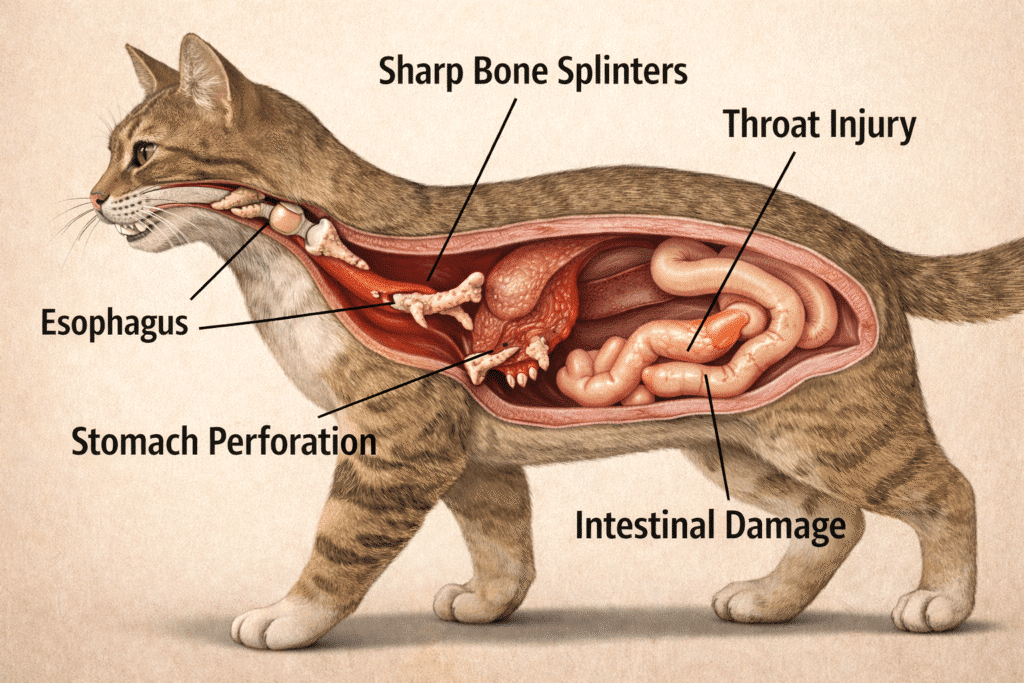
Cooked chicken bones easily splinter into sharp fragments when chewed. These fragments can act like tiny needles, causing serious internal damage.
🔥 Cooked vs Raw Bones
- Cooked bones: Brittle, sharp, and highly dangerous
- Raw bones: Slightly softer but still risky for domestic cats
Even raw bones can lead to choking or bacterial infections, so neither option is truly safe.
💔 Internal Injuries Caused by Chicken Bones
😿 Mouth and Throat Damage
Sharp bone fragments can cut your cat’s mouth, gums, or throat. This may lead to bleeding, pain, and difficulty eating.
🩺 Digestive Tract Injuries
Once swallowed, bones can scrape or puncture internal organs.
⚡ Risk of Perforation
A perforated stomach or intestine is a medical emergency. It can lead to internal bleeding and infection, often requiring surgery.
🚨 Choking Hazards and Blockages
😧 Signs Your Cat Is Choking
- Gagging or coughing
- Pawing at the mouth
- Difficulty breathing
- Sudden panic
⛑️ Emergency Response Tips
If your cat is choking:
- Stay calm
- Avoid blindly reaching into the mouth
- Seek immediate veterinary help
🦠 Bacterial Contamination Risks
🧫 Salmonella and Other Bacteria
Chicken bones, especially raw ones, can carry harmful bacteria like Salmonella.
🤒 Effects on Cats’ Health
Infections can cause:
- Vomiting
- Diarrhea
- Fever
- Weakness
In severe cases, these infections can become life-threatening.
🔍 Symptoms to Watch After Bone Consumption
🧠 Behavioral Changes
- Lethargy
- Loss of appetite
- Hiding or unusual aggression
🚩 Physical Warning Signs
- Vomiting or gagging
- Blood in stool
- Constipation
- Abdominal pain
🏥 What to Do If Your Cat Eats a Chicken Bone
⚡ Immediate Steps
- Remove any remaining bones
- Monitor your cat closely
- Offer water but avoid inducing vomiting
📞 When to Call a Vet
Contact a vet immediately if:
- Your cat shows distress
- Symptoms appear within hours
- You suspect choking or blockage
🧬 Long-Term Health Complications
🦠 Internal Infections
Untreated injuries can lead to severe infections, including sepsis.
⚠️ Digestive Issues
Chronic problems like constipation or intestinal damage may develop over time.
🥕 Safe Alternatives to Chicken Bones
✅ Vet-Approved Treats
- Commercial cat treats
- Dental chews designed for cats
🍳 Homemade Safe Options
- Cooked boneless chicken
- Small pieces of fish (boneless)
Always ensure food is soft, small, and easy to digest.
🔐 Preventing Access to Chicken Bones
🍽️ Kitchen Safety Tips
- Dispose of bones in sealed trash bins
- Avoid leaving plates unattended
👨👩👧 Educating Family Members
Make sure everyone in the household understands the risks, especially children who may unknowingly feed the cat.
❌ Common Myths About Cats and Bones
🐾 “Cats Can Handle Bones Naturally”
This myth is misleading. Domestic cats are not equipped to safely handle cooked bones.
🧠 Debunking Misconceptions
Just because cats can chew bones doesn’t mean they should. The risks far outweigh any perceived benefits.
Read More ▶ Cats Refuses to Drink Water: 11 Powerful Reasons Why & Easy Solutions That Work
❓ FAQs
1. Can cats eat raw chicken bones safely?
Not entirely. While less brittle than cooked bones, raw bones still pose choking and bacterial risks.
2. What happens if my cat swallows a small bone?
It may pass naturally, but there’s still a risk of internal injury. Monitor closely.
3. How quickly do symptoms appear?
Symptoms can appear within hours or take a few days, depending on the severity.
4. Are certain cats more at risk?
Kittens and older cats are more vulnerable due to weaker digestive systems.
5. Can chicken bones cause death in cats?
Yes, in severe cases involving choking, perforation, or infection.
6. What’s the safest treat for cats?
Soft, boneless, vet-approved treats are the safest option.
Read More ▶ 30 Best Foods for Dachshunds with Sensitive Stomachs | Ultimate Digestive Health Guide
🏁 Conclusion
Understanding Why Chicken Bones Are More Dangerous for Cats Than Most Parents Realize is essential for every pet owner. What may seem like a harmless treat can quickly turn into a medical emergency.
By staying informed, choosing safe alternatives, and preventing access to harmful foods, you can protect your cat from unnecessary pain and danger. When in doubt, always prioritize safety over instinct.