Why Is My Cat Suddenly Clingy? 7 Real Reasons Behind the Change
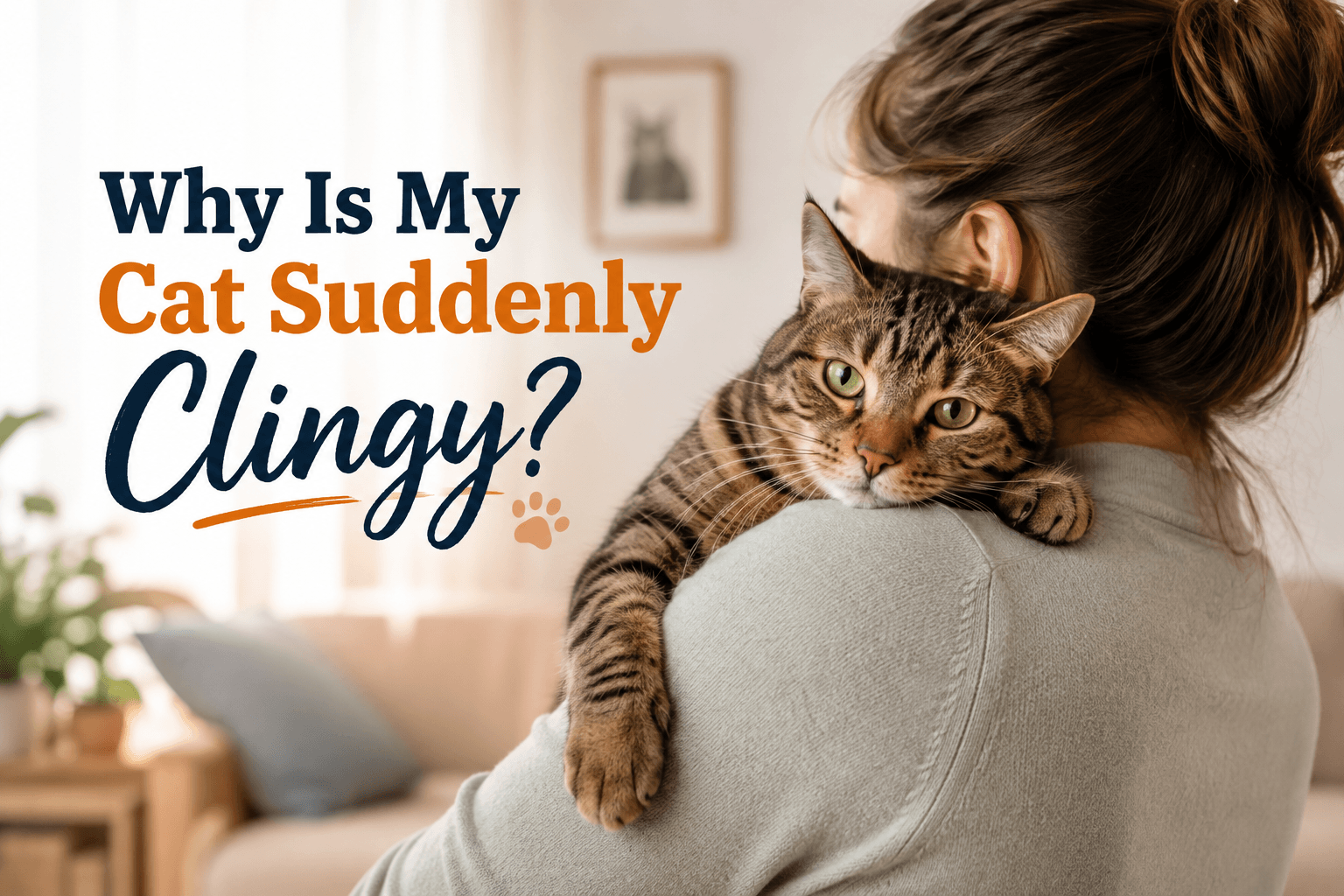
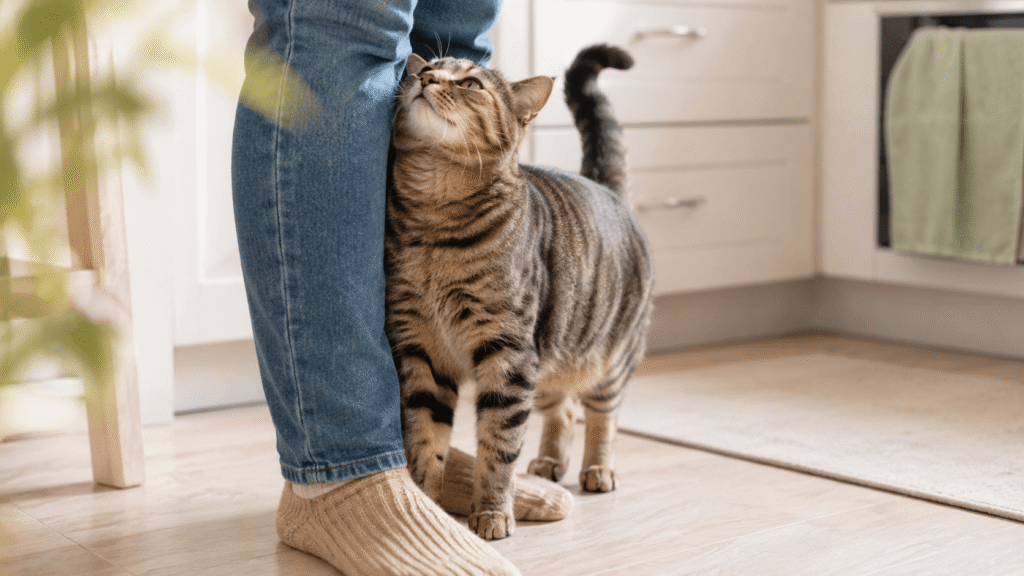
Cats have a reputation for independence, so when your usually aloof cat starts following you room to room, meowing at closed doors, or refusing to settle unless they’re touching you, it’s natural to notice. Sometimes sudden clinginess is simply a sign of deepening trust. But because cats are experts at hiding discomfort, a sudden and dramatic shift in behavior is also one of the more reliable signals that something else is going on — physically or emotionally.
✅Why Do Cats Suddenly Become Clingy?
Cats generally don’t change their social habits without a reason. A sudden shift toward neediness is usually a response to something specific, even if it isn’t obvious to you yet.
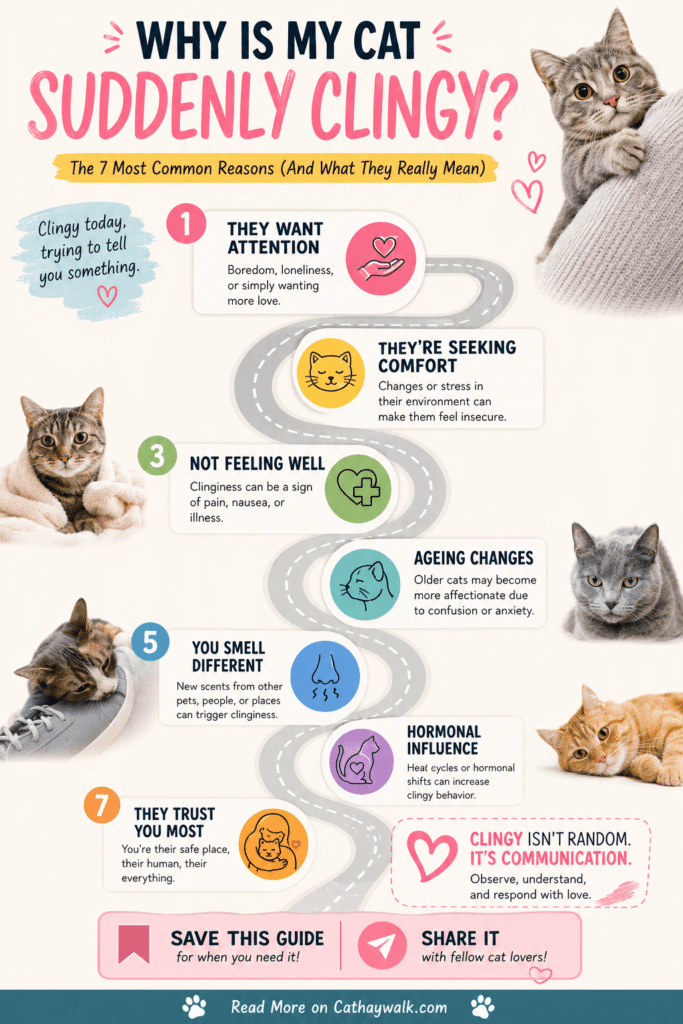
1. A change in their environment
Cats are highly sensitive to shifts in their surroundings that a person might not even notice — a rearranged room, a new work schedule, unfamiliar guests, or even the scent of a stray animal outside. When their territory starts to feel unpredictable, many cats respond by sticking closer to the person they trust most.
2. Stress or a recent scare
Loud noises, a recent vet visit, a new pet in the house, or anything that startled your cat can trigger a clingy phase as they seek reassurance. This tends to resolve on its own once your cat re-establishes a sense of safety, but it can take days or weeks depending on the cat.
3. Boredom or under-stimulation
An under-stimulated cat may start seeking more interaction simply because they don’t have enough else to do. This is more common in indoor-only cats without much environmental enrichment, and it often improves with more play and mental stimulation.
4. Illness or physical discomfort
This is the one worth taking seriously. Cats are instinctively good at masking pain, since hiding weakness would have been a survival disadvantage in the wild. A sudden increase in clinginess — especially paired with other subtle changes — can be an early sign that a cat isn’t feeling well, including conditions like hyperthyroidism, which is more common in older cats and can also cause restlessness and increased vocalization.
5. Post-surgery or hormonal changes
If your cat was recently spayed or neutered, mild clinginess in the days afterward is common. It can come from lingering post-surgical discomfort or from hormonal shifts that often make cats more affectionate. This is usually short-lived and settles down as they recover.
6. Age-related changes
In senior cats, a sudden increase in attachment can be linked to cognitive changes, sensory decline (like reduced vision or hearing), or age-related discomfort. Because these changes tend to be gradual and easy to miss otherwise, unusually sudden clinginess in an older cat is worth paying closer attention to.
7. A genuinely stronger bond
It’s also entirely possible your cat just trusts you more than they used to. Cats that were adopted as adults, rescued from difficult situations, or naturally cautious sometimes take months or years to fully relax into a home — and increased affection can simply be a sign they finally feel secure.
✅When to Be Concerned
Occasional extra affection isn’t something to worry about. What matters is whether the clinginess is a genuine change from your cat’s normal personality, and whether it’s paired with other symptoms. Consider a veterinary visit if you notice:
- Sudden clinginess that came on quickly, especially in an older cat
- Loss of appetite, increased or decreased thirst, or weight changes
- Excessive vocalization, especially at night
- Hiding, withdrawal, or aggression alternating with clinginess
- Changes in litter box habits
- Reluctance to be touched or handled despite seeking closeness
This article is meant to help you recognize patterns, not to diagnose your cat — if anything feels off, a vet visit is the safest way to rule out an underlying medical cause, especially since several of the conditions linked to sudden clinginess are very treatable when caught early.
✅What You Can Do
Rule out medical causes first. Because clinginess can be an early symptom of illness — particularly in cats over age 10 — a quick vet check is a reasonable first step if the change was sudden and doesn’t have an obvious cause like a household disruption.
Keep routines consistent. Cats find comfort in predictability. Feeding, play, and sleep on a consistent schedule can help reduce stress-related clinginess.
Add enrichment. Puzzle feeders, climbing space, window perches, and dedicated play sessions can help address boredom-driven clinginess without requiring more of your direct attention every minute of the day.
Reward calm independence. If you want to gently encourage more balanced behavior, try rewarding your cat with attention when they’re calm and not actively demanding it, rather than only responding when they escalate.
Give it time after a change. If the trigger was a move, a new pet, or a schedule shift, many cats settle back into their normal selves within a few weeks as their environment starts to feel predictable again.
📑FAQs
➖Is it bad if my cat is suddenly clingy? Not necessarily — increased affection can be a positive sign of trust. But because sudden change is more diagnostically useful than constant clinginess, it’s worth paying attention to timing and any other symptoms.
➖Can clinginess be a sign of illness in cats? Yes. Because cats instinctively hide pain and illness, changes in behavior — including clinginess — are often one of the only early signs something is wrong. This is especially true in senior cats.
➖Why is my cat suddenly clingy after being spayed or neutered? This is common and usually temporary, caused by a mix of post-surgical discomfort and hormonal changes. It typically resolves within a week or two as your cat recovers.
➖Should I ignore my cat when they’re being clingy? Not entirely — sudden clinginess is often communication, not just a bid for attention. It’s more helpful to look for the underlying cause than to ignore the behavior outright.