The Ultimate First Week With a New Puppy Checklist: 25 Essential Steps for a Happy Start
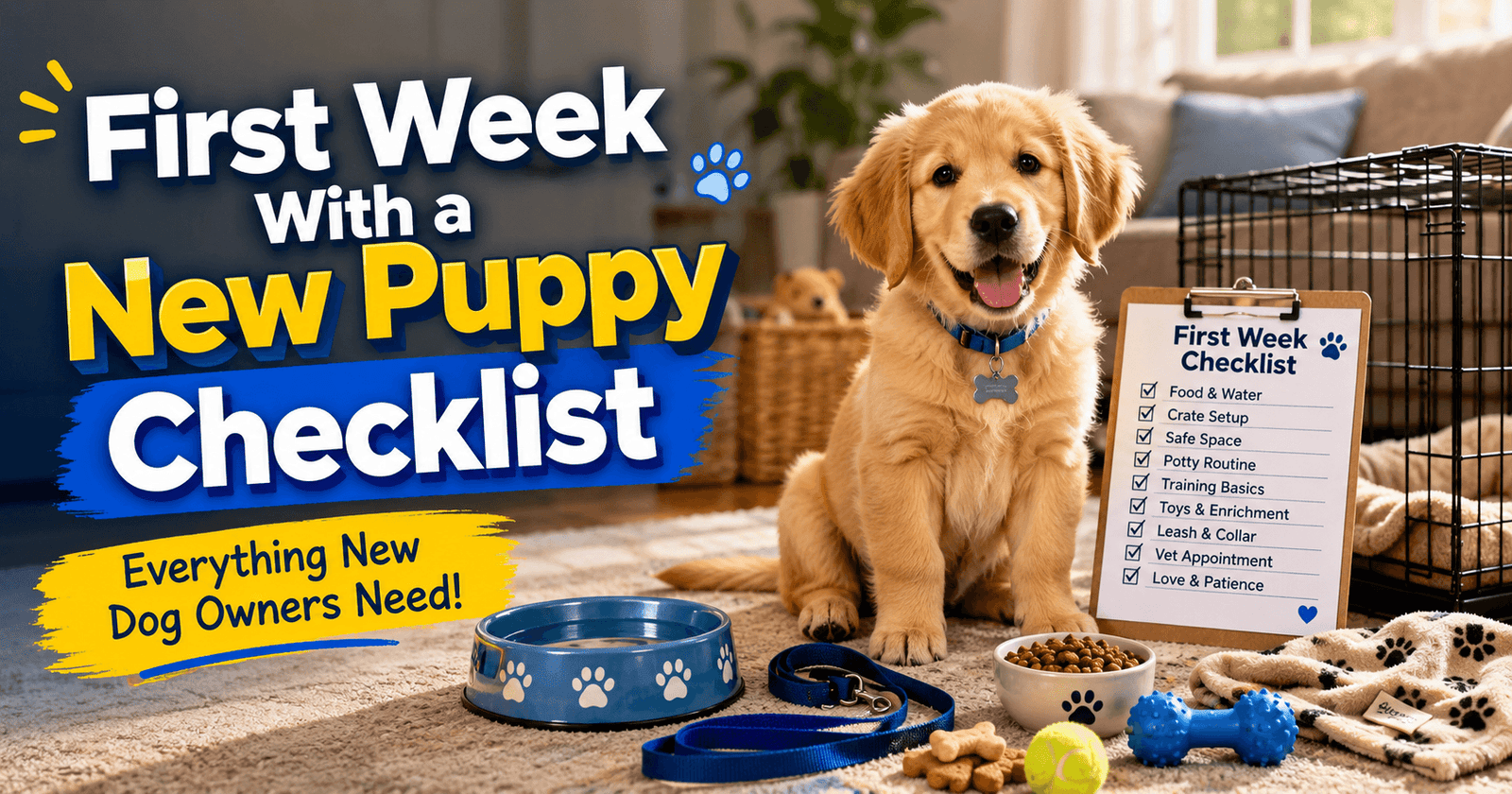
The Ultimate First Week With a New Puppy Checklist 🐾
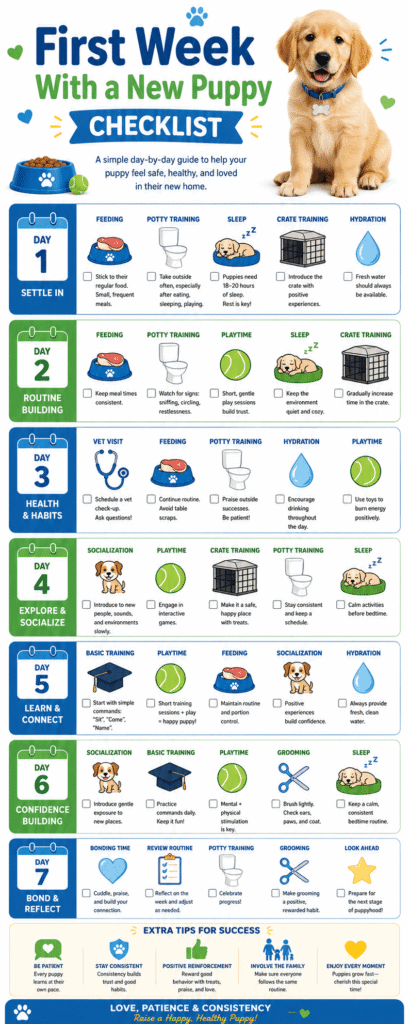
Bringing home a puppy is one of life’s most exciting milestones. 🎉 However, the First Week With a New Puppy Checklist is more than simply buying toys and cuddling your furry friend. Those first seven days shape your puppy’s confidence, routines, behavior, and relationship with your family.
A puppy has just left everything familiar—its mother, littermates, smells, and daily routine. Everything is new, and that can feel overwhelming. Your job is to provide stability, consistency, patience, and lots of love.
This comprehensive guide walks you through every important step so both you and your puppy enjoy a smooth transition.
Why the First Week Matters ❤️
The first week lays the foundation for your puppy’s future.
During these early days, your puppy learns:
- 🏠 Where they live
- 😊 Who their family is
- 🍖 When meals happen
- 🚽 Where to potty
- 😴 Where to sleep
- 🎾 How to play safely
- 🐕 What behaviors earn rewards
Positive experiences now build confidence while reducing fear and anxiety later.
First Week With a New Puppy Checklist: Before Bringing Your Puppy Home 🏡
Preparation makes everything easier.
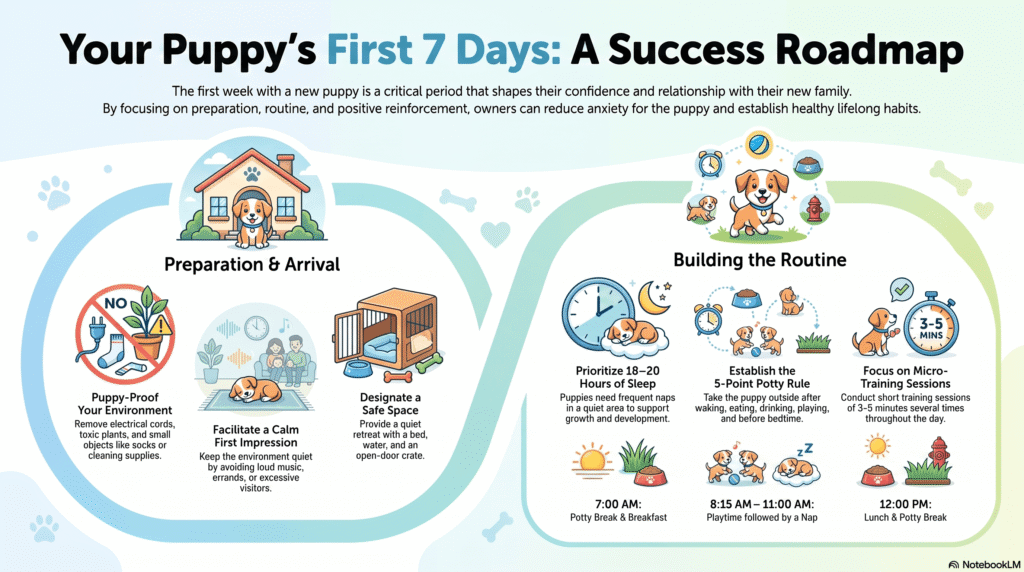
Puppy-Proof Every Room
Just like toddlers, puppies explore with their mouths.
Remove:
- ⚡ Electrical cords
- 🌿 Toxic plants
- 💊 Medications
- 🍫 Chocolate
- 🧹 Cleaning supplies
- 👟 Shoes
- 🧦 Socks
- 🗑️ Small objects
Install baby gates if needed to limit access.
Essential Puppy Supplies 🛒
Before pickup day, have everything ready.
| Item | Why It Matters |
|---|---|
| Food | Prevent stomach upset |
| Food & water bowls | Daily meals |
| Collar & ID tag | Safety |
| Leash | Walks |
| Crate | Security |
| Bed | Comfortable sleep |
| Toys | Mental stimulation |
| Chews | Teething relief |
| Treats | Positive training |
| Poop bags | Clean-up |
| Puppy shampoo | Grooming |
| Brush | Coat care |
Having supplies prepared reduces stress on Day One.
Day 1: Bringing Your Puppy Home 🚗
The ride home can be overwhelming.
Keep the environment calm.
Avoid:
- Too many visitors
- Loud music
- Long errands
- Busy public places
Instead:
- Speak softly 😊
- Offer reassurance ❤️
- Allow plenty of sniffing
- Let your puppy explore at their own pace
Remember, everything is brand new.
Create a Safe Space 🏠
Every puppy needs a quiet retreat.
Include:
- Soft bed
- Blanket
- Water bowl
- Safe chew toy
- Crate with the door open
Avoid forcing crate time immediately.
Let curiosity lead the way.
Feeding Your Puppy 🍽️
Young puppies thrive on routine.
Most puppies under four months eat:
- 🌞 Breakfast
- ☀️ Lunch
- 🌇 Dinner
Feed the same food recommended by the breeder or shelter during the first week.
Changing foods too quickly can upset digestion.
Fresh water should always be available.
Healthy Feeding Tips
✅ Feed at consistent times
✅ Remove uneaten food after 20 minutes
✅ Avoid table scraps
✅ Use treats sparingly
✅ Reward good behavior with healthy snacks
Routine builds trust and supports potty training.
Potty Training Basics 🚽
One of the biggest parts of the First Week With a New Puppy Checklist is establishing a bathroom routine.
Take your puppy outside:
- Immediately after waking
- After eating
- After drinking
- After playing
- Before bedtime
Praise successful potty trips immediately with treats and enthusiastic encouragement.
If accidents happen, stay calm. Never punish your puppy—they’re still learning.
Creating a Healthy Sleep Schedule 😴
Sleep is one of the most overlooked parts of the First Week With a New Puppy Checklist, yet it’s critical for your puppy’s growth and development.
Young puppies sleep between 18–20 hours a day. Although they may seem full of energy during playtime, they need frequent naps to recharge.
Tips for Better Sleep
- 🛏️ Keep the crate or bed in a quiet area.
- 🌙 Stick to a consistent bedtime.
- 🚫 Avoid exciting games right before sleep.
- 🧸 Place a soft blanket and a safe chew toy inside the crate.
- 💡 Use a dim night light if your puppy seems anxious.
Some puppies may cry during the first few nights because they miss their littermates. This is normal. Wait a few moments before responding, as rushing in immediately can unintentionally teach them that crying always brings attention. If they continue crying, take them outside for a quick potty break and calmly return them to bed.
Helping Your Puppy Feel Safe ❤️
Your puppy has entered a completely unfamiliar world. Building trust should be your highest priority during the first week.
You can help your puppy feel secure by:
- 😊 Speaking in a calm, gentle voice.
- 🐾 Allowing them to approach people at their own pace.
- 🦴 Rewarding calm behavior with praise and treats.
- 🤗 Handling them gently during play and cuddles.
- ⏰ Maintaining a predictable daily routine.
Trust develops through consistent, positive experiences rather than forcing interactions.
Socialization During the First Week 🌎
Socialization doesn’t mean introducing your puppy to everything at once. Instead, it means gradually exposing them to new experiences while ensuring they feel safe.
Safe Experiences to Introduce
- 👨👩👧 Family members
- 🏡 Different rooms in your home
- 🚗 Short car rides
- 🎵 Everyday household sounds
- 🧹 Vacuum cleaner from a distance
- 📺 Television noises
- 🎩 People wearing hats, glasses, or carrying umbrellas
Avoid busy dog parks or interactions with unfamiliar dogs until your veterinarian confirms your puppy has received the appropriate vaccinations.
Meeting Children and Visitors 👶
If children are present:
- Teach them to sit quietly.
- Avoid hugging or squeezing the puppy.
- Supervise every interaction.
- Encourage gentle petting.
For visitors:
- Limit the number of guests during the first few days.
- Ask visitors to remain calm.
- Allow the puppy to approach when comfortable.
Positive first impressions help build lifelong confidence.
Start Basic Puppy Training 🎓
Training begins the moment your puppy comes home.
Focus on short sessions lasting 3–5 minutes several times a day.
Essential Commands
- ✅ Sit
- ✅ Come
- ✅ Watch Me
- ✅ Leave It
- ✅ Down
Reward every success with treats, praise, toys, or affection.
Remember, consistency is more important than perfection.
Teaching Your Puppy’s Name 🐶
One of the easiest first lessons is name recognition.
- Say your puppy’s name once.
- When they look at you, immediately reward them.
- Repeat several times throughout the day.
Soon, your puppy will associate their name with positive experiences and pay attention when called.
Read More ➡ Indoor Activities for Cats: The Complete Guide to a Happier Indoor Cat
Crate Training Basics 🏠
Crates are valuable tools when introduced correctly.
A crate should never be used as punishment.
Instead, make it a welcoming place by:
- Feeding meals nearby or inside.
- Tossing treats into the crate.
- Leaving the door open during exploration.
- Offering special chew toys only inside the crate.
Gradually increase the amount of time your puppy spends resting in the crate while remaining calm and relaxed.
Exercise and Playtime 🎾
Although puppies are energetic, too much exercise can strain their developing joints.
A balanced routine includes:
- Short play sessions
- Gentle walks (if approved by your vet)
- Puzzle toys
- Tug games
- Fetch with soft toys
- Sniffing games
Mental stimulation is just as important as physical activity.
Prevent Puppy Biting 🦷
Puppies naturally explore the world with their mouths, especially while teething.
If your puppy bites your hands:
- Offer a chew toy instead.
- Stop play briefly if biting continues.
- Reward gentle interactions.
- Avoid rough play that encourages nipping.
Consistency helps your puppy learn appropriate bite inhibition.
Schedule Your First Veterinary Visit 🩺
A veterinary checkup during the first week helps ensure your puppy gets off to a healthy start.
Discuss the Following
- 💉 Vaccination schedule
- 🪱 Deworming
- 🐜 Flea and tick prevention
- 🦷 Dental care
- 🍽️ Nutrition recommendations
- ⚖️ Healthy weight
- 🐕 Breed-specific concerns
- 📅 Future wellness visits
Bring any medical records provided by the breeder or shelter.
Introduce Grooming Early ✂️
Regular grooming isn’t just about appearance—it also helps your puppy become comfortable with handling.
Practice short sessions that include:
- Brushing
- Looking at their ears
- Touching their paws
- Gently examining their teeth
- Wiping around the eyes if needed
Reward calm behavior with treats and praise.
Establish a Daily Routine 📅
Dogs thrive on predictability.
Here’s an example schedule:
| Time | Activity |
|---|---|
| 7:00 AM | Potty break |
| 7:15 AM | Breakfast |
| 7:45 AM | Playtime |
| 8:15 AM | Nap |
| 11:00 AM | Potty break |
| 12:00 PM | Lunch |
| Afternoon | Training + Play + Nap |
| 6:00 PM | Dinner |
| Evening | Family time |
| Before Bed | Final potty break |
A consistent schedule helps reduce anxiety and speeds up house training.
Read More ➡ Expert Guide to The Best Dog Dryers for Grooming
Common Mistakes to Avoid 🚫
Even loving owners can make mistakes during the first week.
Avoid these common pitfalls:
- ❌ Expecting too much too soon.
- ❌ Punishing accidents.
- ❌ Skipping naps.
- ❌ Overfeeding treats.
- ❌ Allowing unwanted behaviors “just this once.”
- ❌ Introducing too many people at once.
- ❌ Leaving your puppy alone for long periods.
- ❌ Forgetting to puppy-proof the home.
Patience and consistency are key to long-term success.
Frequently Asked Questions (FAQs) ❓
1. How long does it take for a puppy to adjust to a new home?
Most puppies begin feeling comfortable within one to three weeks, although every puppy adjusts at a different pace. Keeping a consistent routine and providing positive experiences can help them settle in more quickly.
2. Should I let my puppy sleep in my bedroom?
Many owners keep the crate in their bedroom during the first few weeks. This can help puppies feel secure and makes nighttime potty trips easier. You can gradually move the crate later if desired.
3. How often should I take my puppy outside?
During the first week, take your puppy outside every one to two hours, as well as after waking up, eating, drinking, playing, and before bedtime.
4. Is it normal for my puppy to cry at night?
Yes. Your puppy has recently left their littermates and is adjusting to a new environment. Keeping a bedtime routine and offering a safe sleeping area usually helps reduce nighttime crying over time.
5. When can I start training my puppy?
Training can begin on the very first day at home. Keep sessions short, fun, and reward-based to encourage learning.
6. When is it safe to take my puppy on walks?
Short outings around your home or yard may be appropriate, but avoid areas where unknown dogs gather until your veterinarian confirms your puppy has completed the recommended vaccination schedule.
7. How many toys should a new puppy have?
A small variety is ideal, including chew toys, puzzle toys, plush toys, and interactive toys. Rotating them every few days helps keep your puppy interested.
Conclusion 🐾 Following a thoughtful First Week With a New Puppy Checklist sets the stage for a lifetime of companionship, trust, and good behavior. While the first few days may feel overwhelming, remember that every meal, potty break, training session, and cuddle helps your puppy build confidence in their new home.
Keep expectations realistic, celebrate small victories, and stay consistent with routines. Your patience, kindness, and positive reinforcement will help your puppy grow into a happy, healthy, and well-adjusted dog. Enjoy every moment of this exciting journey—those tiny paws grow faster than you think! ❤️