Indoor Activities for Cats: The Complete Guide to a Happier Indoor Cat
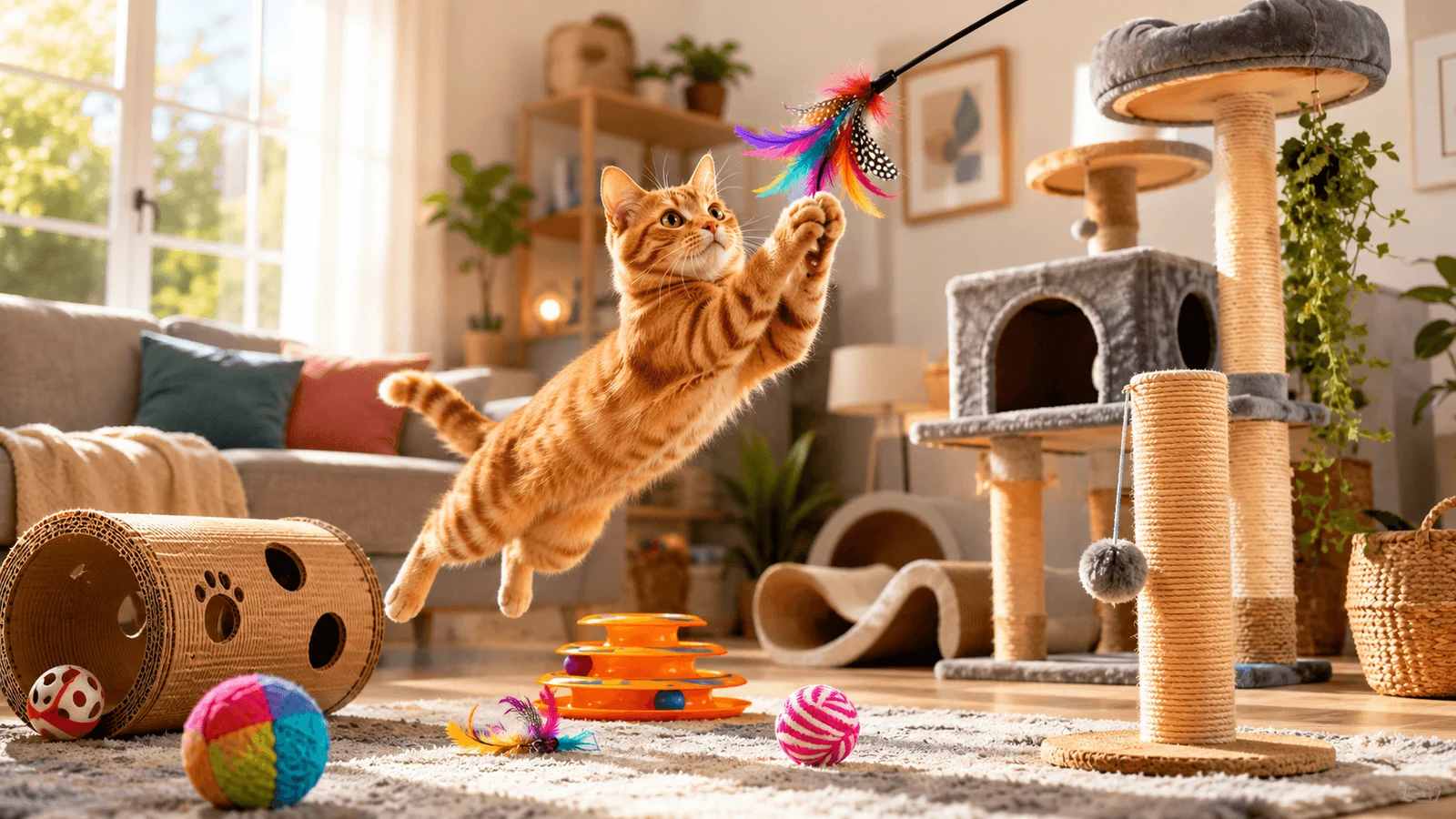
Living indoors keeps cats safe from traffic, predators, diseases, and harsh weather. However, it also removes many of the natural challenges that outdoor cats enjoy every day. Without enough stimulation, indoor cats may become bored, stressed, overweight, or even destructive.
That’s why Indoor Activities for Cats are essential. They encourage exercise, improve mental health, strengthen the bond between you and your feline friend, and reduce unwanted behaviors like scratching furniture or excessive meowing.
Whether you have an energetic kitten or a relaxed senior cat, the ideas in this guide will help create an enriching environment your pet will love.
Why Indoor Cats Need Daily Enrichment 🏡
Cats are natural hunters. Even the laziest house cat still has instincts to stalk, chase, climb, pounce, and explore.
Without opportunities to express these instincts, cats may develop problems such as:
- Weight gain
- Anxiety
- Aggression
- Excessive sleeping
- Furniture scratching
- Nighttime zoomies
- Overgrooming
- Depression
Daily enrichment mimics hunting and exploration while keeping your cat physically and mentally healthy.
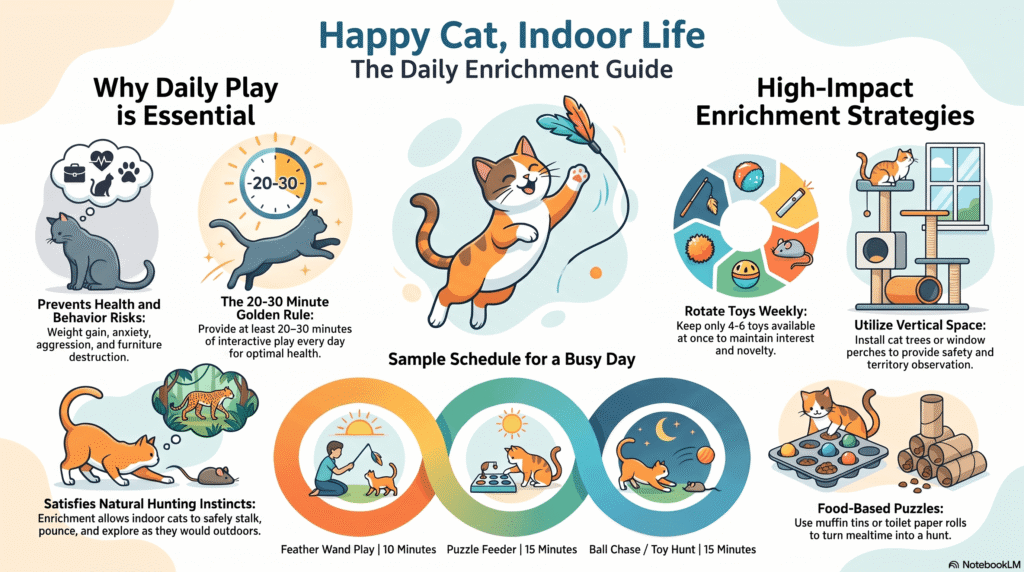
Experts generally recommend providing at least 20–30 minutes of interactive play every day, split into shorter sessions if needed.
Benefits of Indoor Activities for Cats 🌟
Regular play isn’t just fun—it supports your cat’s overall well-being.
Some of the biggest benefits include:
Better Physical Health
Running, jumping, climbing, and chasing burn calories and improve muscle tone.
Mental Stimulation
Puzzle games and interactive toys challenge your cat’s brain, reducing boredom.
Stronger Bond
Playing together builds trust between cats and their owners.
Reduced Stress
Play helps release energy and lowers anxiety.
Better Sleep
A tired cat is usually a happy cat. After a good play session, most cats enjoy long, restful naps.
Interactive Games Your Cat Will Love 🎾
Interactive play closely resembles hunting behavior and is often the best type of enrichment.
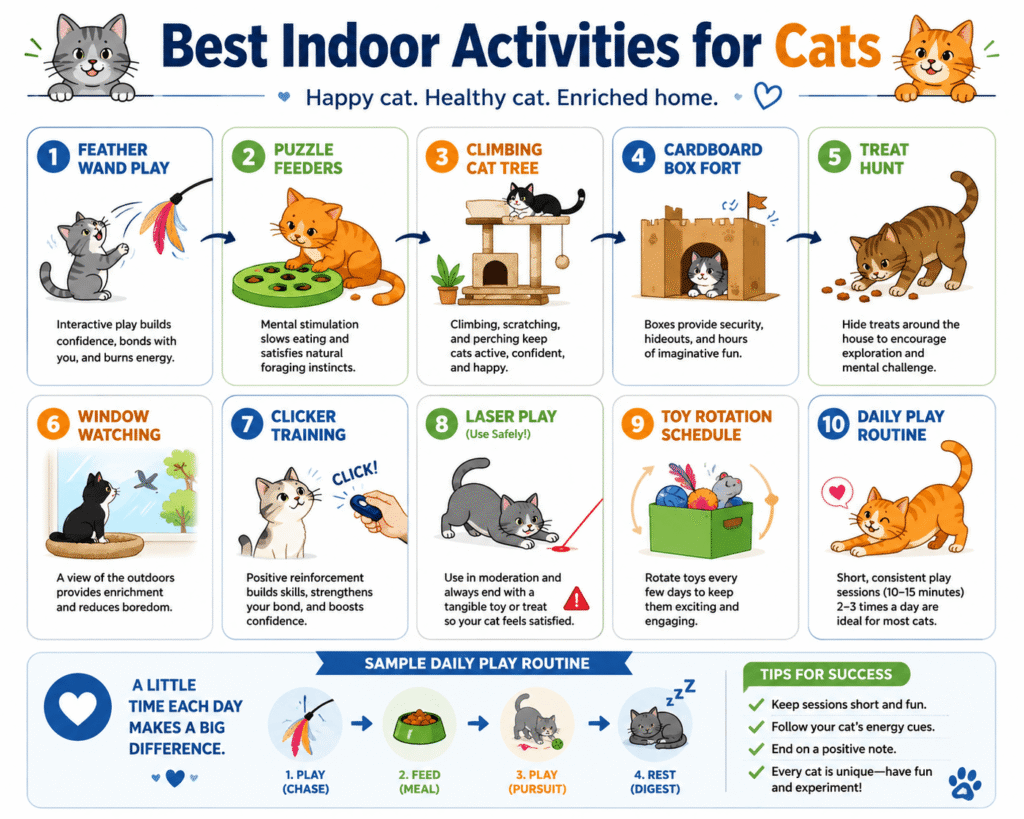
1. Feather Wand Toys
Feather wands imitate birds in flight.
Move the toy unpredictably:
- Behind furniture
- Across the floor
- Into the air
- Around corners
Allow your cat to “catch” the toy occasionally to prevent frustration.
2. Laser Pointer Games 🔴
Laser pointers encourage exercise.
However:
- Never shine the laser into your cat’s eyes.
- Always finish with a real toy or treat so your cat experiences a successful “hunt.”
3. Ball Chase
Many cats enjoy lightweight balls made of:
- Foam
- Felt
- Plastic
- Crinkle material
Rolling balls down a hallway creates an exciting chase.
4. Hide and Seek
Hide behind doors or furniture and call your cat.
Many felines enjoy searching for their owners.
Reward successful finds with affection or treats.
5. Toy Mouse Hunt 🐭
Hide toy mice around the house.
Your cat gets to search, stalk, and capture them just like prey in nature.
Rotate hiding spots regularly.
DIY Indoor Activities for Cats 🛠️
You don’t need expensive toys.
Many household items become exciting enrichment tools.
Cardboard Box Castles 📦
Cats adore cardboard boxes.
Create:
- Tunnels
- Multi-room forts
- Hideouts
- Climbing towers
Cut entrance holes and connect multiple boxes together.
Paper Bag Adventures
Remove handles for safety.
Place:
- Crinkle paper
- Soft toys
- Catnip
inside the bag.
Many cats spend hours exploring.
Toilet Paper Roll Puzzle
Fold the ends of an empty toilet paper tube.
Add:
- Dry treats
- Small kibble pieces
Your cat rolls it around until snacks fall out.
Muffin Tin Puzzle
Place treats inside a muffin tray.
Cover some sections with ping pong balls.
Your cat must remove the balls to discover hidden rewards.
Blanket Tunnel
Drape blankets over chairs to create exploration tunnels.
Cats naturally enjoy enclosed spaces.
Food-Based Enrichment 🍗
Eating should involve more than simply placing food into a bowl.
Cats naturally spend significant time hunting before meals.
Instead, try:
Puzzle Feeders
These require problem-solving before food is released.
Benefits include:
- Slower eating
- Weight control
- Mental exercise
Treasure Hunt
Hide small portions of kibble throughout the home.
Your cat spends time searching instead of eating everything immediately.
Frozen Treats
Freeze wet food into silicone molds.
This provides longer-lasting enrichment, especially during warmer months.
Climbing Activities 🧗
Cats love observing their territory from above.
Consider adding:
- Cat trees
- Wall shelves
- Window perches
- Climbing bridges
- Cat hammocks
Vertical space is especially valuable in apartments.
Cats often feel safer when they can climb.
Window Entertainment 🪟
Windows provide endless stimulation.
Place a cat perch near a secure window overlooking:
- Birds
- Squirrels
- Trees
- People walking
- Rainfall
Adding a bird feeder outside (where appropriate and safe) can make window watching even more engaging.
Teach Simple Tricks 🎓
Cats are highly trainable.
Using treats and positive reinforcement, many cats learn:
- Sit
- High five
- Spin
- Jump through hoops
- Target training
- Come when called
Short five-minute sessions keep training enjoyable.
Technology for Indoor Cats 📱
Technology can provide extra entertainment when used in moderation.
Popular options include:
- Motion-activated toys
- Automatic laser toys
- Interactive rolling balls
- Tablet games designed for cats
- Smart treat dispensers
- Pet cameras with treat tossers
Technology works best alongside regular interactive play with you.
Rotate Toys to Keep Things Fresh 🔄
One common mistake cat owners make is leaving every toy out all the time. Over time, even the most exciting toy becomes familiar, and your cat may lose interest.
Instead, create a toy rotation system.
Try this simple routine:
- Keep only 4–6 toys available each week.
- Store the rest in a box or drawer.
- Swap toys every 7–10 days.
- Reintroduce older toys as if they were new.
This method keeps playtime exciting without constantly buying new toys.
Indoor Activities for Kittens 🐱
Kittens have endless energy and curiosity. They need frequent, short play sessions to support healthy growth and social development.
Great activities include:
Mini Obstacle Courses
Use cushions, tunnels, and boxes to create a safe adventure course.
Soft Ball Games
Lightweight foam or fabric balls are easy for tiny paws to chase.
Climbing Practice
Provide kitten-safe cat trees with lower platforms to build confidence.
Gentle Tug Toys
Small plush toys encourage pouncing and grabbing without being too rough.
Social Play
Spend 10–15 minutes several times a day engaging your kitten with wand toys or interactive games.
Tip: Avoid using your hands as toys. This helps prevent biting and scratching habits later in life.
Indoor Activities for Senior Cats ❤️
Older cats may slow down, but they still benefit from daily enrichment.
Focus on low-impact activities that are easy on aging joints.
Some ideas include:
- Slow-moving feather wand games
- Food puzzles with large openings
- Soft plush toys
- Window perches with easy access
- Gentle clicker training
- Catnip-filled toys
Keep sessions short—around 5 to 10 minutes—and let your cat set the pace.
If your senior cat has arthritis or another health condition, consult your veterinarian before introducing new activities.
Read More ➖ How to Cat Proof Your House: Preparing Your Home for Cat Adoption
Create an Indoor Cat Adventure Zone 🏠
Transform part of your home into an enrichment area your cat can explore every day.
Include a mix of:
- 📦 Cardboard boxes
- 🧗 Cat tree
- 🪟 Window perch
- 🐭 Toy mice
- 🧩 Puzzle feeder
- 🌿 Cat-safe grass
- 😺 Scratching post
- 🎾 Interactive toys
Changing the layout every few weeks gives your cat something new to investigate.
Common Mistakes to Avoid ❌
Even well-meaning owners can accidentally reduce the effectiveness of playtime.
Avoid these common mistakes:
Leaving Toys Out All the Time
Rotate toys regularly to maintain novelty.
Overusing Laser Pointers
Always end laser play with a toy or treat your cat can physically catch.
Skipping Daily Play
Even 15–20 minutes of interaction each day can make a significant difference.
Ignoring Vertical Space
Cats naturally enjoy climbing and observing their surroundings from above.
Choosing Unsafe Toys
Avoid toys with:
- Loose strings
- Small detachable parts
- Sharp edges
- Toxic materials
Always supervise play with string-like toys to prevent accidental swallowing.
Read More ➖ Cat Trees: The Purr-fect Solution for Happy Cats
Sample Daily Indoor Activity Routine 📅
Here’s an easy schedule that fits into most households.
| Time | Activity | Duration |
|---|---|---|
| Morning | Feather wand play | 10 minutes |
| Midday | Puzzle feeder | 15 minutes |
| Afternoon | Window watching | 20 minutes |
| Evening | Ball chase or toy mouse hunt | 15 minutes |
| Night | Treat hunt and cuddles | 10 minutes |
This combination provides physical exercise, mental stimulation, and bonding time.
Frequently Asked Questions
1. How much playtime does an indoor cat need?
Most healthy adult cats benefit from 20–30 minutes of interactive play each day. Active kittens may need several shorter sessions totaling an hour or more.
2. What are the best indoor activities for cats that stay home alone?
Great options include:
- Puzzle feeders
- Automatic toys
- Window perches
- Cat trees
- Treat-dispensing toys
- Safe cardboard play areas
These help keep your cat entertained while you’re away.
3. Can indoor cats be happy without going outside?
Yes. With enough enrichment, exercise, and social interaction, indoor cats can live long, healthy, and fulfilling lives.
4. How can I stop my indoor cat from getting bored?
Rotate toys regularly, introduce new games, create climbing spaces, offer puzzle feeders, and spend quality time playing together every day.
5. Are laser pointers safe for cats?
Yes, when used responsibly. Never shine the laser into your cat’s eyes, and always finish the session with a toy or treat your cat can catch to satisfy its hunting instinct.
6. What toys do most cats enjoy?
Many cats love:
- Feather wands
- Toy mice
- Crinkle balls
- Catnip toys
- Interactive puzzle toys
- Rolling balls
- Cardboard boxes
Every cat has unique preferences, so experiment with different options.
7. How often should I replace or rotate cat toys?
Inspect toys regularly for damage and replace any that are worn or unsafe. Rotating toys every one to two weeks helps maintain your cat’s interest.
8. Can training be considered an indoor activity for cats?
Absolutely! Positive reinforcement training teaches useful behaviors while providing mental stimulation and strengthening your bond with your cat.
Read More ➖ 15 Irresistible Best Apartment Dogs for Small Spaces That Will Steal Your Heart
Conclusion 🎉 Keeping your feline entertained doesn’t require expensive gadgets or a large home. With the right mix of interactive play, climbing opportunities, food puzzles, DIY projects, and training, Indoor Activities for Cats can transform everyday life into an exciting adventure.
The key is variety. Rotate toys, introduce new challenges, and spend a little time each day engaging with your cat. These simple habits can reduce boredom, prevent unwanted behaviors, encourage healthy exercise, and strengthen the bond you share.
A happy indoor cat is an active, curious, and mentally stimulated one. By making enrichment part of your daily routine, you’ll help your feline companion enjoy a healthier, more fulfilling life—right from the comfort and safety of home. 😺💖