Why Does My Dog Stare at Me?
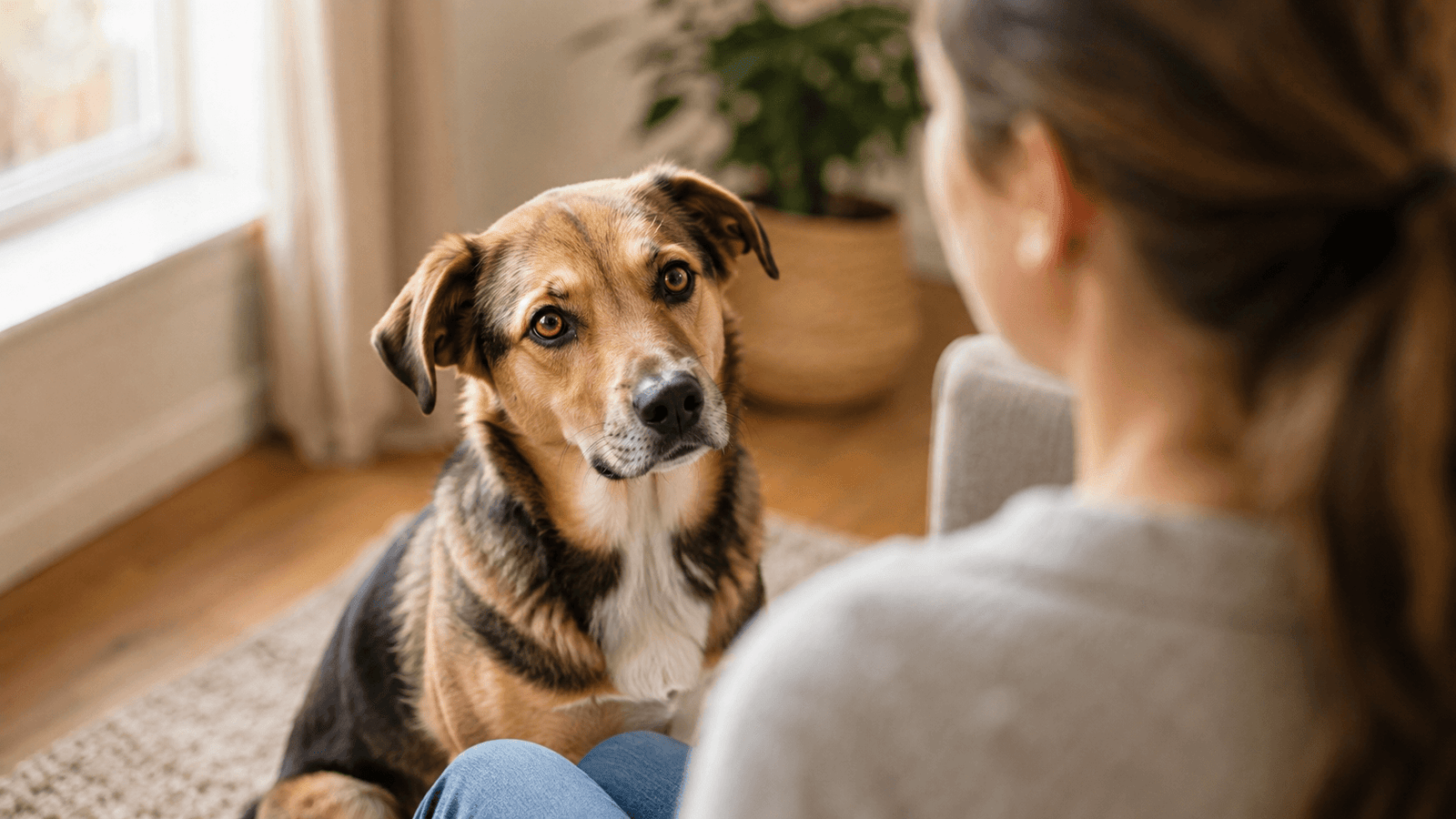
You’re sitting on the sofa, cooking dinner, or getting ready for bed—and suddenly you notice your dog staring directly at you.
Not a quick glance. A full-on, unblinking dog stare.
So what does it mean?
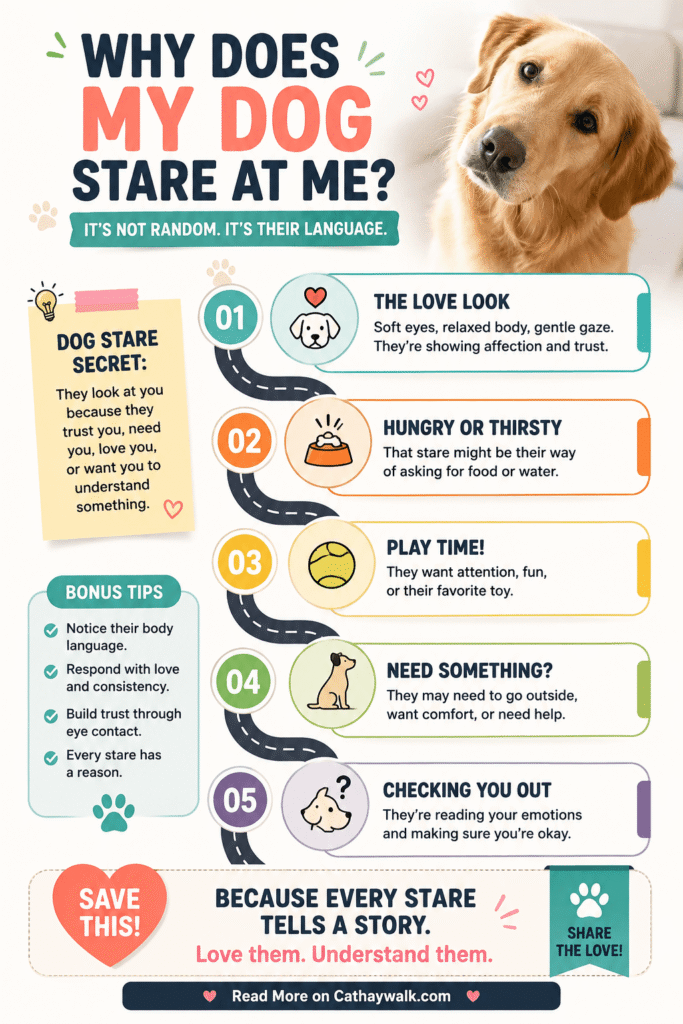
Usually, it depends on the situation, your dog’s body language, and what happens immediately before and after the stare. Dogs use eye contact as part of their communication, but staring can mean very different things. Your dog may be asking for something, waiting for your next move, showing affection, feeling uncertain, or simply trying to understand you.
Some owners also notice a related behavior: “my dog follows me everywhere and stares at me.” That can be completely normal, but persistent staring combined with anxiety, restlessness, or sudden behavior changes deserves closer attention.
This guide explains the most common reasons dogs stare, how to read the rest of their body language, and when staring could indicate a problem.
1. Your Dog Wants Something From You
One of the simplest explanations for a dog staring at you is that they want something.
Dogs quickly learn that humans control important resources: food, walks, toys, outdoor access, attention, and comfortable places to sleep. If staring has worked before, your dog may repeat it.
➡For example, your dog might stare at you when:
- Their food bowl is empty.
- They want to go outside.
- They want to play.
- Their usual walk is approaching.
- They want attention or affection.
- A favorite toy is stuck somewhere.
- They want you to share your food.
Look at what happens next
Context is more useful than eye contact alone.
If your dog stares at you and then looks toward the door, they may be asking to go outside. If they stare at their food bowl and then back at you, the message is probably fairly obvious.
Some dogs also develop a predictable routine. They may stare at you around the same time every evening because they have learned that this is when dinner, a walk, or play normally happens.
The important point is that staring isn’t necessarily a problem that needs correcting. Sometimes your dog is simply communicating.
2. Your Dog Is Waiting for Your Next Move
Dogs are excellent observers of human behavior.
Your dog may stare because they are trying to predict what you’re about to do. Picking up your keys could mean a walk. Putting on shoes might mean you’re leaving. Opening a cupboard could mean food is coming.
This is especially common in dogs that are closely bonded with their owners.
A dog may watch your hands, face, and body movements because those signals help them understand what happens next.
◾Why does my dog follow me everywhere and stare at me?
If your dog follows you everywhere and stares at you, they may simply have learned that following you gives them useful information.
For instance, your dog might follow you from the kitchen to the hallway because they suspect you’re about to go outside. They may then stare at you while waiting for confirmation.
Following behavior becomes more concerning when your dog appears distressed whenever you move away. Whining, pacing, scratching at doors, destructive behavior, excessive barking, or panic when left alone can indicate that something more than ordinary attachment is happening.
3. Your Dog May Be Showing Affection
Sometimes, a soft dog stare is simply a sign of connection.
When a relaxed dog looks at a familiar person with soft eyes, a loose body, relaxed ears, and normal breathing, there may be little reason to worry.
➡Gentle eye contact can occur during quiet moments such as:
- Sitting together on the sofa
- Resting beside you
- Petting your dog
- Relaxing after a walk
- Waiting calmly for dinner
Research has found that interactions between dogs and their owners can involve oxytocin, a hormone associated with social bonding. That doesn’t mean every stare is an expression of love, but relaxed eye contact can certainly be part of a positive relationship.
◾Don’t force eye contact
It’s also important not to assume every dog enjoys prolonged eye contact.
Some dogs become uncomfortable when a person stares directly into their eyes, particularly if the dog is nervous, unfamiliar with the person, or already showing signs of stress.
Instead of deliberately holding eye contact, allow your dog to choose whether to engage.
A relaxed dog that looks away, blinks, approaches you, or settles comfortably is giving you useful information about how they feel.
4. Your Dog Is Confused or Looking for Guidance
Dogs don’t always understand what we expect from them.
Imagine you tell your dog to sit, but they don’t know what you mean. They may stare at you because they’re waiting for another clue.
The same thing can happen when you’re teaching a new behavior.
➡A dog may look directly at you when they hear:
- A familiar command
- A new word
- A change in your tone of voice
- An unusual household sound
- A request they don’t understand
In this situation, staring can be part of the learning process.
◾What should you do?
Keep your instructions simple and consistent.
If you’re training a behavior, reward the response you want rather than repeatedly repeating the command. Short training sessions are usually easier for dogs to understand than long sessions filled with confusing signals.
5. Your Dog May Be Feeling Stressed or Uncomfortable
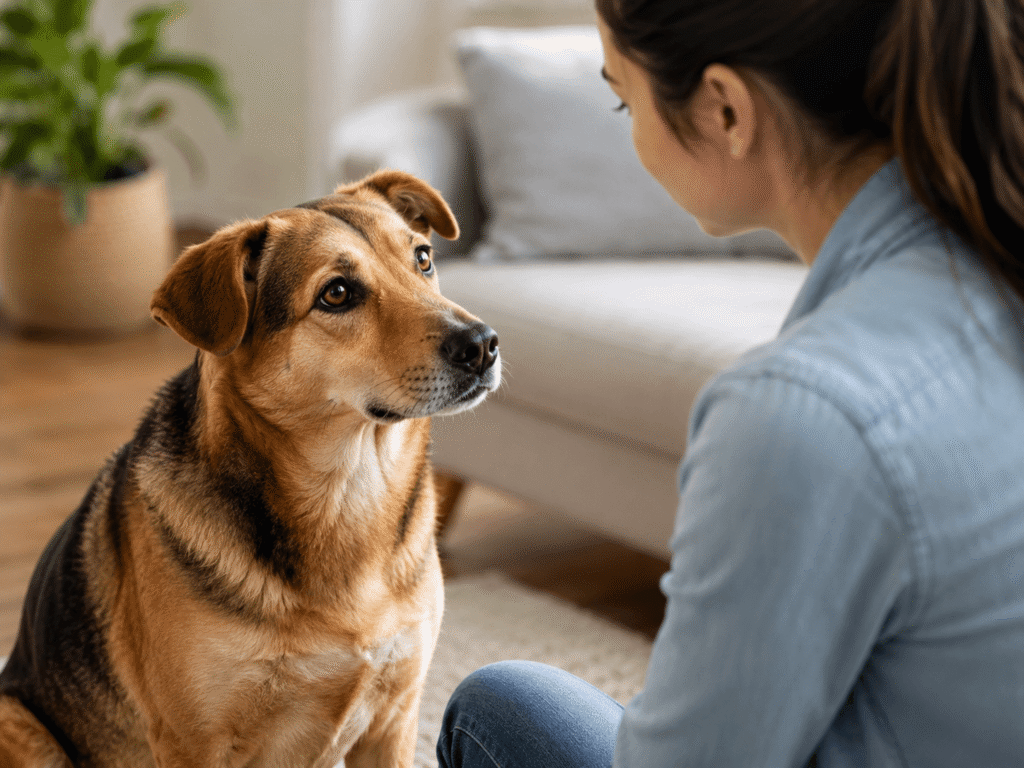
A stare becomes more meaningful when it’s accompanied by other body-language signals.
➡A dog that is uncomfortable may stare while also showing signs such as:
- A stiff or tense body
- Ears held unusually far back or forward
- Lip licking
- Yawning when not tired
- Turning the head away
- Whale eye, where the whites of the eyes are visible
- Tucked tail
- Freezing
- Growling or showing teeth
A dog doesn’t need to display all of these signs to be uncomfortable.
◾Pay attention to the whole dog
Never interpret eye contact in isolation.
For example, a dog standing loosely with a relaxed tail and soft facial expression is communicating something very different from a dog standing rigidly, staring intensely, and refusing to move.
If your dog appears uncomfortable, give them space rather than approaching them to force interaction.
This is particularly important around children. Teach children to avoid hugging, cornering, climbing on, or staring directly into a dog’s face.
6. Your Dog Could Be Watching You for Food
Let’s be honest: sometimes the explanation is simply dinner.
Dogs are opportunistic learners. If staring at you has occasionally resulted in a tasty reward, your dog may have discovered that eye contact is an effective strategy.
➡You might notice the stare becoming especially intense when you’re:
- Eating at the table
- Preparing meat
- Opening a snack
- Cooking dinner
- Holding a treat
If you don’t want begging to become a habit, avoid rewarding persistent staring with food from your plate.
Instead, teach an alternative behavior, such as lying on a mat while you eat, and reward that behavior consistently.
7. When a Dog Stare Could Mean Something Is Wrong
Most staring is harmless, but a sudden change in behavior shouldn’t automatically be dismissed.
Contact your veterinarian if staring is new, persistent, or accompanied by other unusual signs, particularly if your dog seems confused or disconnected from their surroundings.
➡Watch for changes such as:
- Staring at walls or empty spaces repeatedly
- Seeming confused about familiar surroundings
- Unusual pacing
- Episodes of appearing unresponsive
- Repetitive movements
- Sudden changes in sleep or behavior
- Difficulty walking
- Loss of coordination
- Changes in appetite or thirst
- Signs of pain or illness
These symptoms can have many possible causes, including medical or neurological problems. A veterinarian is the right person to determine what is happening.
◾Don’t diagnose from staring alone
A single episode of staring doesn’t tell you what is wrong.
The useful information is the bigger picture: when it happens, how long it lasts, what your dog does during it, and whether anything else has changed.
💡If possible, record an unusual episode on your phone. A short video can give your veterinarian valuable information about behavior that may not occur during the appointment.
✅How to Tell What Your Dog’s Stare Means
A simple way to interpret a dog stare is to use three questions:
◻What happened immediately before the stare?
Did you pick up the leash, open the refrigerator, sit down, or give a command?
◻What does the rest of your dog’s body look like?
Relaxed posture and soft eyes suggest something different from stiffness, tension, or obvious stress.
◻What does your dog do afterward?
Does your dog bring you a toy, walk toward the door, lie down, or retreat?
Over time, you’ll probably recognize your dog’s individual patterns. Dogs develop their own communication styles with the people they know best.
📑Frequently Asked Questions About Dog Staring
➖Why does my dog stare at me without blinking?
Your dog may be watching you for information, asking for something, or simply maintaining attention. Look at their overall body language and the situation before deciding what the stare means.
➖Why does my dog stare at me when I eat?
Your dog may have learned that staring sometimes results in food. If you don’t want begging, avoid rewarding the behavior and teach your dog an alternative, such as settling on a bed or mat.
➖Why does my dog follow me everywhere and stare at me?
Following and staring can be normal social behavior, especially in dogs that are strongly bonded to their owners. However, if your dog becomes distressed whenever you leave, talk with a veterinarian or qualified behavior professional about possible separation-related problems.
➖Is it bad when a dog stares at you?
Not necessarily. A relaxed dog stare is often harmless and can be part of normal communication. A tense stare accompanied by stiff posture, growling, freezing, or other stress signals should be taken seriously.
➖Should I stare back at my dog?
You don’t need to deliberately stare back. If your dog is relaxed and comfortable, gentle eye contact is usually fine. If your dog appears nervous or tense, look away and give them space.
🎯Final Thoughts: Read the Whole Message
A dog stare doesn’t have one universal meaning. Your dog could be asking for dinner, waiting for a walk, watching your next move, seeking attention, showing affection, or communicating uncertainty.
The key is to look beyond the eyes.
Consider your dog’s posture, ears, tail, facial expression, recent experiences, and what happens immediately after the stare. If the behavior is sudden or comes with confusion, pain, or other unusual symptoms, seek veterinary advice rather than trying to diagnose the cause yourself.
Once you learn to read these small signals, everyday interactions with your dog become much easier to understand.