Why Cats Knead Blankets?
Have you ever watched your cat rhythmically push their paws into a soft blanket while purring happily and wondered, “Why Do Cats Knead Blankets?” 😺🧶
This charming behavior, often called “making biscuits,” is one of the most beloved and mysterious feline habits. Some cats knead every night before bedtime, while others prefer your favorite throw blanket—or even your lap!
The good news? In most cases, kneading is completely normal and actually reveals fascinating insights into your cat’s emotions, instincts, and relationship with you.
In this comprehensive guide, you’ll learn exactly why cats knead blankets, whether it’s a sign of happiness or stress, and what you should do when your furry friend starts their biscuit-making routine.
What Is Kneading? 🤔
Kneading is a repetitive motion where cats push their front paws alternately against a soft surface.
The movement resembles someone kneading bread dough, which is why many cat lovers affectionately call it “making biscuits.” 🥖😻
Cats may knead:
- Blankets 🧶
- Pillows
- Bedsheets
- Soft toys
- Their owner’s lap
- Other pets
Some cats purr loudly while kneading. Others drool, close their eyes, or enter an almost trance-like state of relaxation.
The Origins of Kneading Behavior 🐾
To understand why do cats knead blankets, we need to look back to kittenhood.
When kittens nurse from their mother, they instinctively press their tiny paws around the mother’s mammary glands.
This stimulates milk flow and helps them feed more efficiently.
Because this action is associated with:
- Warmth
- Safety
- Nourishment
- Love
- Security
many cats carry the behavior into adulthood.
7 Fascinating Reasons Why Do Cats Knead Blankets? 😺
1. They Remember Nursing Days 🍼
The strongest explanation is rooted in early life experiences.
As kittens:
- They kneaded to receive milk.
- They associated kneading with comfort.
- Their mothers often purred while caring for them.
Adult cats may knead soft blankets because those textures remind them of their mother’s fur.
It’s a comforting throwback to one of the safest periods of their lives.
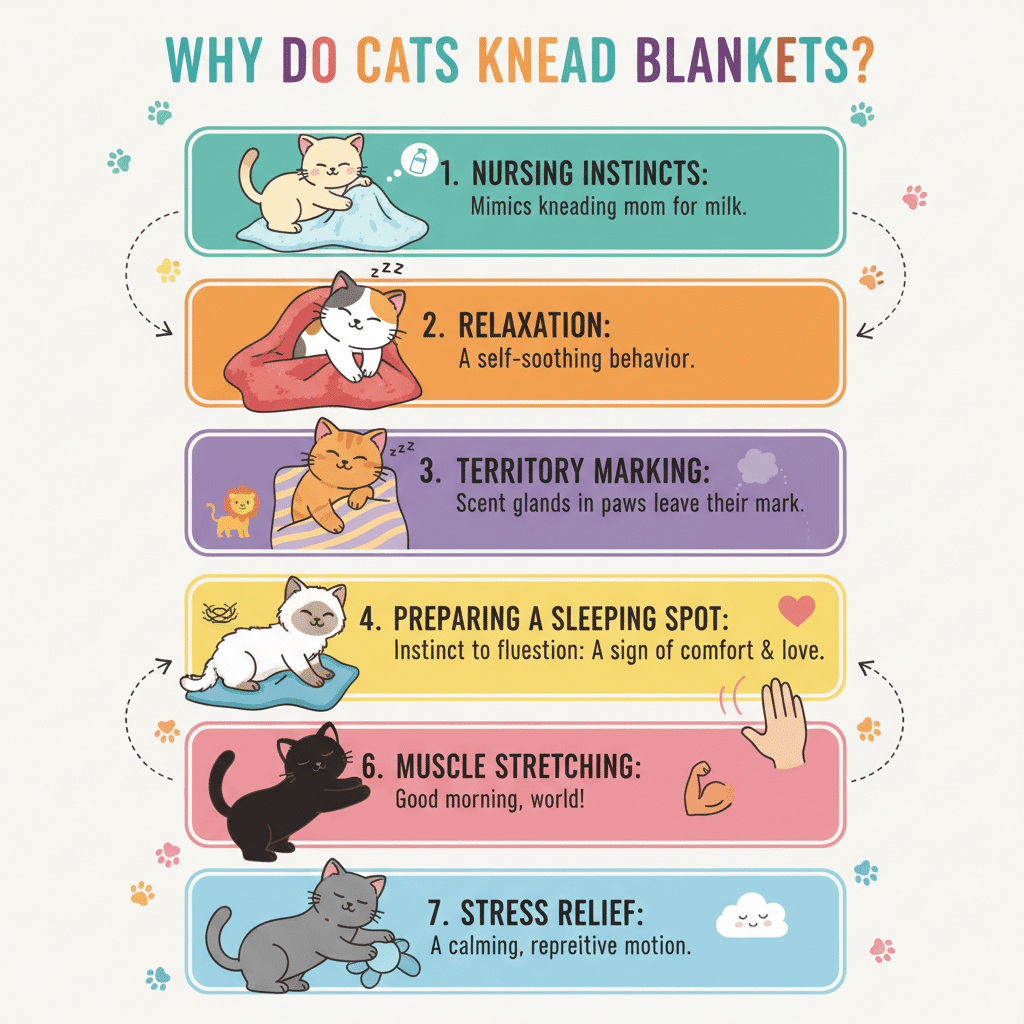
2. They’re Feeling Happy and Relaxed 😌
Many cats knead when they’re content.
Signs include:
- Slow blinking
- Purring
- Half-closed eyes
- Curled tails
- Relaxed posture
If your cat climbs onto a cozy blanket and starts kneading, they’re often expressing pure satisfaction.
Think of it as the feline version of sighing with happiness after settling into a comfortable bed.
3. They’re Marking Their Territory 🏠
Cats have scent glands located in their paws.
Every time they knead, tiny amounts of scent transfer onto the surface.
This helps them communicate:
“This belongs to me.”
Blankets often absorb scents well, making them ideal targets for territorial marking.
While humans can’t detect these scents, other cats certainly can.
4. They’re Preparing a Sleeping Spot 🛏️
Wild feline ancestors flattened grass and leaves before resting.
Domestic cats may retain this instinct.
Kneading helps them:
- Test softness
- Create comfort
- Prepare a nesting area
- Ensure safety
Even though your cat has luxurious blankets, ancient instincts still influence modern behaviors.
5. They’re Showing You Love ❤️
When cats knead their owners, it’s often a huge compliment.
They’re signaling trust and affection.
You represent:
- Safety
- Food
- Companionship
- Protection
In other words:
Your cat feels completely at ease around you.
That’s a special bond worth celebrating.
6. They’re Stretching Their Muscles 🧘
Kneading isn’t just emotional.
It’s physical exercise, too.
Benefits include stretching:
- Shoulders
- Front legs
- Paws
- Tendons
- Toes
After waking up from a nap, kneading can function like a gentle feline yoga routine.
7. They’re Managing Stress 😿
Occasionally, kneading serves as self-soothing behavior.
Changes that may trigger stress include:
- Moving homes
- New pets
- Visitors
- Loud noises
- Routine disruptions
Kneading can help cats regulate emotions and restore feelings of security.
However, excessive kneading combined with behavioral changes deserves veterinary attention.
Read More ➖ Working at Home With a Cat: Olga’s Pressure for an Early Dinner
Why Some Cats Knead More Than Others 🐱
Not every cat becomes a master biscuit maker.
Several factors influence frequency.
Breed Differences
Some owners report more kneading among:
- Siamese
- Burmese
- Ragdolls
- Domestic shorthairs
Although scientific evidence remains limited, genetics may contribute.
Personality
Affectionate cats often knead more.
Independent cats may rarely display the behavior.
Early Weaning
Some experts believe kittens separated from their mothers too early may continue nursing-associated behaviors into adulthood.
Is Kneading Ever a Problem? ⚠️
Usually, no.
Kneading is considered normal feline behavior.
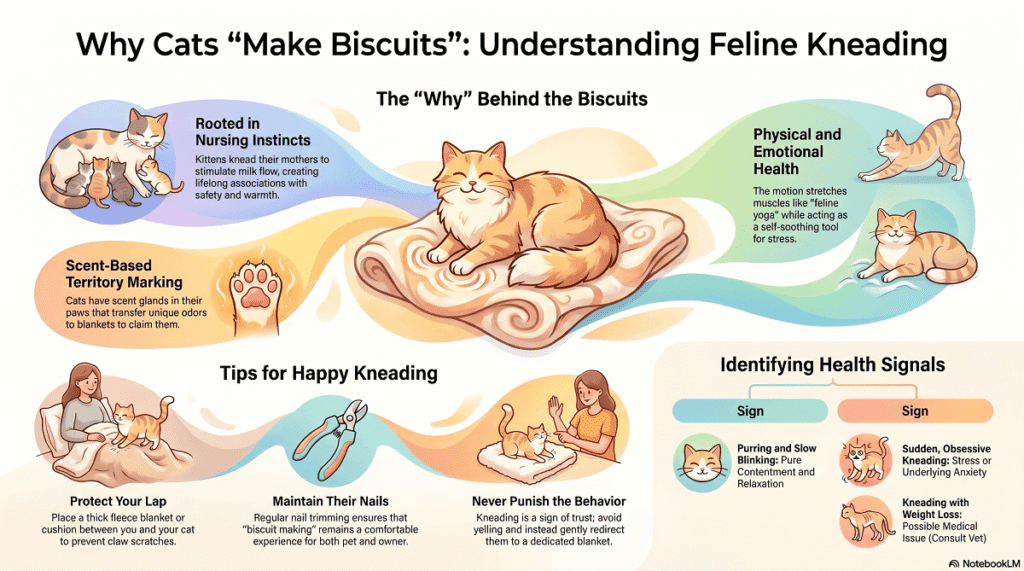
However, consult your veterinarian if you notice:
- Sudden onset of obsessive kneading
- Weight loss
- Appetite changes
- Excessive vocalization
- Signs of pain
- Skin irritation from over-grooming
- Anxiety-related symptoms
Behavioral shifts can sometimes indicate underlying medical issues.
How Should You Respond When Your Cat Kneads? 😻
Do Encourage It
If the behavior isn’t causing harm:
✅ Let them enjoy it.
Protect Your Lap
Cats sometimes forget how sharp their claws are.
Try:
- Thick blankets
- Cushions
- Wearing jeans
Trim Their Nails
Regular nail maintenance prevents accidental scratches.
Offer Dedicated Blankets
Many cats love having their own kneading station.
Soft fleece blankets are often favorites.
Should You Stop Your Cat From Kneading? 🚫
Generally, no.
Avoid:
- Punishment
- Yelling
- Pushing them away harshly
These responses can create fear and damage trust.
Instead:
Redirect Gently
Use:
- A favorite blanket
- Soft pet bedding
- Positive reinforcement
If kneading becomes destructive, behavioral guidance from your veterinarian may help.
Fun Facts About Cat Kneading 🎉
- 😺 Some cats drool while kneading.
- 🐾 Others suckle blankets simultaneously.
- 🧶 Not all cats knead.
- ❤️ Purring often accompanies kneading.
- 🌿 Wild ancestors likely kneaded vegetation before resting.
- 💤 Many cats knead right before naps.
The Emotional Meaning Behind Kneading
When asking, “Why Do Cats Knead Blankets?”, many owners worry something is wrong.
Most of the time, the opposite is true.
Kneading often means your cat feels:
- Safe
- Relaxed
- Loved
- Comfortable
- Content
It’s one of the clearest displays of feline trust.
Rather than viewing it as odd behavior, consider it an honor.
Your cat has chosen your home—and perhaps your favorite blanket—as their happy place.
Read More ➖ Why Does My Cat Follow Me Everywhere? Understanding Your Feline Shadow
FAQs: Why Do Cats Knead Blankets? ❓
1. Why do cats knead blankets and purr?
Purring combined with kneading usually signals contentment, relaxation, and emotional comfort.
2. Why does my cat knead me before sleeping?
Your cat likely sees you as a source of security and affection and is preparing for rest.
3. Is kneading a sign of stress?
Sometimes. Occasional kneading is normal, but sudden excessive kneading alongside other symptoms may indicate anxiety.
4. Why do cats knead and bite blankets?
This behavior can stem from kittenhood nursing instincts and comforting associations.
5. Should I stop my cat from kneading?
Usually not. Gentle redirection is preferable if claws become uncomfortable.
6. Do all cats knead blankets?
No. Some cats knead frequently, while others rarely or never exhibit the behavior.
7. Why does my adult cat still knead like a kitten?
Adult cats often retain behaviors linked to positive early experiences and emotional comfort.
Expert Advice and Additional Resources 📚
If you’re interested in learning more about feline behavior, the American Society for the Prevention of Cruelty to Animals (ASPCA) provides reliable information on understanding your cat’s habits and needs.
Visit: https://www.aspca.org/pet-care/cat-care
Understanding natural behaviors can strengthen the bond between you and your feline companion.
Conclusion: Why Do Cats Knead Blankets? 😺🧶❤️
So, why do cats knead blankets?
The answer lies in a beautiful combination of instinct, comfort, affection, communication, and emotional well-being.
Whether your cat is remembering kittenhood, marking territory, stretching after a nap, or simply expressing love, kneading is usually a reassuring sign that they feel secure in their environment.
The next time your furry friend starts making biscuits on your favorite blanket, pause and appreciate the moment.
Behind those tiny paws is a powerful message:
“I feel safe, happy, and at home with you.” 🐾💕