Why Does My Cat Follow Me Everywhere? Understanding Your Feline Shadow
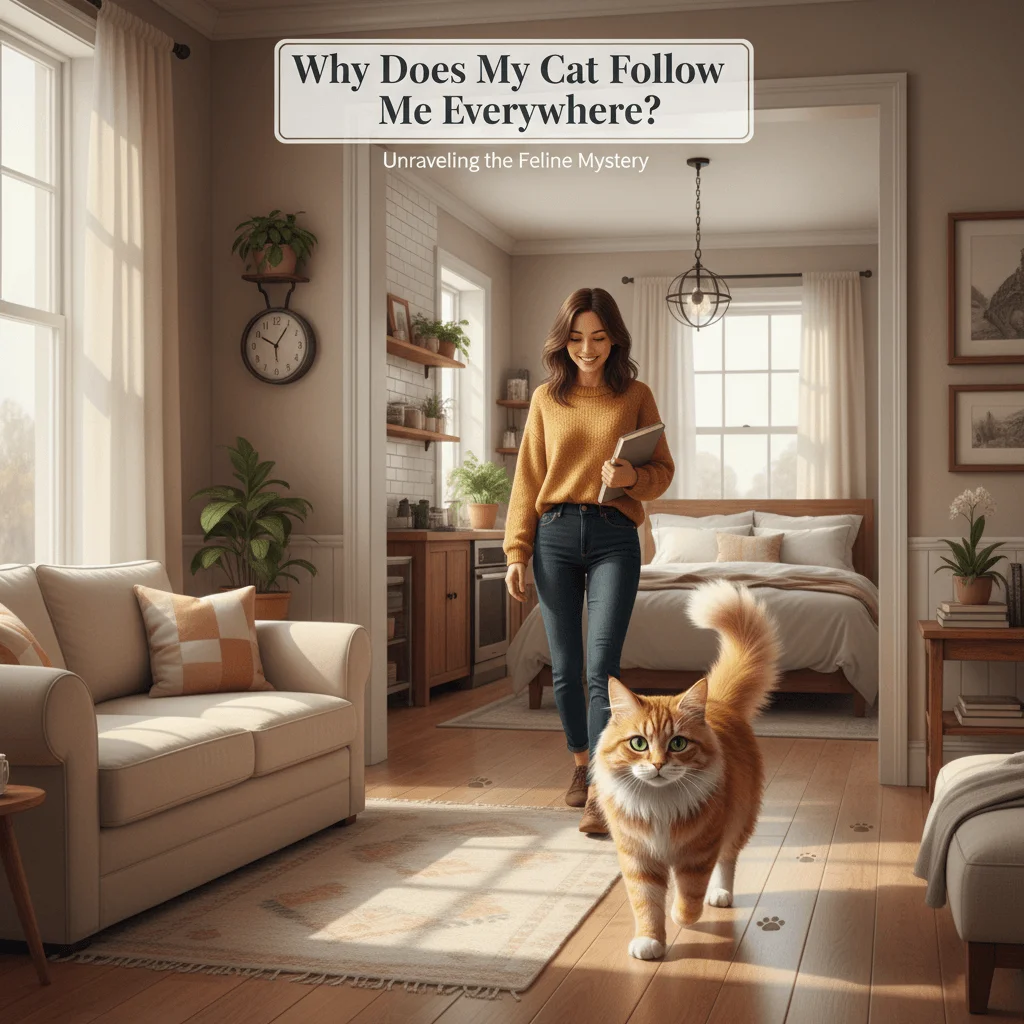
Have you ever stood up to grab a snack, only to find your cat trotting behind you? Or perhaps you’ve noticed tiny paws following you from room to room, even into the bathroom. If you’ve been wondering, “Why Does My Cat Follow Me Everywhere?”, you’re definitely not alone.
Many cat owners assume that cats are distant and independent creatures. Yet countless feline companions act more like loyal sidekicks, supervising every household activity. 😸
The truth is that this behavior can mean many different things. Sometimes it’s a sign of affection. Other times, it’s driven by curiosity, habit, hunger, or even underlying health concerns.
In this comprehensive guide, we’ll explore the most common explanations behind your cat’s shadow-like behavior, how to tell whether it’s normal, and what you can do if your furry friend becomes overly attached.
Understanding Cat Following Behavior 🐾
Cats have a reputation for being independent. Unlike dogs, they don’t always seek constant interaction. However, modern studies and everyday experience suggest that cats form deep social bonds with their humans.
Following behavior is one of the many ways cats communicate. Depending on the context, your feline companion may be expressing trust, affection, curiosity, or a practical need.
The key is observing the circumstances surrounding the behavior.
Ask yourself:
- Does your cat only follow you near feeding times?
- Has the behavior suddenly appeared?
- Does your cat seem distressed when separated?
- Is your pet otherwise healthy and active?
The answers often reveal the true motivation behind the behavior.
1. Your Cat Loves You ❤️
One of the sweetest answers to Why Does My Cat Follow Me Everywhere? is simple:
They genuinely enjoy your company.
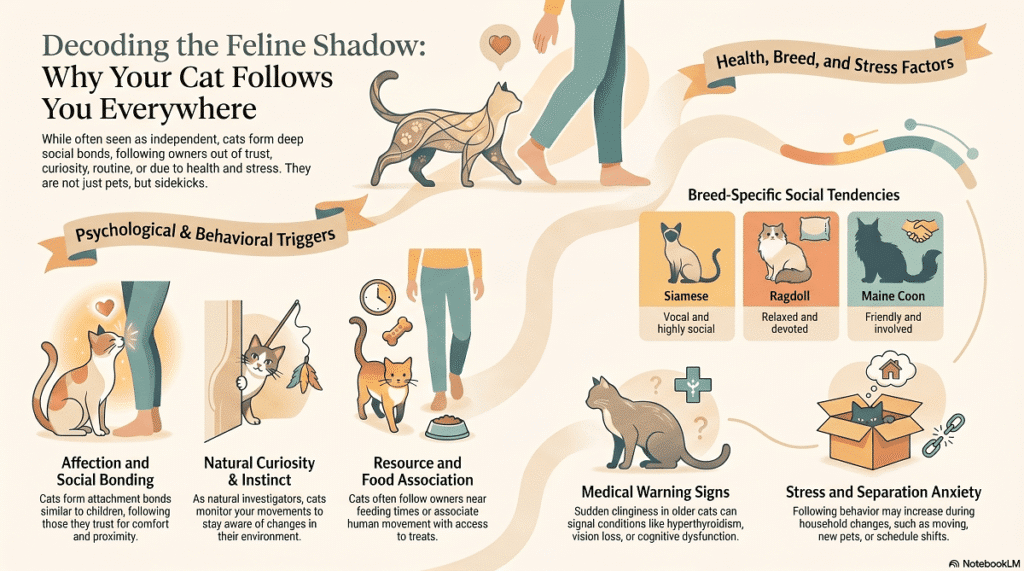
Cats form attachment bonds with their caregivers similar to those observed in young children and dogs. When your cat follows you from room to room, they may simply want to be near someone they trust.
Signs of affection include:
- Slow blinking 😻
- Purring
- Head bunting
- Kneading
- Sleeping near you
- Greeting you at the door
If your cat appears relaxed and content while following you, affection is often the explanation.
How Cats Show Love Differently
Unlike dogs, cats usually express love subtly. Following behavior is their quiet way of saying:
“You’re my favorite human.”
2. Curiosity Is in Their Nature 🔍
Cats are natural investigators.
Every movement you make presents an opportunity for exploration.
Are you opening a cabinet?
Walking into a room?
Carrying bags?
Your cat wants to know what’s happening.
Why Curiosity Drives Following
Cats evolved as both predators and prey. Staying aware of environmental changes increased survival.
As a result, your routine activities become fascinating events.
Common curiosity triggers include:
- Laundry baskets
- Grocery bags
- Closed doors
- Running water
- Rearranging furniture
- New household objects
For your cat, you’re the star of the household entertainment channel. 📺😹
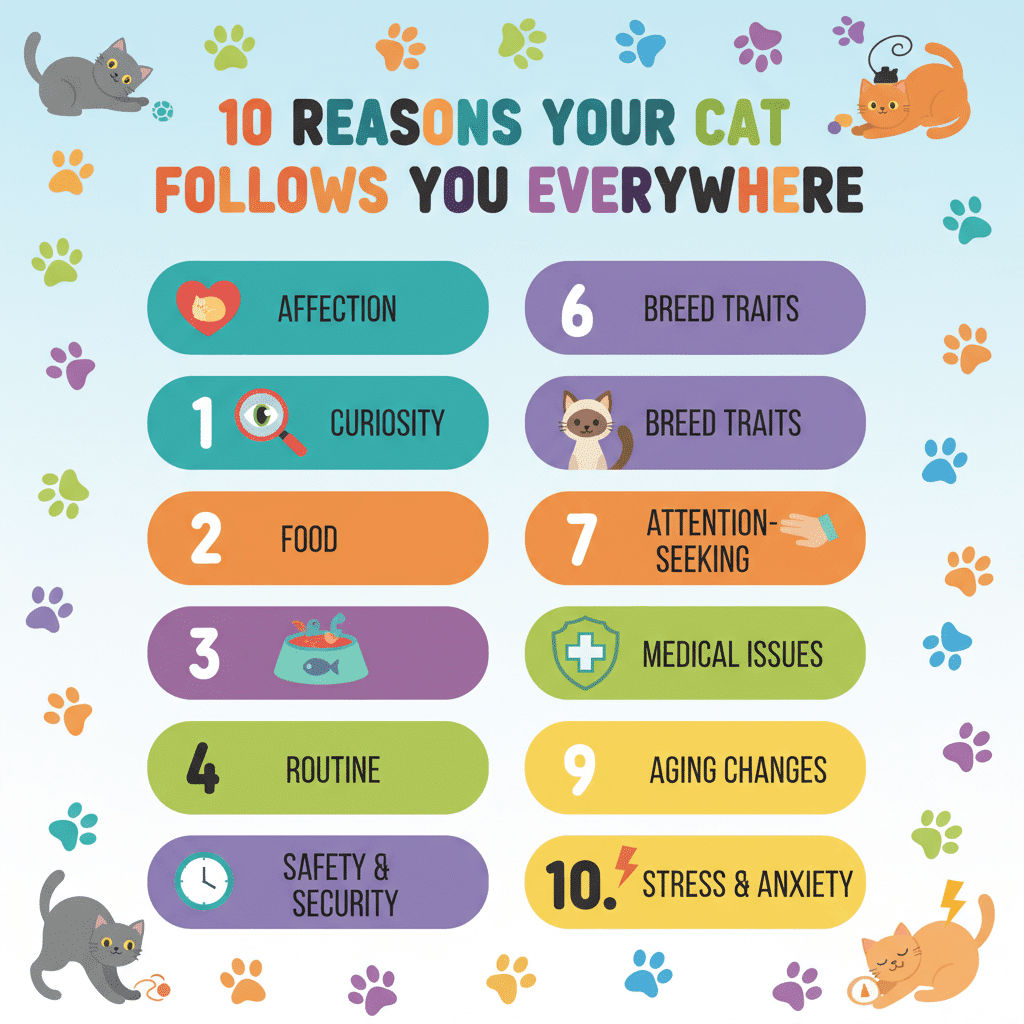
3. They Associate You With Food 🍗
Food is one of the strongest motivators in the feline world.
Many cats quickly learn that humans control access to meals, treats, and snacks.
If your cat seems especially attentive around:
- Breakfast time
- Dinner preparation
- Treat containers
- Refrigerator visits
they may simply be reminding you that food service should never be delayed.
How to Recognize Food-Motivated Following
Food-related following usually includes:
- Meowing loudly
- Leading you toward the kitchen
- Rubbing against your legs
- Increased activity near feeding schedules
Consistency in feeding routines can help reduce excessive food-seeking behavior.
4. Routine and Habit ⏰
Cats thrive on predictability.
They often establish routines based on household patterns.
If you spend every evening reading in the living room, your cat may automatically accompany you.
Over time, following becomes part of daily life.
Examples of Habit-Based Following
- Joining your morning coffee ritual ☕
- Following bedtime routines 🛏️
- Supervising chores 🧹
- Watching you work from home 💻
These predictable interactions help cats feel secure.
5. Your Cat Feels Safe Around You 🏡
To your cat, you may represent safety and stability.
Even confident cats seek reassurance from trusted companions.
This is particularly common in:
- Newly adopted cats
- Rescue animals
- Cats adjusting to new environments
- Households with recent changes
Following you allows your cat to monitor their surroundings while remaining close to a source of comfort.
Building Security
You can reinforce your cat’s confidence by:
- Maintaining routines
- Offering safe hiding spaces
- Providing enrichment toys
- Using gentle interactions
A secure cat often demonstrates healthy attachment rather than dependency.
Read More 👉 7 Powerful Secrets to Choosing the Best Litter Box Location for a Happy, Healthy Cat
6. Breed Tendencies 🐈
Certain breeds naturally display stronger social tendencies.
These cats often crave interaction and companionship.
Breeds Known for Following Owners
| Breed | Personality |
|---|---|
| Siamese | Vocal and highly social |
| Burmese | Affectionate and people-oriented |
| Ragdoll | Relaxed and devoted |
| Maine Coon | Friendly and involved |
| Sphynx | Extremely affectionate |
| Tonkinese | Interactive and playful |
If you own one of these breeds, having a feline shadow is perfectly normal.
7. Attention-Seeking Behavior 🎾
Sometimes, your cat simply wants engagement.
If they aren’t receiving enough stimulation, following you becomes an invitation to interact.
Signs Your Cat Wants Attention
- Meowing frequently
- Pawing at you
- Bringing toys
- Jumping onto your workspace
- Interrupting activities
Ways to Increase Enrichment
Try adding:
- Puzzle feeders 🧩
- Interactive wand toys
- Climbing trees 🌳
- Window perches
- Scheduled play sessions
Mental stimulation often reduces excessive clinginess.
8. Medical Reasons to Consider 🩺
A sudden increase in following behavior should never be ignored.
Sometimes, health problems contribute to behavioral changes.
Conditions That May Cause Increased Attachment
- Hyperthyroidism
- High blood pressure
- Cognitive dysfunction
- Vision loss
- Hearing impairment
- Chronic pain
- Diabetes
Older cats are especially vulnerable to age-related conditions.
Warning Signs
Contact your veterinarian if following behavior appears alongside:
- Weight loss
- Increased thirst
- Appetite changes
- Disorientation
- Restlessness
- Vocalization changes
- Litter box issues
Early intervention can significantly improve outcomes.
9. Age-Related Changes 👵🐱
Senior cats often become more attached.
As they age, they may experience sensory decline or cognitive changes.
Seeking proximity can provide reassurance.
How Aging Influences Behavior
Older cats may:
- Sleep closer to owners
- Become more vocal
- Follow during nighttime
- Seek additional comfort
Compassion and routine become increasingly important during this life stage.
10. Stress and Anxiety 😿
Environmental changes can increase clingy behavior.
Common stressors include:
- Moving homes 📦
- New pets 🐶
- New babies 👶
- Renovations 🔨
- Changes in schedules
- Visitors staying over
Following you may help your cat cope with uncertainty.
Reducing Anxiety
Strategies include:
- Preserving routines
- Creating quiet retreats
- Providing vertical spaces
- Using veterinarian-approved calming products
- Offering reassurance through play
Addressing stress early prevents escalation.
How to Respond to a Clingy Cat 🐾
If your cat follows you constantly, there’s usually no need to worry.
However, balance is important.
Do
✅ Provide daily playtime.
✅ Maintain feeding routines.
✅ Offer affection on their terms.
✅ Schedule regular veterinary visits.
✅ Encourage independent activities.
Don’t
❌ Punish following behavior.
❌ Force separation suddenly.
❌ Ignore sudden behavioral changes.
❌ Assume clinginess is always harmless.
Positive reinforcement creates a healthy relationship.
When Should You Contact a Veterinarian? 📧🩺
While following behavior is often normal, seek professional advice if:
- The behavior develops suddenly.
- Your cat appears distressed.
- Appetite changes occur.
- Sleep patterns shift dramatically.
- Excessive vocalization begins.
- Mobility decreases.
- Senior cats exhibit confusion.
Behavioral changes are sometimes the earliest indicators of illness.
Prompt evaluation protects your cat’s well-being.
Frequently Asked Questions (FAQs) ❓
1. Why does my cat follow me everywhere but not other family members?
Cats form individual attachment bonds. They often choose the person who feeds them, plays with them, or makes them feel safest.
2. Is it normal for my cat to follow me into the bathroom?
Yes. Bathrooms contain interesting sounds, running water, and a temporarily captive human audience. 😹
3. Why has my cat suddenly started following me everywhere?
Sudden changes may reflect stress, aging, illness, or environmental changes. Consult a veterinarian if the behavior persists or accompanies other symptoms.
4. Does following behavior mean my cat has separation anxiety?
Not necessarily. Most cats that follow owners are simply affectionate or curious. Separation anxiety usually involves distress when left alone.
5. Can boredom make my cat clingy?
Absolutely. Cats lacking enrichment often seek stimulation through increased interaction with their humans.
6. Should I discourage my cat from following me?
Usually no. If the behavior isn’t excessive or distressing, it’s a healthy expression of your bond.
7. Which cat breeds are most likely to follow their owners?
Siamese, Burmese, Ragdolls, Maine Coons, Sphynx cats, and Tonkinese breeds commonly display this trait.
Read More 👉 Best Litter for Automatic Litter Box for Odor Control & Easy Cleaning
Conclusion: Why Does My Cat Follow Me Everywhere? 😻
So, Why Does My Cat Follow Me Everywhere?
In most cases, the answer is heartwarming: your cat trusts you, enjoys your presence, and considers you an important part of their world.
Whether motivated by affection, curiosity, routine, food, or a need for security, following behavior often reflects the unique bond shared between humans and their feline companions.
At the same time, it’s wise to pay attention to sudden behavioral changes, especially in older cats. Understanding the context allows you to distinguish normal attachment from potential health concerns.
The next time tiny paws trail behind you through the house, take a moment to appreciate what they might be saying:
“I choose to be near you.” 🐾❤️
For more information on feline behavior and wellness, visit the American Association of Feline Practitioners (AAFP): https://catvets.com/.