7 Surprising Reasons Why Cat Has Bizarre Eating Habits Can Be a Fascinating Mystery

If your Cat Has Bizarre Eating Habits, you’re definitely not alone. Many cat owners notice unusual food behaviors that leave them confused, amused, or even worried. Some cats only eat from one side of the bowl, while others refuse food unless it is served in a very specific way. Some even prefer drinking from the bathroom sink instead of their clean water bowl!
These strange eating habits can happen for many reasons. Sometimes it’s simply personality. Other times, it may signal stress, discomfort, or even a hidden health issue. Understanding why your cat behaves this way helps you provide better care and avoid unnecessary worry.
Cats are naturally picky creatures. Their instincts, environment, and health all affect how they eat. Unlike dogs, cats often make food decisions based on texture, smell, temperature, and even bowl placement.
In this article, we’ll explore why a Cat Has Bizarre Eating Habits, what signs to watch for, and how you can help your furry friend enjoy healthier mealtimes. Whether your cat steals bread, licks plastic bags, or refuses perfectly good food for mysterious reasons, there’s usually an explanation.
According to the American Veterinary Medical Association, monitoring eating habits is one of the best ways to track your pet’s health. You can learn more from trusted resources like the .
Let’s dive into the curious world of feline dining habits.
✅Understanding Normal Cat Eating Behavior
Cats may seem mysterious, but their eating habits often follow strong natural instincts. Before worrying that your Cat Has Bizarre Eating Habits, it helps to understand what is considered normal feline behavior.
Unlike humans, cats are hunters by nature. Their ancestors survived by catching several small prey animals throughout the day rather than eating large meals. This instinct still exists in house cats today.
▶How Domestic Cats Develop Food Preferences
Cats form food preferences early in life. Kittens exposed to different textures and flavors usually become less picky adults. However, some cats strongly prefer one type of food and reject everything else.
For example, a cat raised mostly on wet food may refuse dry kibble completely. Others may only accept food served at room temperature because cold food smells weaker.
Smell plays a huge role in feline appetite. Cats rely more on scent than taste when choosing food. If something smells “wrong,” they may walk away immediately.
Texture also matters. Some cats love crunchy kibble, while others prefer soft pâté-style meals. This is why one cat may happily eat fish but refuse chicken from the same brand.
▶Natural Hunting Instincts and Feeding Patterns
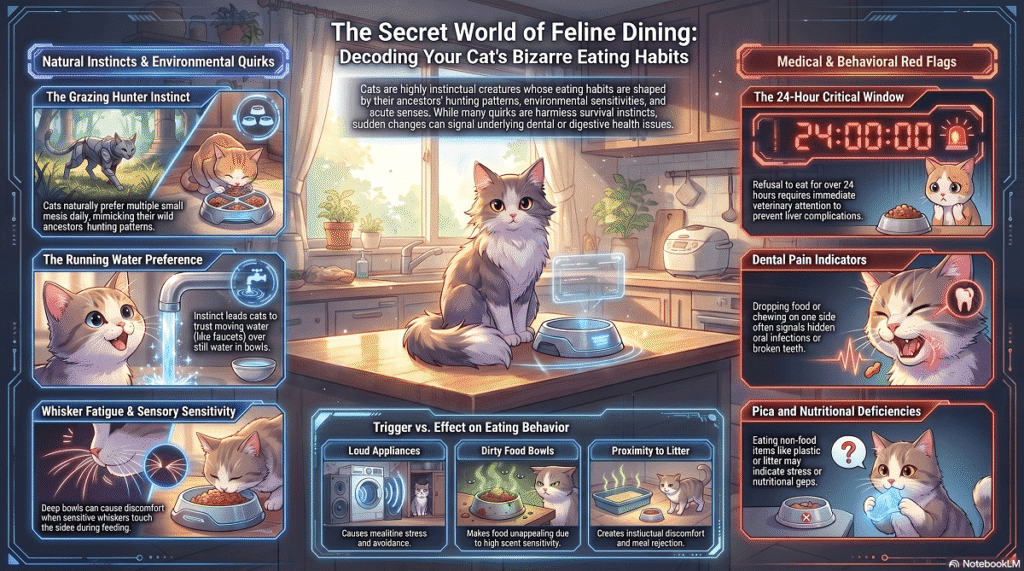
Cats often prefer multiple small meals rather than one large serving. This reflects their wild hunting pattern. A cat may nibble throughout the day instead of finishing everything at once.
Some behaviors that seem strange are actually normal instincts:
- Pawing at food before eating
- Watching the room while chewing
- Carrying food away from the bowl
- Drinking water away from the food station
- Eating only when the house is quiet
These habits help cats feel safe and in control.
So when a Cat Has Bizarre Eating Habits, it may simply be following deeply rooted survival instincts rather than being difficult.
✅Why Cat Has Bizarre Eating Habits Happens
When a Cat Has Bizarre Eating Habits, there is usually a reason behind it. Cats rarely do things randomly. Their strange food behaviors often come from emotional, environmental, or instinctive triggers.
Understanding the cause helps owners respond correctly instead of guessing.
▶Behavioral Reasons Behind Strange Eating Patterns
Some eating habits are connected to behavior rather than illness. Cats are creatures of routine, and even small changes can affect how they eat.
Common behavioral causes include:
- Boredom
- Attention-seeking behavior
- Anxiety from household changes
- Competition with other pets
- Negative past experiences with food
For example, if a cat once felt sick after eating a certain flavor, it may avoid that food forever—even if the food wasn’t the real cause.
Some cats also learn that refusing food gets attention. If owners immediately offer treats or different meals, the cat may repeat the behavior.
Playing with food can also be linked to hunting instincts. Swatting kibble around the floor may simply feel more natural than eating directly from a bowl.
▶Environmental Triggers That Affect Appetite
Cats are highly sensitive to their surroundings. Bowl placement, noise, and even lighting can affect eating behavior.
Common environmental triggers include:
| Trigger | Effect on Eating |
|---|---|
| Loud appliances nearby | Causes stress during meals |
| Dirty food bowls | Makes food less appealing |
| Bowl too close to litter box | Creates discomfort |
| Other pets nearby | Leads to food guarding |
| Sudden food brand changes | Causes rejection |
Even the shape of the bowl matters. Some cats dislike deep bowls because their whiskers touch the sides, causing “whisker fatigue.”
So yes, when a Cat Has Bizarre Eating Habits, the answer may be as simple as moving the food bowl to a quieter place.

✅Common Examples of Bizarre Cat Eating Habits
Every cat owner eventually notices something strange at mealtime. When a Cat Has Bizarre Eating Habits, the behavior can range from funny to frustrating.
Some habits are harmless quirks, while others may need attention.
▶Eating Only Specific Colors of Food
Yes—some cats truly prefer certain colors.
A cat may ignore brown kibble but eagerly eat red pieces. This usually relates to smell, shape, or texture rather than actual color, but the result looks very strange.
Cats are surprisingly sensitive to consistency. Even a tiny recipe change can make them reject a food they loved yesterday.
▶Drinking Water from Unusual Places
Many cats ignore their water bowl completely and prefer:
- Bathroom sinks
- Shower floors
- Glasses on tables
- Toilet bowls
- Outdoor puddles
Running water often feels fresher and safer to cats. In nature, still water can be risky, while moving water is usually cleaner.
This explains why many cats become obsessed with dripping faucets.
▶Stealing Human Food Unexpectedly
Some cats become tiny food thieves.
They may steal:
- Bread
- Chips
- Cheese
- Butter
- Chicken
- Ice cream
Oddly, many cats target foods they shouldn’t even like. This may be driven by smell, texture, or simple curiosity.
▶Playing With Food Before Eating
Some cats slap food across the kitchen like it’s a toy.
This often comes from hunting instincts. Moving prey is more exciting than still prey, so batting food around may feel natural.
If your Cat Has Bizarre Eating Habits, these examples show you’re definitely not alone.
✅Medical Reasons Behind Strange Eating Behavior
Sometimes, when a Cat Has Bizarre Eating Habits, the reason goes beyond personality or routine. Health problems can change appetite, food choices, and even the way a cat approaches the food bowl.
This is why sudden eating changes should never be ignored.
▶Dental Problems and Oral Pain
Dental pain is one of the most common hidden reasons behind strange eating habits.
A cat with tooth pain may:
- Drop food while chewing
- Eat only soft food
- Avoid dry kibble
- Chew on one side of the mouth
- Approach food but walk away
Gum disease, broken teeth, and mouth infections can make eating uncomfortable. Since cats are good at hiding pain, owners may only notice changes in food behavior first.
If your cat suddenly stops eating crunchy food, dental issues may be the cause.
▶Digestive Issues and Food Intolerance
Stomach discomfort can also explain why a Cat Has Bizarre Eating Habits.
Digestive problems may include:
- Vomiting after meals
- Diarrhea
- Constipation
- Food allergies
- Sensitivity to certain ingredients
A cat may begin avoiding food that reminds them of previous discomfort. Even healthy food can become “bad” in their mind if they once felt sick afterward.
This is why slow food transitions are important. Sudden diet changes can upset digestion and create long-term food refusal.
▶Stress, Anxiety, and Appetite Changes
Cats are sensitive animals, and emotional stress often affects appetite.
Triggers may include:
- Moving to a new home
- New pets
- New babies
- Loud guests
- Construction noise
- Changes in routine
Stress may cause overeating, undereating, or strange food rituals.
A cat may suddenly demand food at midnight or refuse meals unless the owner stands nearby. These behaviors often reflect emotional insecurity rather than hunger.
When a Cat Has Bizarre Eating Habits, emotional wellness matters just as much as physical health.
✅How Cat Owners Can Identify Serious Problems
Not every strange eating habit is dangerous, but some signs should never be ignored. Knowing the difference helps protect your cat’s health.
When a Cat Has Bizarre Eating Habits, observation becomes your best tool.
▶Warning Signs That Need Veterinary Attention
Some behaviors suggest a medical issue rather than a harmless quirk.
Watch for:
- Refusing food for more than 24 hours
- Sudden weight loss
- Frequent vomiting
- Excessive drooling
- Difficulty chewing
- Bad breath
- Blood in saliva
- Eating non-food items like plastic or litter
This last behavior is called pica and may point to nutritional deficiencies, stress, or illness.
Cats can become seriously ill very quickly if they stop eating, especially overweight cats. Liver complications may develop faster than many owners realize.
If your cat’s habits change suddenly and strongly, a vet visit is the safest choice.
▶Monitoring Daily Feeding Habits at Home
Simple observation can reveal a lot.
Helpful tracking habits include:
| What to Monitor | Why It Matters |
|---|---|
| Food amount eaten | Detects appetite changes |
| Water intake | Shows hydration status |
| Favorite food changes | May reveal discomfort |
| Eating speed | Helps identify stress |
| Weight changes | Tracks overall health |
Some owners keep a small feeding journal. This makes it easier to notice patterns and explain symptoms clearly to the veterinarian.
When a Cat Has Bizarre Eating Habits, details matter.
✅Tips to Manage Cat Has Bizarre Eating Habits
Living with a cat’s strange food routines can be challenging, but small adjustments often make a big difference.
If your Cat Has Bizarre Eating Habits, patience works better than force.
Creating a Consistent Feeding Routine
Cats love predictability.
Try to:
- Feed at the same times daily
- Use the same feeding area
- Avoid sudden food changes
- Keep feeding bowls clean
- Reduce distractions during meals
Routine helps cats feel safe. A predictable schedule lowers anxiety and improves appetite.
Free-feeding all day may work for some cats, but scheduled meals often help identify appetite problems faster.
▶Choosing the Right Food Texture and Flavor
Sometimes the issue is not the food itself—but how it feels.
Experiment carefully with:
- Wet food vs dry food
- Shredded vs pâté textures
- Fish vs poultry flavors
- Warm vs room-temperature meals
Warming wet food slightly can improve smell and increase interest.
However, avoid changing foods too often. Constant switching can create even pickier habits.
▶Reducing Mealtime Stress and Competition
Multi-pet homes often create hidden stress.
Helpful solutions include:
- Separate feeding stations
- Quiet feeding spaces
- Elevated bowls for comfort
- Water bowls away from food
- Slow feeders for anxious eaters
Cats often prefer privacy while eating. A peaceful setup can reduce strange food behavior quickly.
When a Cat Has Bizarre Eating Habits, the solution is often surprisingly simple.
✅Best Foods for Cats with Selective Eating Habits
Choosing the right food can make a huge difference when a Cat Has Bizarre Eating Habits. Selective eaters often need meals that match both their health needs and personal preferences.
The goal is not just feeding them—it’s helping them enjoy eating again.
▶Wet Food vs Dry Food Comparison
Both wet and dry food have benefits, and some picky cats strongly prefer one over the other.
| Type | Benefits | Challenges |
|---|---|---|
| Wet Food | Strong smell, more moisture, easier to chew | Spoils faster, often more expensive |
| Dry Food | Convenient, supports dental scraping, longer shelf life | Less smell, harder for cats with dental pain |
Wet food often works better for older cats or cats with dental sensitivity. The stronger aroma helps stimulate appetite.
Dry food may work better for cats who enjoy crunch and routine.
Some owners combine both for balance.
Read More ➖ How Do Cats Know to Use the Litter Box? Vet-Approved Facts
▶Safe Treats and Healthy Food Rewards
Treats can encourage positive eating habits—but only in moderation.
Good safe options include:
- Cooked plain chicken
- Small tuna portions (occasionally)
- Freeze-dried cat treats
- Vet-approved dental treats
- Special digestive support treats
Avoid feeding:
- Onions
- Garlic
- Chocolate
- Grapes
- Dairy overload
- Highly salty snacks
Human food may seem harmless, but many ingredients are unsafe for cats.
When a Cat Has Bizarre Eating Habits, using healthy rewards instead of unhealthy snacks helps prevent bigger problems later.
Frequently Asked Questions
1. Why does my cat only eat when I watch?
Some cats feel safer eating when their owner is nearby. This can be linked to trust, routine, or mild anxiety.
2. Why does my cat drink from the sink instead of the bowl?
Running water often feels fresher to cats. They naturally trust moving water more than still water.
3. Is it normal for cats to play with food before eating?
Yes, this often reflects hunting instincts. Swatting food can mimic catching prey.
4. Should I worry if my cat suddenly refuses dry food?
Yes, especially if they previously liked it. Dental pain is a common reason and should be checked.
5. Can stress cause strange eating habits in cats?
Absolutely. New pets, moving homes, or loud environments can affect appetite and feeding routines.
6. How long can a cat safely go without eating?
Not long. If a cat refuses food for more than 24 hours, veterinary advice is strongly recommended.
💡Conclusion ▶ When a Cat Has Bizarre Eating Habits, it can feel confusing at first—but most behaviors have a clear explanation. Some habits come from natural instincts, while others may signal stress, discomfort, or medical concerns.
The key is observation.
Notice what changes, when it happens, and how your cat reacts. Small details often reveal big answers. A cat refusing food, stealing bread, or drinking from the sink may simply be expressing instinct—or asking for help.
By creating a calm feeding routine, choosing the right food, and watching for warning signs, you can support healthier habits and stronger trust with your feline friend.
After all, cats may be mysterious—but with patience, their strange eating habits start to make perfect sense.