How Long Can You Leave a Dog Alone? 7 Powerful Facts Every Pet Owner Must Know

Dogs are loyal, loving, and deeply social animals. One of the most common questions pet owners ask is: how long can you leave a dog alone without causing stress, anxiety, or health problems?
The answer depends on several important factors such as age, breed, health, training, and personality. Some dogs can comfortably stay alone for several hours, while others may struggle after just a short time.
Understanding your dog’s needs is essential for responsible pet ownership. Leaving a dog alone too long can lead to emotional distress, destructive behavior, and even health concerns. In this guide, we’ll explore everything you need to know so your furry friend stays happy and healthy.
✅Understanding a Dog’s Need for Companionship
Dogs are not meant to spend long periods isolated from people. Their emotional well-being depends heavily on social interaction.
➖Why Dogs Are Social Animals
Dogs evolved alongside humans and thrive on companionship. Unlike cats, many dogs depend heavily on regular human interaction for emotional security.
In the wild, dogs lived in packs. Today, your family is your dog’s pack. This means long periods alone can feel unnatural and stressful.
A dog that feels secure with regular companionship is often:
- More relaxed
- Better behaved
- Less destructive
- Easier to train
- Emotionally healthier
That’s why asking how long can you leave a dog alone is such an important part of being a responsible owner.
➖The Emotional Impact of Being Alone
Too much alone time may lead to:
- Separation anxiety
- Depression
- Excessive barking
- Chewing furniture
- Indoor accidents
- Aggression or fearfulness
Some dogs handle solitude better than others, but no dog should be left isolated regularly for excessive periods.
✅How Long Can You Leave a Dog Alone by Age
Age plays one of the biggest roles in determining safe alone time.
➖Puppies and Their Special Needs
Puppies require frequent bathroom breaks, feeding schedules, and constant supervision.
A common rule is:
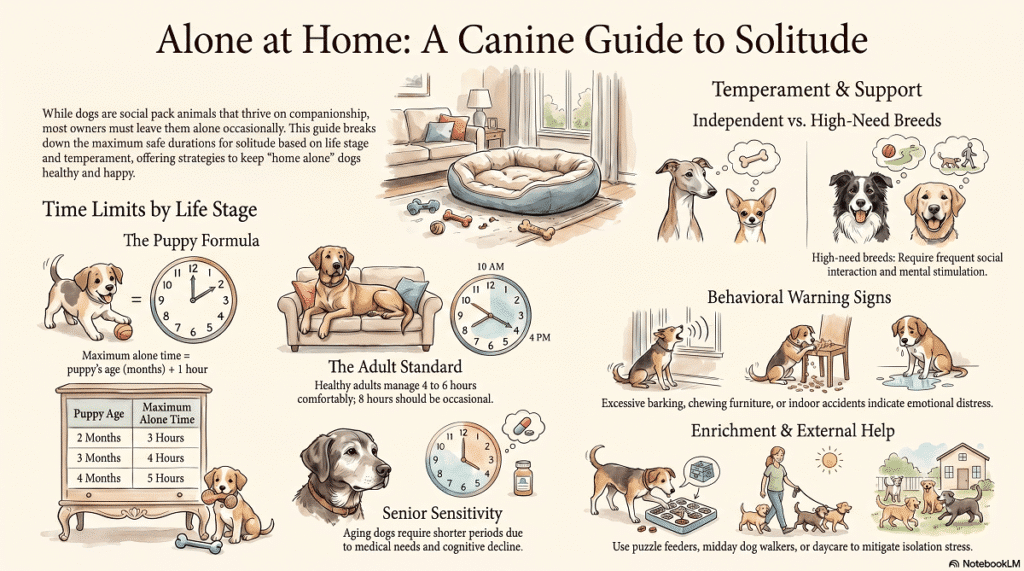
Puppy alone time = age in months + 1 hour
For example:
| Puppy Age | Maximum Alone Time |
|---|---|
| 2 months | 3 hours |
| 3 months | 4 hours |
| 4 months | 5 hours |
Young puppies should rarely be left alone for a full workday. They are still learning routines and need emotional reassurance.
They also get bored quickly, which can lead to destructive chewing and accidents.
➖Adult Dogs and Alone Time
Most healthy adult dogs can handle:
4 to 6 hours comfortably
Some well-trained dogs may tolerate up to 8 hours occasionally, but this should not become a daily habit.
Even if your adult dog can physically “hold it,” emotional needs still matter. A dog left alone every day for long periods may still experience loneliness.
➖Senior Dogs and Extra Care
Older dogs often need more frequent bathroom breaks and may have medical conditions requiring attention.
Senior dogs may struggle with:
- Arthritis
- Incontinence
- Vision loss
- Anxiety
- Cognitive decline
Because of this, they often need shorter alone periods than healthy adults.
✅Breed Differences and Independence Levels
Not all dogs experience solitude the same way.
➖Breeds That Tolerate Alone Time Better
Some breeds are naturally more independent, including:
- Basset Hounds
- Greyhounds
- Shiba Inus
- Chihuahuas
- French Bulldogs
These dogs may manage alone time more comfortably when properly exercised and trained.
➖Breeds That Need Constant Attention
Some breeds strongly dislike being alone, such as:
- Border Collies
- Labrador Retrievers
- Australian Shepherds
- German Shepherds
- Cavalier King Charles Spaniels
These breeds are highly social and mentally active. Without stimulation, boredom can quickly turn into behavioral issues.
✅Signs Your Dog Is Alone Too Long
Your dog may already be telling you the answer to how long can you leave a dog alone.
➖Behavioral Warning Signs
Watch for:
- Excessive barking
- Scratching doors
- Destroying furniture
- Chewing shoes
- Digging indoors
- Escape attempts
These are common signs of frustration or anxiety.
➖Physical Health Symptoms
Health-related signs include:
- Loss of appetite
- Excessive sleeping
- Weight changes
- Indoor urination
- Stress-related licking or chewing
These symptoms should never be ignored.
✅Tips to Help Your Dog Stay Comfortable Alone
Even if you must leave your dog for work, there are ways to make the experience easier.
➖Creating a Safe and Fun Environment
Your dog should have:
- Fresh water
- Comfortable bedding
- Safe chew toys
- Access to a bathroom area if needed
- A calm, temperature-controlled environment
Avoid sudden departures with emotional goodbyes. Calm exits help reduce anxiety.
➖Using Toys, Walks, and Mental Stimulation
Before leaving:
- Take your dog for a long walk
- Play fetch
- Use puzzle feeders
- Offer treat-dispensing toys
Mental stimulation can reduce boredom significantly.
Helpful enrichment ideas can be found through trusted resources like the American Kennel Club at
A tired dog is usually a happier dog.
✅When to Hire Help
Sometimes your schedule simply doesn’t match your dog’s needs.
➖Dog Walkers and Pet Sitters
A midday dog walker can make a huge difference, especially for puppies and senior dogs.
Benefits include:
- Bathroom breaks
- Exercise
- Social interaction
- Reduced anxiety
➖Doggy Daycare Options
For highly social dogs, daycare can be an excellent option.
It provides:
- Supervised play
- Exercise
- Structure
- Socialization
This can be especially helpful for energetic breeds that struggle with isolation.
Read More ▶ Can Adding Oil Benefit Your Dog’s Health? Exploring the Options and Their Uses
📑Frequently Asked Questions
➖Can I leave my dog alone for 8 hours while I work?
Some adult dogs can handle 8 hours occasionally, but daily long absences may cause emotional stress. Midday walks are highly recommended.
➖Is it cruel to leave a dog alone overnight?
If it happens occasionally and the dog is healthy, it may be manageable. Regular overnight isolation is not ideal for most dogs.
➖Can puppies stay alone all day?
No. Puppies need frequent potty breaks, meals, and supervision. Leaving them alone all day is not recommended.
➖Do dogs get sad when left alone?
Yes, many dogs experience loneliness, boredom, or anxiety when left alone too long.
➖Should I leave the TV on for my dog?
Some dogs find background noise comforting. Soft music or TV can reduce silence-related stress.
➖What is separation anxiety in dogs?
It is a condition where dogs become highly distressed when left alone, often showing destructive or panic-related behaviors.
Read More ▶ Bad Breath in Dogs: 7 Powerful Causes and Proven Fixes for Fresh Canine Breath
💡Conclusion ➖ So, how long can you leave a dog alone?
For most adult dogs, 4 to 6 hours is ideal, while puppies and seniors usually need much shorter periods. Breed, health, and personality all matter.
The goal isn’t just whether your dog can survive being alone—it’s whether they can thrive.
Responsible dog ownership means balancing your schedule with your pet’s emotional and physical needs. With proper planning, enrichment, and support, your dog can stay safe, calm, and happy even when you’re away.
Your dog gives you unconditional love every day. Making sure they feel secure when alone is one of the best ways to return that love.