7 Powerful Secrets to Choosing the Best Litter Box Location for a Happy, Healthy Cat
🧠 Understanding Why Litter Box Placement Matters
Choosing the right Litter Box Location is one of the most important decisions a cat owner can make. 🐾 Many people focus on the litter type or the box design, but placement often has the biggest impact on success.
Cats are creatures of habit and instinct. 🐱 Their environment influences how comfortable and secure they feel when using the litter box. A poor location can lead to stress, accidents, and unwanted behaviors.
🐾 The Natural Instincts of Cats
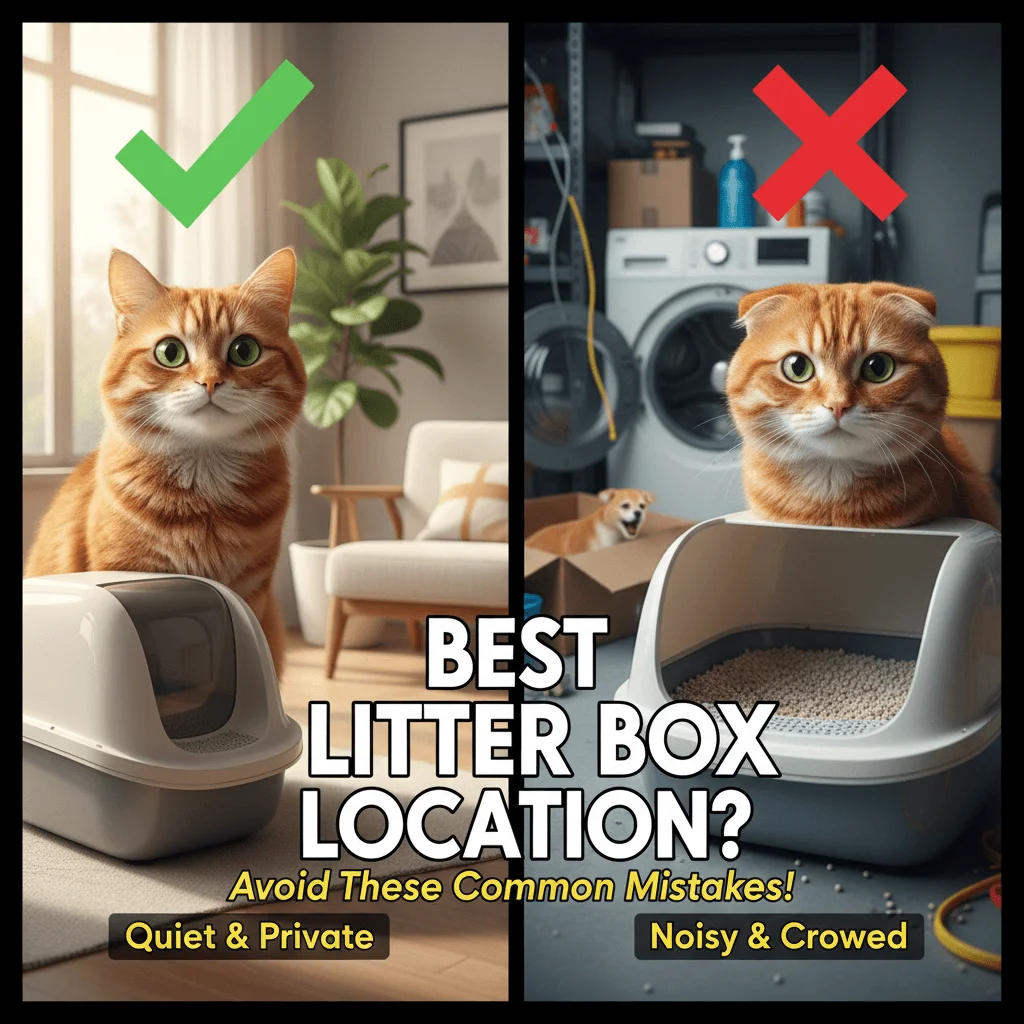
Cats naturally seek safe and quiet places to eliminate. In the wild, they look for areas where they can avoid threats and remain undisturbed. 🌿
Domestic cats retain these instincts. That’s why a litter box located in a noisy or crowded area may be ignored.
🌎 How Environment Influences Litter Box Habits
Several environmental factors affect litter box use:
- 🔊 Noise levels
- 🚶 Foot traffic
- 💡 Lighting
- 🌡️ Temperature
- 🚪 Accessibility
A comfortable environment encourages consistent use and helps prevent accidents.
Read More ▶ Powerful Benefits of diabetic cat food for Managing Your Cat’s Health Naturally
✅ What Makes an Ideal Litter Box Location
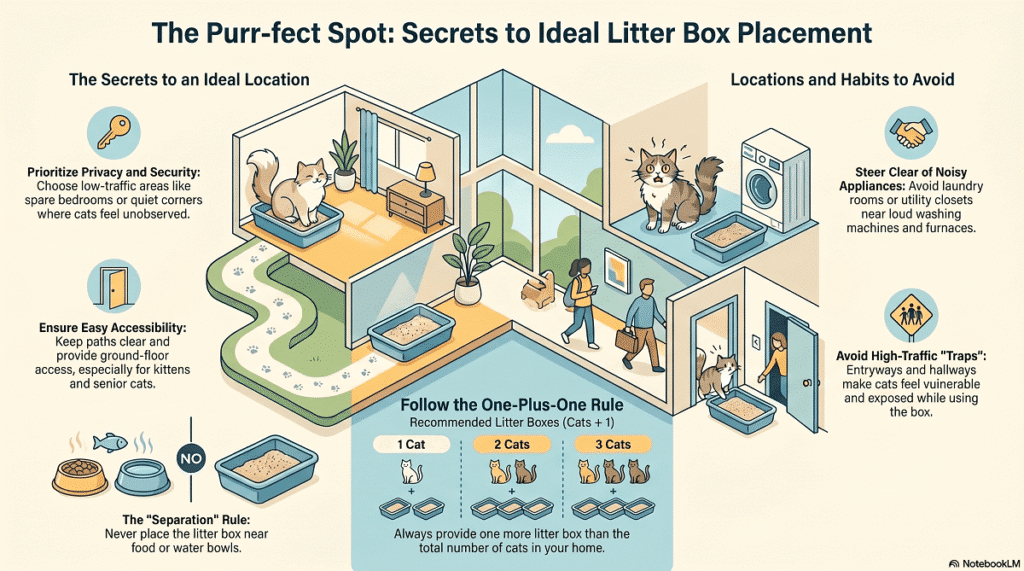
The perfect Litter Box Location combines privacy, accessibility, and cleanliness. 🏡
🔒 Privacy and Security Considerations
Cats appreciate privacy when doing their business. 😺
Ideal locations include:
- 🛏️ Spare bedrooms
- 🚽 Quiet bathrooms
- 📍 Low-traffic corners
- 🐾 Dedicated pet areas
A private space helps your cat feel secure and relaxed.
🚶 Accessibility for Cats of All Ages
Your cat should be able to reach the litter box easily.
Consider:
- 🚪 Open pathways
- 💡 Adequate lighting
- 🏠 Ground-floor access
- 🦴 Easy entry for older cats
Convenience is key for both kittens and senior cats.
❌ Common Mistakes When Choosing a Litter Box Location
Avoiding common mistakes can save you and your cat a lot of frustration.
🚪 High-Traffic Areas
Busy areas make cats feel exposed and vulnerable.
Avoid placing the litter box near:
- 🚪 Front entrances
- 🚶 Hallways
- 📺 Living rooms
- 🎮 Children’s play areas
🔊 Noisy Appliances and Equipment
Unexpected sounds can frighten cats.
Examples include:
- 🧺 Washing machines
- 🔥 Furnaces
- 💨 HVAC systems
- 🧹 Vacuum storage areas
🌬️ Poor Ventilation Problems
A cramped space without airflow can trap odors and create discomfort.
Benefits of good ventilation:
- 🌸 Fresher air
- 🧼 Better hygiene
- 😺 Improved comfort
- 💧 Reduced moisture buildup
🏠 Best Rooms in the House for a Litter Box
Some rooms naturally make better litter box locations than others.
🚽 Bathrooms
Bathrooms are often an excellent choice because they offer:
- 🧹 Easy cleanup
- 🌬️ Good ventilation
- 🚪 Privacy
- 💧 Water access
👕 Laundry Rooms
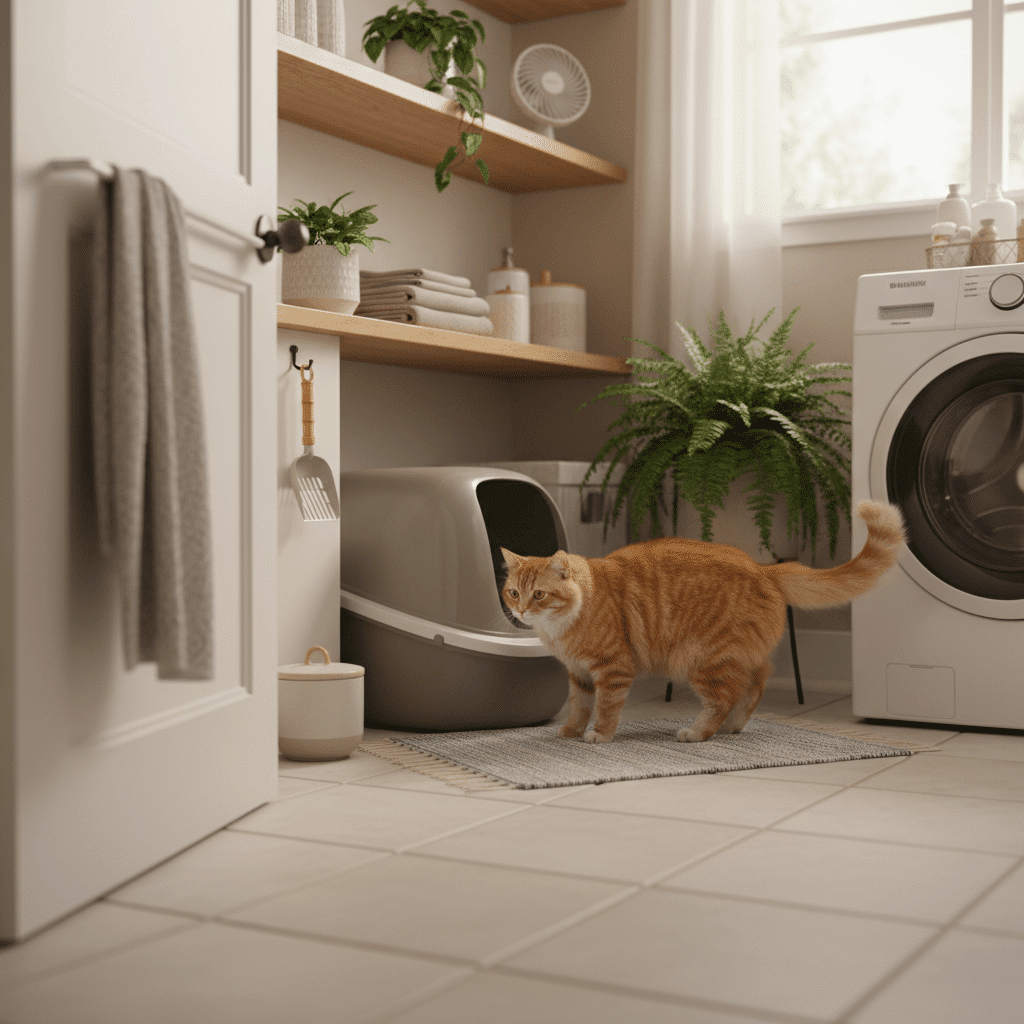
Laundry rooms can work well if the litter box is placed away from noisy machines.
🛏️ Spare Bedrooms
A spare bedroom provides:
- 🤫 Quiet surroundings
- 🐱 Privacy
- 🌡️ Comfortable temperatures
- 🏡 Plenty of space
📍 Quiet Corners
A secluded corner behind furniture may be perfect in smaller homes.
🐈🐈 Multi-Cat Homes and Litter Box Placement
Multiple cats require careful planning.
➕ The One-Plus-One Rule
Experts recommend:
| 🐱 Number of Cats | 📦 Recommended Litter Boxes |
|---|---|
| 1 | 2 |
| 2 | 3 |
| 3 | 4 |
| 4 | 5 |
This reduces territorial disputes and competition.
🗺️ Strategic Distribution of Boxes
Instead of placing all boxes together:
- 🏠 Use different rooms
- 🪜 Place boxes on separate floors
- 🚪 Provide multiple escape routes
- 😺 Reduce conflicts
🐱 Litter Box Location for Kittens
Young kittens need extra support during litter training.
🎯 Easy Access and Training
Place litter boxes:
- 🛏️ Near sleeping areas
- 🐾 Close to play zones
- 🏠 On every floor used regularly
🌟 Building Positive Habits Early
Consistency helps kittens develop lifelong bathroom habits. Avoid moving the box frequently during training.
Read More ▶ Benefits of Fresh Dog Food Every Pet Parent Should Know
👴🐱 Litter Box Location for Senior Cats
Older cats often face mobility challenges.
🦴 Mobility Challenges
Helpful adjustments include:
- 🏠 Ground-level placement
- 🚶 Short walking distances
- 🧽 Non-slip flooring
- 🚪 Easy access
❤️ Comfort and Convenience
Senior cats are more likely to use a litter box consistently when it is close to their favorite resting spots.
🏢 Apartment Living and Small Spaces
Small spaces require smart placement solutions.
📏 Maximizing Limited Space
Consider:
- 🚽 Bathroom corners
- 🚪 Ventilated utility closets
- 🛋️ Furniture-integrated boxes
- 🏠 Hidden pet stations
💡 Creative Placement Ideas
Popular options include:
- 🪑 Bench enclosures
- 🛋️ End-table litter cabinets
- 📦 Decorative storage units
🌸 Managing Odor Without Sacrificing Location
Many owners hide litter boxes to control smells, but there are better solutions.
🌬️ Ventilation Strategies
Try:
- 🪟 Opening windows
- 🌪️ Exhaust fans
- 🌿 Air purifiers
- 🚪 Improved airflow
🧹 Cleaning Routines
| 📝 Task | ⏰ Frequency |
|---|---|
| Scoop waste | Daily |
| Check litter level | Daily |
| Deep clean box | Weekly |
| Replace litter | Every 2–4 weeks |
A clean litter box is the best odor-control method. ✨
🚨 Signs Your Cat Dislikes the Current Location
Your cat may show clear signs of discomfort.
😿 Behavioral Warning Signs
Watch for:
- ❌ Eliminating outside the box
- ⏳ Hesitation before entering
- 🐾 Excessive digging
- 🚫 Avoiding the litter box
🩺 Health Concerns to Watch For
Consult a veterinarian if litter box habits suddenly change.
Possible causes include:
- 🦠 Urinary tract infections
- 🩺 Kidney disease
- 🦴 Arthritis
- 🤢 Digestive issues
❓ Frequently Asked Questions
1️⃣ Where should a litter box never be placed?
🚫 Avoid noisy, crowded, and difficult-to-access areas such as hallways, entryways, and near appliances.
2️⃣ Can a litter box be kept in a bathroom?
✅ Yes! Bathrooms often provide privacy, ventilation, and easy cleanup.
3️⃣ How many litter boxes should I have for two cats?
🐱🐱 You should ideally have three litter boxes.
4️⃣ Should a litter box be near food and water bowls?
🍽️ ❌ No. Cats prefer eating and eliminating in separate locations.
5️⃣ Is it okay to move a litter box?
🔄 Yes, but gradual changes are usually best.
6️⃣ Why did my cat stop using the litter box after it was moved?
😿 Cats rely on routine and may feel stressed by sudden changes.
🎯 Conclusion Choosing the right Litter Box Location can dramatically improve your cat’s comfort, health, and happiness. 🐱❤️ A quiet, accessible, and clean space helps your cat feel secure while reducing accidents and behavioral issues.
Whether you live in a large house 🏡 or a small apartment 🏢, thoughtful placement can make all the difference. By understanding your cat’s instincts and needs, you can create a stress-free bathroom experience that benefits both you and your feline companion. 🐾✨