How to Teach a Dog to Sit: A Step-by-Step Guide for Every Dog Owner
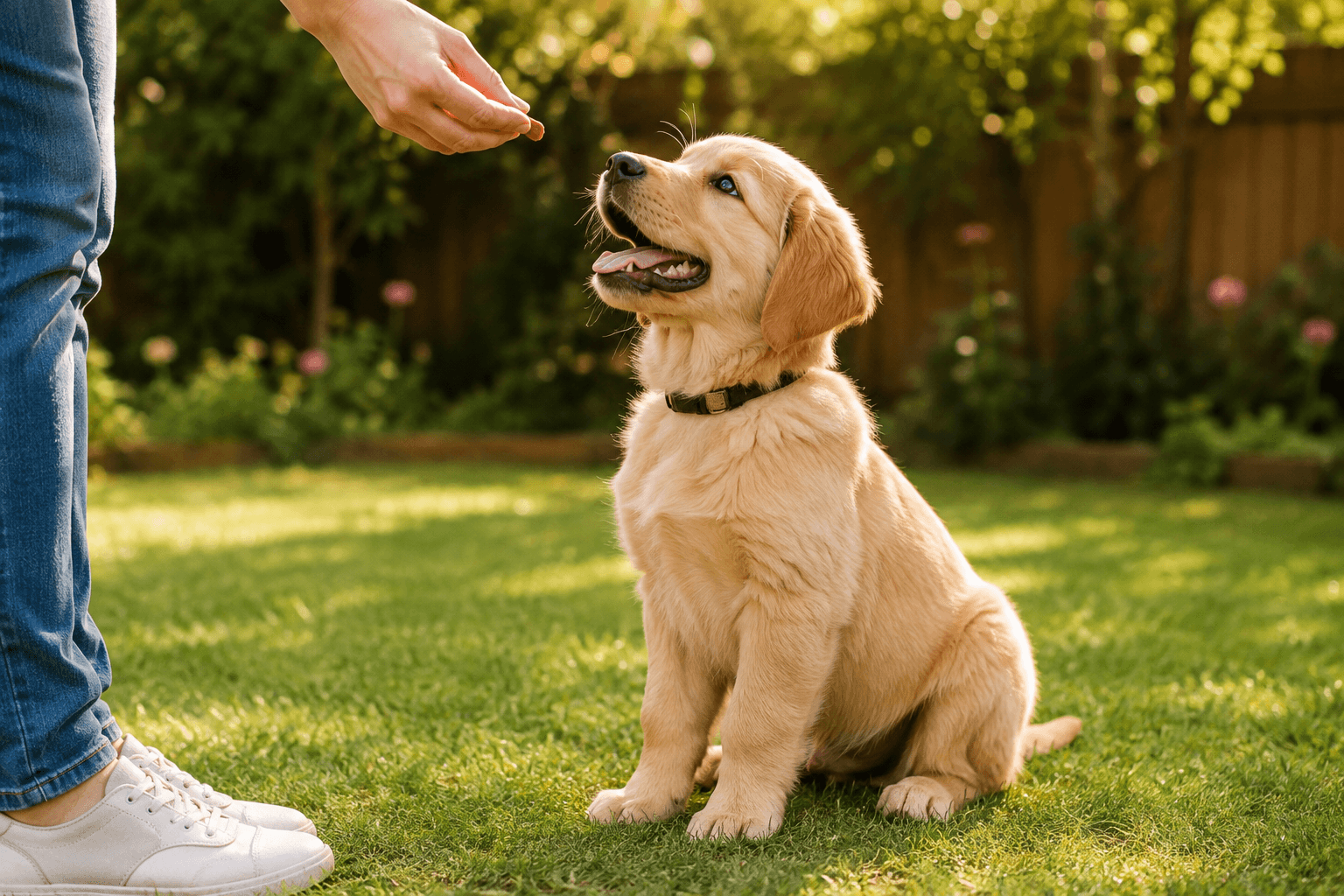
If you’ve ever watched a well-trained dog plop into a sit the instant their owner says the word, you’ve probably wondered how they got there. The good news is that sit is one of the easiest commands to teach, and most dogs can learn it in just a few short sessions. It’s also the foundation for almost everything else you’ll want to teach later, from staying put at the door to waiting patiently while you make dinner.
Whether you’ve just brought home a bouncy new puppy or you’re working with an older dog who never quite picked up basic manners, this guide walks you through exactly how to teach a dog to sit using positive, reward-based methods that actually stick. You’ll also learn how to move from a simple sit into sit and stay dog training, along with fixes for the most common hiccups along the way.
✔Why Teaching Your Dog to Sit Matters
Sit isn’t just a party trick. It’s a management tool that makes everyday life with your dog calmer and safer. A dog who sits reliably is easier to greet guests with, easier to feed without chaos, and easier to keep out of trouble near doors, stairs, and traffic.
Sit also builds the communication bridge between you and your dog. Every time your dog offers the behavior and gets rewarded, they learn two things at once: that paying attention to you pays off, and that English words can carry meaning. That groundwork makes every future lesson, from loose-leash walking to recall, noticeably faster to teach.
If you’re just starting out with a new puppy, it’s worth pairing this lesson with broader groundwork on socialization and house manners — our guide on covers the basics that make commands like sit click faster.
✔What You’ll Need Before You Start
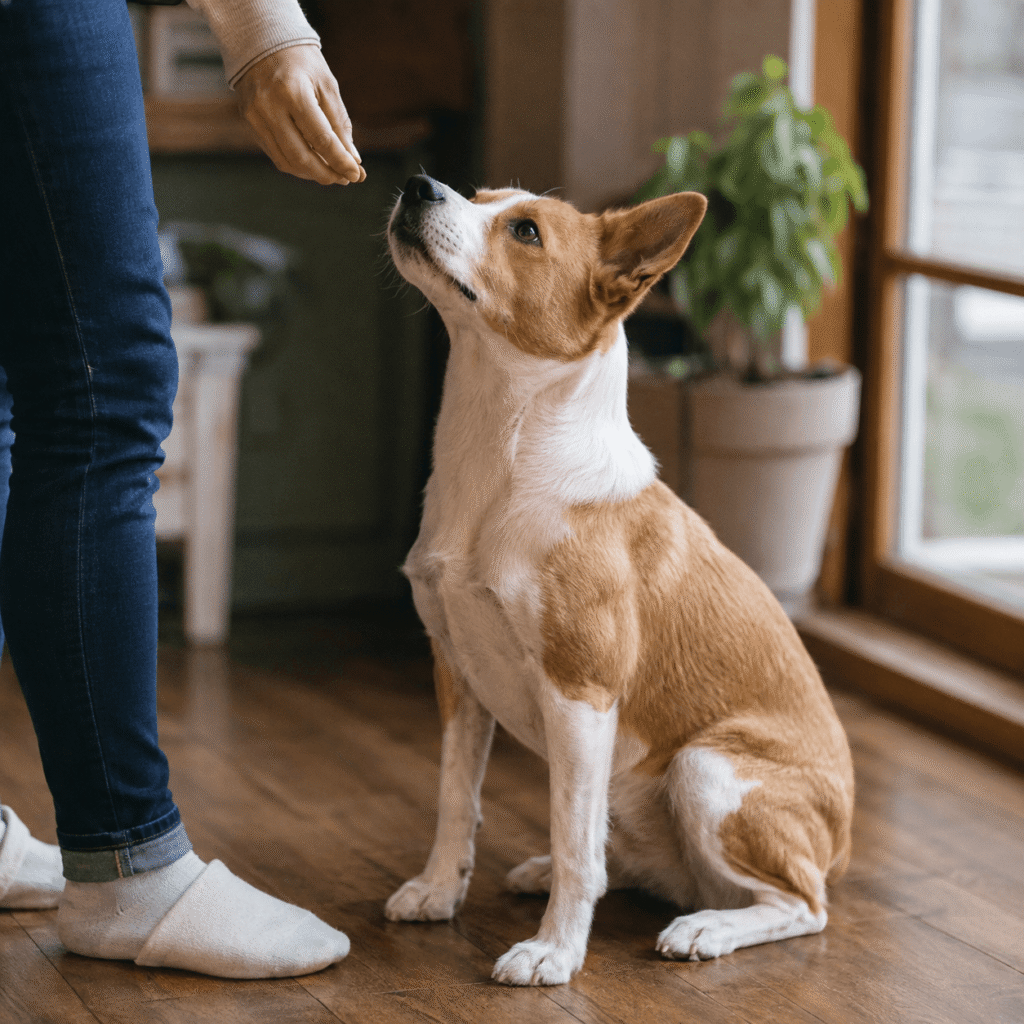
You don’t need much to get started, but a little preparation makes training smoother.
◾Treats Your Dog Actually Wants
Skip the everyday kibble and use something your dog finds genuinely exciting — small pieces of cooked chicken, cheese, or soft training treats work well. Keep pieces pea-sized so your dog can eat them fast and stay focused on you instead of chewing.
◾A Quiet, Low-Distraction Space
Start indoors, in a room without other pets, guests, or loud noises competing for your dog’s attention. You can move to busier environments once the behavior is solid.
◾A Little Patience
Some dogs pick up sit in a single five-minute session. Others need several short sessions spread across a few days. Both are completely normal, and rushing tends to slow progress rather than speed it up.
✔How to Teach a Dog to Sit: Step-by-Step Instructions
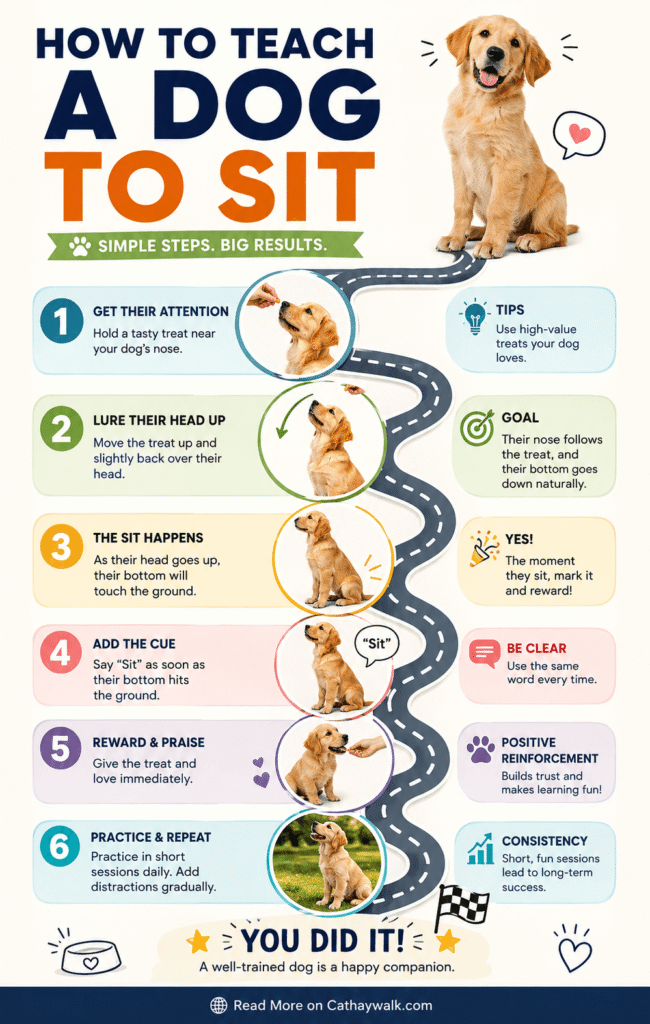
Here’s the core method most trainers rely on, sometimes called luring, because you use a treat to guide your dog’s body into position.
➖Step 1: Get Your Dog’s Attention
Hold a treat close to your dog’s nose so they catch the scent. You want them focused and slightly eager, not jumping or grabbing at your hand.
➖Step 2: Lure the Sit
Slowly move the treat up and back over your dog’s head, toward their tail. As their nose tilts up to follow the treat, their hindquarters will naturally lower to the ground. The moment their bottom touches the floor, that’s a sit.
➖Step 3: Mark and Reward Immediately
The instant your dog’s bottom hits the ground, say “yes” or click a clicker if you’re using one, then give the treat right away. Timing matters here — rewarding even a second late can make your dog think you’re rewarding something else, like standing back up.
➖Step 4: Add the Verbal Cue
Once your dog is sitting reliably from the hand lure, start saying “sit” right before you move your hand. After several repetitions, your dog will begin connecting the word itself to the action, and you can gradually fade the hand motion out.
➖Step 5: Practice in Short, Frequent Sessions
Aim for five to ten repetitions per session, two or three times a day. Short, upbeat sessions that end on a success keep your dog motivated and prevent frustration on both ends of the leash.
✔Common Mistakes That Slow Down Training
Even simple commands can go sideways if a few small habits creep in.
◻Repeating the Cue Too Many Times
Saying “sit, sit, sit” teaches your dog that the word doesn’t mean much until you’ve said it several times. Say it once, wait a couple of seconds, then help your dog into position if needed.
◻Rewarding Too Late
If you pause even a few seconds before treating, your dog may associate the reward with whatever they’re doing at that moment, not the sit itself. Keep treats within easy reach so you can reward instantly.
◻Practicing Only in One Spot
Dogs don’t automatically generalize commands to new environments. A dog who sits perfectly in the kitchen might act like they’ve never heard the word at the park. Practice in a few different rooms, then outdoors, once the basic behavior is solid.
◻Using Sit as a Punishment
Never use the sit command as a consequence for bad behavior. If your dog associates “sit” with getting in trouble, they’ll be less willing to respond to it in general.
✔Moving On to Sit and Stay Dog Training
Once your dog sits confidently on cue, you can build toward sit and stay dog training, which adds duration and distance to the behavior. This is a natural next step and one of the most useful skills for everyday situations like answering the door or loading into the car.
🔹Introducing the Stay Cue
After your dog sits, hold your palm out flat and say “stay.” Wait just one second, then reward while they’re still sitting. Gradually increase the time between the cue and the reward, a second or two at a time.
🔹Adding Distance Slowly
Once your dog can hold a stay for five or six seconds, start taking a single step back before returning to reward them. Build distance gradually — if your dog breaks the stay, that’s a sign to shorten the distance or duration and rebuild from there.
🔹Releasing the Stay
Always end a stay with a clear release word, like “okay” or “free,” so your dog learns the difference between waiting and being done. Without a release cue, dogs often guess when it’s fine to move, which weakens the whole exercise.
✔Troubleshooting: What to Do If Your Dog Won’t Sit
Some dogs need a slightly different approach depending on their size, age, or temperament.
🔸For Puppies
Puppies have short attention spans, so keep sessions to just a minute or two. Their joints are also still developing, so avoid asking for long stays or repeated sit-ups on hard floors.
🔸For Anxious or Distracted Dogs
If your dog seems too stressed or distracted to focus, dial back the environment first. Practice somewhere calmer, and consider whether broader anxiety is getting in the way of learning — our guide on can help you spot the signs.
🔸For Large or Senior Dogs
Older or larger dogs sometimes hesitate to sit because of joint discomfort. If your dog seems reluctant or uncomfortable lowering into a sit, it’s worth mentioning to your veterinarian rather than pushing through with more repetitions.
🔸If Your Dog Just Doesn’t Care About Treats
Try a different reward. Some dogs respond better to a favorite toy, a game of tug, or verbal praise paired with physical affection. The reward just needs to be something your dog genuinely wants in that moment.
✔Making Sit Part of Everyday Life
The real payoff of training comes from using the command outside of formal practice sessions. Ask your dog to sit before meals, before clipping on the leash, or before greeting a visitor at the door. This turns a learned trick into a genuine life skill and reinforces the behavior far more than isolated training sessions ever could.
Consistency across the household matters too. If one family member allows jumping on guests while another asks for a sit first, your dog will get mixed signals. Agreeing on the same cues and expectations helps training stick faster for everyone involved.
📑Frequently Asked Questions
➖How long does it take to teach a dog to sit? Most dogs learn the basic sit within a few short sessions over two to three days. Full reliability, including sitting on cue in distracting environments, usually takes a few weeks of consistent practice.
➖What’s the best age to start teaching a dog to sit? Puppies as young as eight weeks old can start learning sit, though sessions should stay very short. Older dogs and rescues can learn just as easily; age isn’t a barrier to basic obedience training.
➖Should I use treats forever, or will my dog eventually sit without them? Treats are most important during the learning phase. Once your dog reliably sits on cue, you can shift to intermittent rewards, mixing in praise, petting, or life rewards like getting the leash clipped on, so the behavior holds up without a treat in hand every time.
➖Why does my dog sit at home but not outside? This usually means the behavior hasn’t been generalized yet. Practice the same steps in new locations with increasing distractions, starting with something as simple as your own backyard before moving to busier spaces.
Is it too late to train an older dog to sit? Not at all. Older dogs can absolutely learn new commands, though they may need a bit more patience and shorter sessions, especially if joint stiffness makes sitting less comfortable than it used to be.
Final Thoughts and Next Steps
Teaching your dog to sit is a small investment that pays off in a calmer, more cooperative companion. With short, positive sessions and consistent timing, most dogs pick it up quickly, and from there, sit and stay dog training opens the door to everything else you’ll want to teach down the line.