
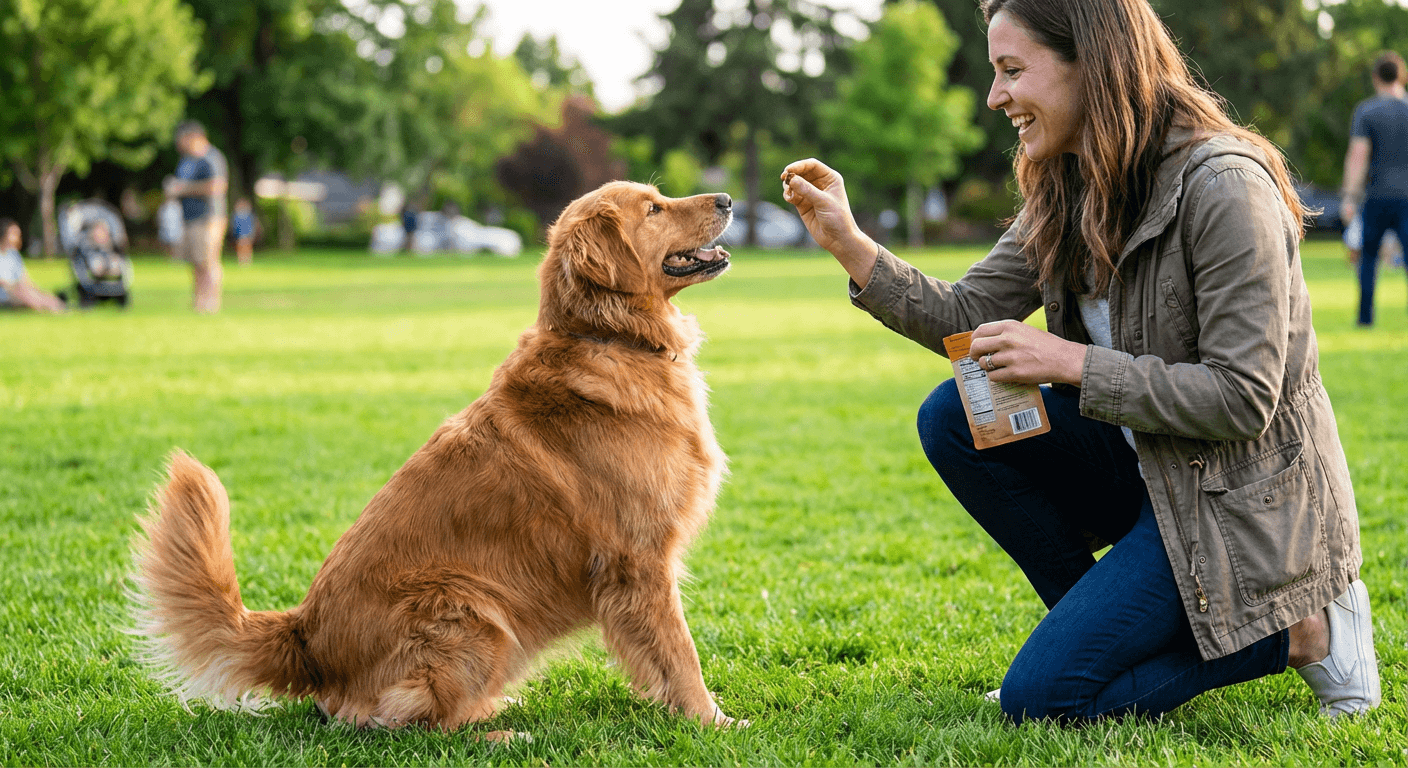
Make Pet Training Fun Unlock Your Dog’s Best Behavior in 2026
The Foundation of Fun Pet Training: Understanding Motivation
Transforming your dog’s behavior doesn’t have to be a chore; it can be one of the most rewarding and joyful experiences you share. The key to successful pet training lies in understanding how dogs learn and what truly motivates them. When training feels like a game, your dog is more engaged, eager to participate, and retains lessons more effectively.
Approaching pet training with a mindset of play and positive reinforcement not only strengthens your bond but also makes the entire process more efficient. Instead of battling resistance, you’ll be fostering enthusiasm and building a trusting relationship based on mutual understanding and respect. This shift in perspective is crucial for unlocking your dog’s best behavior in 2026 and beyond.
Positive Reinforcement: The Cornerstone of Effective Pet Training
Positive reinforcement is the most powerful tool in your pet training arsenal. It involves rewarding desired behaviors, making it more likely that your dog will repeat them. This method creates a positive association with learning and strengthens the bond between you and your furry friend.
When your dog performs an action you like, immediately follow it with something they value. This could be a high-value treat, enthusiastic praise, a favorite toy, or a quick game of tug. The timing of the reward is critical; it should occur within 1-2 seconds of the desired behavior so your dog clearly understands what they are being rewarded for.
– Treats: Small, soft, and highly palatable treats work best. Rotate different types to keep your dog interested.
– Praise: Use an upbeat, happy tone of voice. Words like “Good dog!” or “Yes!” can become powerful secondary reinforcers.
– Toys: A quick throw of a favorite ball or a game of tug can be incredibly motivating for many dogs, especially those less food-driven.
– Affection: Some dogs thrive on gentle scratches behind the ears or belly rubs, though ensure it doesn’t interrupt the training flow.
The science behind positive reinforcement is clear: it builds confidence, reduces stress, and fosters a dog who loves to learn. Conversely, punishment-based methods can lead to fear, anxiety, aggression, and can damage the trust between you and your dog, making pet training a negative experience for everyone involved.
Reading Your Dog’s Body Language During Pet Training
Being able to read your dog’s body language is essential for successful and enjoyable pet training. Your dog is constantly communicating how they feel about the session, the environment, and the task at hand. Understanding these cues allows you to adjust your approach, prevent frustration, and ensure a positive experience.
Look for signs of engagement, which include a relaxed posture, soft eyes, a loosely wagging tail, and focused attention on you. A dog who is enjoying the training will often have an open mouth, a slightly lolling tongue, and may offer play bows.
Conversely, watch for signs of stress or disengagement. These might include:
– Lip licking or yawning (when not tired)
– Head turning away or avoiding eye contact
– Flattened ears or tail tucked between legs
– Excessive panting or drooling
– Freezing or slow, deliberate movements
– Growling, snapping, or barking (as a last resort to communicate discomfort)
If you notice these stress signals, it’s time to take a break, simplify the task, or end the session on a positive note with something easy. Pushing a stressed dog will only create negative associations with pet training and hinder progress. Always aim for short, successful sessions that leave your dog wanting more.
Crafting Engaging Pet Training Sessions for Maximum Impact
The structure and environment of your pet training sessions are just as important as the methods you use. By making sessions enjoyable, unpredictable, and tailored to your dog’s energy levels, you can dramatically improve their focus and retention. Think of each session as an opportunity to deepen your connection, not just to teach a command.
A well-planned session prevents boredom and frustration, ensuring that both you and your dog look forward to your time together. Incorporating variety and challenge at the right pace keeps their minds stimulated and their tails wagging.
Short, Sweet, and Consistent Training
Dogs, especially puppies and young dogs, have limited attention spans. Long, repetitive training sessions can quickly lead to boredom, frustration, and a breakdown in focus. The most effective pet training sessions are short, frequent, and end before your dog loses interest.
Aim for 5-10 minute sessions, several times a day, rather than one long 30-minute session. This approach keeps training fresh and exciting. Consistent daily practice, even if brief, reinforces behaviors much more effectively than sporadic, marathon sessions. Think of it as micro-learning for your dog.
– Multiple short sessions: Try 3-5 sessions of 5-7 minutes each throughout the day.
– End on a high note: Always conclude the session after a successful command, even if you planned for more. This leaves your dog feeling accomplished and eager for the next session.
– Integrate into daily life: Practice commands during walks, before meals, or when greeting guests. This helps generalize behaviors beyond a formal training setting.
Gamification: Turning Chores into Cheers
One of the best ways to make pet training fun is to turn it into a game. Dogs learn through play, and by incorporating elements of fun, you can make even the most mundane commands exciting. This not only increases engagement but also strengthens your bond through shared enjoyable activities.
Consider these playful approaches:
– Hide-and-seek recall: Have someone hold your dog while you hide, then call them excitedly. Reward with a jackpot of treats and praise when they find you.
– Treasure hunt ‘stay’: Hide treats around the house while your dog is in a “stay,” then release them to find the “treasure.”
– Obstacle courses: Use household items like pillows, blankets, and chairs to create a mini agility course. Guide your dog through it, rewarding them for navigating each obstacle.
– Fetch and drop: Teach “drop it” by playing fetch. When your dog brings the toy back, trade it for a treat, then throw the toy again.
These games not only teach specific commands but also build problem-solving skills, confidence, and reinforce the idea that interacting with you is always a positive experience. Remember, the goal of pet training is a well-behaved dog who enjoys learning and spending time with you.
Comparison of Smart Pet Training Gadgets
In 2026, technology offers exciting tools to enhance pet training, making it more interactive and efficient. From remote treat dispensers to smart cameras, these gadgets can support your efforts, especially when you can’t be physically present. Here’s a look at some popular options:
| Product | Price | Pros | Cons | Best For |
|---|---|---|---|---|
| Petcube Bites 2 Lite | $149 | Full HD camera, two-way audio, remote treat dispensing. | Requires Wi-Fi, app subscription for full features. | Monitoring, rewarding positive behavior from afar, managing separation anxiety. |
| Furbo Dog Camera | $210 | Tosses treats, bark sensor with alerts, 1080p HD, night vision. | Higher price point, treat dispensing can be noisy. | Engaging with dogs remotely, detecting barking, enriching alone time. |
| Wagz Serve Smart Feeder | $299 | Automated, portion-controlled feeding, integrates with Wagz collar. | Expensive, requires specific food types, app-dependent. | Managing diet, scheduled feeding, reinforcing mealtime routines. |
| iFetch Interactive Ball Launcher | $150 | Automated fetch for small to medium dogs, adjustable launch distance. | Can be noisy, some dogs take time to learn to drop ball in funnel. | High-energy dogs, independent play, reinforcing “fetch” and “drop it.” |
These tools can be valuable additions to your pet training regimen, providing mental stimulation and reinforcement even when you’re busy. However, they are best used as supplements to hands-on interaction and not as replacements for your direct involvement in teaching and bonding.
Mastering Core Commands Through Playful Pet Training
Core commands are the building blocks of a well-behaved dog. By teaching these commands through playful, positive methods, you ensure your dog sees them as enjoyable interactions rather than obligations. This approach fosters a reliable response, even in distracting environments.
Making these foundational commands fun will set your dog up for success in all future learning. It’s about building a positive association with every cue you give, turning every instruction into an opportunity for engagement and reward.
Sit and Stay: Building Patience with Fun
Teaching “sit” and “stay” are crucial for impulse control and safety. These commands can be introduced through games that make learning enjoyable and reinforce their utility in everyday situations.
For “sit,” hold a treat above your dog’s nose and slowly move it towards their tail. As their nose follows the treat, their rear end will naturally lower into a sit. As soon as their rear touches the ground, mark the behavior with a verbal cue like “Yes!” or a clicker, and give the treat. Repeat this a few times, then start adding the verbal cue “Sit” just as they are about to sit.
To make “stay” fun, start with very short durations and distances. Ask your dog to “sit,” then say “stay” and take one step back. Immediately step back to them, reward, and release them with a cheerful “Okay!” or “Free!” Gradually increase the distance and duration, always rewarding generously. You can turn this into a game by playing “red light, green light,” where “stay” is red light and “okay” is green light, allowing them to move and get a treat.
– Practice in different environments to help generalize the command.
– Use a release cue to signal the end of the “stay” and prevent anticipation.
– Build duration and distance slowly to avoid frustration.
Recall: The Life-Saving Game
A reliable “come” command is perhaps the most important safety command you can teach your dog. It needs to be the most exciting word in their vocabulary, always associated with incredible rewards and fun.
Start teaching recall in a quiet, enclosed area. Get down on your dog’s level, open your arms, and use an enthusiastic, high-pitched voice to call their name followed by “Come!” or “Here!” As they run towards you, praise them lavishly and reward them with a jackpot of high-value treats or their favorite toy. Make it a party!
To make it a game, play “ping-pong recall” with a family member. Stand a short distance apart and take turns calling your dog. Each time they come to one person, they receive a huge reward. This builds enthusiasm and makes coming when called a fun, rewarding experience. Use a long line in open areas to practice, ensuring your dog can’t run off, and you can gently guide them if needed.
– Never use “come” for something your dog finds unpleasant (e.g., bath time, leaving the park).
– Always reward with the best possible treats or toys when they come.
– Practice frequently and in varied environments once a solid foundation is built.
Loose Leash Walking: A Partnership, Not a Tug-of-War
Walking nicely on a leash can be challenging, but it doesn’t have to be a battle. By making loose leash walking a rewarding partnership, you can transform walks into enjoyable experiences for both of you.
Start in a low-distraction environment. Whenever your dog walks beside you with a loose leash, mark the behavior and immediately reward them. If the leash tightens, stop walking. Wait for the leash to slacken, even for a second, then mark and resume walking. This teaches your dog that pulling gets them nowhere, but a loose leash keeps them moving towards fun destinations.
Vary your pace, make sudden turns, and change directions frequently. This keeps your dog engaged and paying attention to your movements. Reward them for checking in with you and for staying close. You can also use a treat lure to guide them into position next to you, rewarding them for maintaining that position.
– Use a comfortable, well-fitting harness or flat collar, avoiding pain-inducing tools.
– Practice in short bursts, gradually increasing duration and distraction levels.
– Reward frequently, especially in the early stages, for a loose leash and attention.
Addressing Challenges with Patience and Play in Pet Training
Even with the most positive approach to pet training, challenges can arise. Nuisance behaviors like jumping or barking are common, and some dogs may exhibit shyness or anxiety. The key is to address these issues with patience, consistency, and by finding playful solutions that redirect unwanted behaviors into desirable ones.
Understanding the root cause of the behavior is often the first step. Is your dog jumping for attention? Barking out of boredom? Addressing the underlying need through enrichment and appropriate outlets can dramatically reduce problem behaviors.
Tackling Nuisance Behaviors Playfully
Many common “bad” behaviors are simply normal dog behaviors that are inappropriate in human settings. Instead of punishing them, we can redirect and provide alternative, acceptable outlets.
– Jumping: When your dog jumps for attention, turn your back and completely ignore them. The moment all four paws are on the floor, turn around and calmly reward them with a treat and soft praise. Be consistent, and teach an alternative like “sit” for greetings.
– Excessive Barking: Identify why your dog is barking (boredom, attention, fear, alert). For boredom, increase exercise and mental enrichment (puzzle toys, sniff games). For attention barking, ignore it and reward silence. For alert barking, teach “quiet” by rewarding them after they bark once or twice, then rewarding silence. You can also create a “go to mat” game to send them to a specific spot when visitors arrive.
– Nipping/Mouthing: Especially common in puppies. Redirect to an appropriate chew toy. When nipping occurs, yelp loudly (like a littermate would), withdraw attention, or walk away for a few seconds. This teaches bite inhibition. Provide plenty of appropriate chew toys to satisfy their natural need to mouth.
The goal of pet training in these scenarios is not to suppress natural instincts but to channel them into appropriate behaviors that fit into your household. Consistency from all family members is vital for success.
Building Confidence in Shy or Anxious Dogs
Shy or anxious dogs require a sensitive and patient approach to pet training. The goal is to build positive associations with scary things and to increase their confidence through gradual exposure and rewarding bravery.
Start by identifying their triggers. Is it new people, loud noises, specific objects, or certain environments? Begin training in a safe, quiet space where your dog feels comfortable. Use high-value treats and gentle praise to reward any calm behavior.
For fear of new people, begin with very mild exposure at a distance. Have a calm friend stand far away, just within sight. Reward your dog for simply noticing them without reacting negatively. Slowly, over many sessions, decrease the distance, always ensuring your dog remains below their fear threshold. Never force interaction. Playing simple games like “find the treat” with the stranger can create positive associations.
– Desensitization and Counter-conditioning: Gradually expose your dog to their fear triggers while pairing the experience with something positive (like treats or a favorite game).
– Structured Play: Engage in games your dog loves. Success in play builds confidence and can help them feel more secure.
– Patience: Building confidence takes time. Celebrate small victories and avoid rushing the process, as this can set your dog back.
Beyond Basic Pet Training: Advanced Tricks and Canine Sports
Once your dog has mastered core commands, the world of advanced tricks and canine sports opens up! These activities are fantastic for mental stimulation, physical exercise, and strengthening your bond. They transform pet training into an exciting shared hobby, preventing boredom and channeling energy constructively.
Engaging in more complex activities can unlock new levels of understanding and communication between you and your dog, proving that pet training is a lifelong journey of discovery and fun.
Teaching Impressive Tricks for Mental Stimulation
Teaching tricks is a wonderful way to provide mental enrichment and show off your dog’s intelligence. Tricks like “shake a paw,” “roll over,” or “fetch specific items” are not only fun but also build problem-solving skills and enhance your dog’s focus during pet training.
– Shake a Paw: Ask your dog to sit. Hold a treat in a closed fist. When your dog paws at your hand to get the treat, say “Shake!” and open your hand to release the treat. Practice until they offer the paw reliably, then remove the lure.
– Roll Over: Start with your dog in a “down” position. Lure them with a treat from their nose over their shoulder, encouraging them to roll onto their side, then their back, and then completely over. Reward generously throughout the motion.
– Fetch Specific Items: This is an advanced trick. Start with two distinct items your dog knows by name (e.g., “ball” and “rope”). Place them close together. Ask for one, and when they bring it, reward. Gradually increase the number of items and the distance.
The process of learning new tricks is incredibly enriching for your dog, keeping their minds active and engaged. It’s a fantastic way to bond and have fun together, proving that pet training can always be fresh and exciting.
Exploring Canine Sports and Activities
For dogs with high energy or specific breed traits, canine sports offer an incredible outlet for their natural abilities. These activities are a fantastic way to continue your pet training journey, providing both physical and mental challenges.
– Agility: Dogs navigate an obstacle course with jumps, tunnels, weaves, and a seesaw. It builds incredible teamwork and body awareness.
– Flyball: A team relay race where dogs jump hurdles, retrieve a tennis ball from a box, and return over the hurdles.
– Scent Work/Nose Work: Dogs use their powerful sense of smell to locate hidden target odors. This is incredibly fulfilling and confidence-boosting for all dogs.
– Dock Diving: Dogs jump for distance or height into a pool of water, perfect for water-loving breeds.
– Disc Dog (Frisbee): Involves catching flying discs and performing various tricks. Builds incredible athletic ability and focus.
Research local clubs or trainers offering these sports. Trying different activities helps you discover what your dog loves most. Engaging in canine sports takes your pet training to a whole new level, fostering an even deeper partnership and providing immense joy for both of you.
Making pet training fun is not just about getting your dog to do what you want; it’s about building a language, a relationship, and a shared life filled with joy and understanding. By embracing positive reinforcement, playful methods, and consistent, engaging sessions, you can unlock your dog’s best behavior and create an unbreakable bond. Remember, every command, every trick, and every game is an opportunity to strengthen your connection and enrich your dog’s life. Start today, and watch your dog thrive in 2026.
Frequently Asked Questions About Fun Pet Training
-What if my dog isn’t food motivated for training?
If your dog isn’t highly motivated by food, experiment with different types of treats, including soft, smelly, high-value options like cooked chicken or cheese. You can also use toys, praise, or short games of fetch as rewards. Observe what your dog truly values and use that as reinforcement.
-How long should a training session be to keep it fun?
For most dogs, especially puppies, 5-10 minute sessions are ideal. It’s better to have multiple short, engaging sessions throughout the day than one long one that leads to boredom or frustration. Always end on a high note, leaving your dog wanting more.
-My dog gets easily distracted. How can I make pet training more engaging?
Start training in a quiet, low-distraction environment. Use extremely high-value rewards that your dog rarely gets. Gradually introduce distractions as your dog masters the command in calmer settings. Keep sessions short, make yourself exciting with an enthusiastic tone, and use movement to capture their attention.
-Can old dogs learn new tricks and still enjoy training?
Absolutely! “You can’t teach an old dog new tricks” is a myth. Senior dogs can learn and enjoy pet training just as much as puppies. Adapt the training to their physical capabilities, keep sessions short, and use positive reinforcement. Mental stimulation is crucial for older dogs’ cognitive health.
-What if I get frustrated during pet training?
Frustration is normal, but it’s important not to let it show to your dog. If you feel frustrated, take a break. End the session on an easy command your dog knows, then step away. Revisit the training when both you and your dog are in a positive mindset. Remember that patience and consistency are key.