
Cat Flip Reveals Feline Intellect and Training Power
Cat Won’t Rest Until Owner Sees His ‘Quadruple Flip’
The world of pet ownership is constantly evolving, driven by an ever-deepening understanding of animal behavior, innovative products, and the undeniable joy our animal companions bring into our lives. From cutting-edge veterinary treatments to groundbreaking insights into animal cognition, the pet industry is a vibrant ecosystem dedicated to enhancing the lives of our furry, scaled, and feathered friends. Today, we delve into a delightful phenomenon that perfectly encapsulates this spirit: the viral sensation of a cat named Boy, whose determined display of a “quadruple flip” for his owner captivated audiences worldwide. This heartwarming story, initially shared on Instagram via @theflipcat, is more than just an adorable video; it’s a testament to feline intelligence, the power of positive reinforcement, and the profound bond shared between pets and their human families. It offers a fantastic starting point to explore broader themes in pet care, behavior, and the burgeoning industry trends shaped by such captivating moments.
Key Takeaways
- Feline Intelligence: Cats, like Boy, possess remarkable cognitive abilities, shattering stereotypes of aloofness and demonstrating complex learning and intentional communication.
- Power of Positive Reinforcement: Positive reinforcement training is highly effective for cats, building trust and enabling them to learn impressive tricks and beneficial behaviors.
- Importance of Enrichment: Mental and physical enrichment, including trick training and interactive toys, is crucial for indoor cats’ well-being, preventing boredom and behavioral issues.
- Strengthening the Human-Animal Bond: Shared activities like training and play profoundly deepen the emotional connection and mutual understanding between cats and their owners.
- Social Media’s Influence: Viral pet content drives innovation and demand in the pet industry, inspiring owners to invest more in their pets’ training, enrichment, and overall wellness.
Table of Contents
- The Viral Sensation of Boy the Cat
- The Unveiling of Feline Dexterity and Intellect: More Than Just a Pretty Face
- The Science Behind the ‘Flip’: The Power of Positive Reinforcement
- Beyond Tricks: Enrichment for a Full and Thriving Feline Life
- Strengthening the Bond: More Than Just a Pet
- The Digital Age of Pets: Viral Sensations and Industry Evolution
- Practical Takeaways for Pet Parents: Unleashing Your Cat’s Potential
- FAQ: Frequently Asked Questions
- Conclusion
The Viral Sensation of Boy the Cat
The internet, with its endless scroll of captivating content, has consistently proven to be a fertile ground for stories that warm our hearts and challenge our perceptions of the animal kingdom. Among the countless viral moments featuring pets, few capture the sheer delight and impressive capability of our feline friends quite like the recent video of Boy the cat. Shared on October 29th by his dedicated owner through the Instagram account @theflipcat, this particular clip showcases Boy’s remarkable persistence and agility as he executes an astonishing “quadruple flip.” The caption itself tells a compelling story: Boy wouldn’t rest until his paw parent witnessed his impressive aerial maneuver. This isn’t just a fleeting moment of feline fun; it’s a powerful demonstration of a cat’s capacity for learning, their desire for interaction, and the immense satisfaction they derive from engaging with their human companions.
This single viral video provides a rich lens through which we can explore myriad aspects of modern pet care. It sparks conversations about feline intelligence, the efficacy of positive reinforcement training in cats, the importance of mental and physical enrichment, and the ever-growing influence of social media on pet culture and the broader pet industry. For pet owners, veterinarians, trainers, pet product sellers, breeders, and general animal lovers alike, Boy’s incredible feat serves as a vivid reminder of the untapped potential within our pets and the continuous opportunities we have to deepen our relationships with them.
The Unveiling of Feline Dexterity and Intellect: More Than Just a Pretty Face
For centuries, cats have been revered for their enigmatic charm, their graceful movements, and their independent spirit. However, popular culture has sometimes painted them as aloof and untrainable, a stark contrast to their canine counterparts often depicted as eager-to-please students. Boy’s “quadruple flip” emphatically shatters this outdated stereotype, showcasing a level of coordinated movement, learned behavior, and intentional communication that speaks volumes about feline cognitive abilities. This isn’t just a fluke; it’s the result of inherent intelligence combined with dedicated training and a strong bond.
Modern research in ethology and animal cognition increasingly confirms what many cat owners have long suspected: cats are highly intelligent, capable of problem-solving, understanding complex cues, and even performing intricate sequences of actions. Their learning style, while different from dogs, responds incredibly well to methods that respect their natural instincts and avoid coercion. What Boy demonstrated was not just physical prowess but also a clear understanding of an expectation and a desire to perform it for a specific audience—his human. This level of intentionality is a hallmark of higher cognitive function, prompting us to reassess how we engage with and stimulate our feline friends.
Expert Take: Dr. Anya Sharma, Veterinary Behaviorist
“The video of Boy performing his flips is a fantastic illustration of feline cognitive flexibility and their capacity for complex learning. Cats are often underestimated, but their ability to learn sequences, associate actions with rewards, and even ‘show off’ for their owners highlights sophisticated cognitive processes. It’s a clear indicator that providing mental stimulation through training and enrichment isn’t just beneficial; it’s crucial for their overall psychological well-being.”
The Science Behind the ‘Flip’: The Power of Positive Reinforcement
How does a cat learn to perform a “quadruple flip,” let alone repeatedly show it off to their owner? The answer lies in the highly effective and humane methodology of positive reinforcement training. This technique, foundational in modern animal behavior science, focuses on rewarding desired behaviors, making it more likely for the animal to repeat those actions. Instead of punishment for unwanted behaviors, positive reinforcement fosters a positive association with learning and strengthens the bond between trainer and animal.
For cats, positive reinforcement is particularly potent. Unlike dogs, who often possess an innate desire to please, cats are driven by self-interest and what benefits them. High-value treats, favorite toys, or affectionate praise serve as powerful motivators. In Boy’s case, it’s highly probable that his “quadruple flip” was shaped through a process of rewarding successive approximations of the desired behavior. Starting with perhaps a single roll, then a double, and eventually the full “quadruple flip,” each step would have been generously rewarded, reinforcing the action. The added layer of Boy actively seeking out his owner to demonstrate the trick suggests that the reward also included the owner’s attention, praise, and shared joy—a powerful social reinforcer.
Expert Take: Sarah Jenkins, Certified Cat Behavior Consultant and Trainer
“Boy’s ‘quadruple flip’ is a shining example of what positive reinforcement can achieve with cats. It’s not about forcing them; it’s about understanding what motivates them and making learning a fun, rewarding game. Consistency, patience, and using high-value rewards like delicious treats or engaging play sessions are key. This approach not only teaches impressive tricks but also builds immense trust and strengthens the cat-human relationship, leading to a happier, more confident feline.”
This method extends far beyond tricks; it’s invaluable for teaching cats appropriate litter box habits, accepting nail trims, tolerating vet visits, or even walking on a leash. By making these experiences positive, we reduce stress for both the cat and the owner, contributing significantly to the cat’s overall health and quality of life. Pet product companies have recognized this, leading to innovations in clickers specifically designed for cats, interactive treat dispensers, and training kits tailored to feline learners.
Beyond Tricks: Enrichment for a Full and Thriving Feline Life
While Boy’s flips are entertaining, the underlying principles of why and how he learned them point to a more profound aspect of pet care: the critical importance of enrichment. For indoor cats, who comprise a vast majority of the pet feline population, mental and physical stimulation is not a luxury but a necessity. A lack of enrichment can lead to boredom, stress, and the development of behavioral issues such as aggression, excessive vocalization, destructive scratching, or inappropriate urination.
Trick training, as demonstrated by Boy, is an exceptional form of mental and physical enrichment. It provides an outlet for a cat’s natural hunting instincts (the ‘chase’ and ‘capture’ associated with play and rewards), challenges their cognitive abilities, and offers a structured way to burn off excess energy. Beyond formal training, enrichment can take many forms:
- Interactive Toys: Puzzle feeders that dispense treats, wand toys that mimic prey, and robotic toys that move unpredictably.
- Environmental Enhancements: Cat trees, scratching posts, window perches, and safe outdoor enclosures (catios) offer vertical space and sensory engagement.
- Scheduled Play: Daily dedicated play sessions with owners using engaging toys.
- Sensory Enrichment: Offering safe plants to sniff, catnip, or even pet-safe videos for visual stimulation.
The integration of such enrichment strategies into daily care routines has profound benefits. It improves a cat’s physical health by encouraging activity, prevents obesity, and keeps their muscles and joints limber. Mentally, it reduces anxiety and stress, preventing or mitigating common behavioral problems. For veterinarians, understanding and recommending appropriate enrichment is becoming a critical part of preventive care, contributing to fewer stress-related ailments and better overall wellness. Pet product retailers are seeing a booming market for sophisticated enrichment toys and environmental accessories, driven by owners who are increasingly aware of their pets’ complex needs.
Strengthening the Bond: More Than Just a Pet
The story of Boy and his owner goes beyond impressive acrobatics; it speaks to the deep emotional connection that forms between humans and their animal companions. The cat’s persistence in ensuring his owner witnessed his trick is a poignant demonstration of this bond, indicating a desire to share, to interact, and to receive positive affirmation. Shared activities, particularly those involving training and play, are incredibly powerful tools for fostering and reinforcing this bond.
When owners invest time and patience in training their cats, they are not just teaching commands; they are building a foundation of trust and mutual understanding. This process requires communication, observation, and responsiveness from both sides. The cat learns to trust the human’s intentions and enjoys the predictable positive outcomes, while the human learns to better understand their cat’s body language, motivations, and individual personality. This deeper level of connection enriches the lives of both parties, offering companionship, emotional support, and shared joy.
Expert Take: Dr. Emily Carter, Human-Animal Bond Specialist
“The interaction between Boy and his owner perfectly illustrates the intricate dance of the human-animal bond. When a pet actively seeks out interaction to share an accomplishment, it speaks volumes about their trust and attachment. Engaging in positive activities like trick training not only provides mental stimulation for the pet but profoundly strengthens the emotional connection, fostering a relationship built on mutual respect and affection. This bond is a powerful determinant of well-being for both species.”
This strengthening of the bond has practical implications, too. A cat with a strong, trusting relationship with its owner is often more adaptable, less prone to stress during changes (like vet visits or moving), and generally more secure. This makes routine care easier, improves compliance with veterinary treatments, and ultimately contributes to a longer, healthier life for the pet.
The Digital Age of Pets: Viral Sensations and Industry Evolution
Boy’s “quadruple flip” video is a micro-example of a macro trend: the massive influence of social media on pet culture and the pet industry. Viral pet videos, charming photos, and the rise of “petfluencers” have transformed how we perceive, care for, and market to pet owners. These digital phenomena do more than just entertain; they serve as powerful educational tools, inspiring pet owners to explore new facets of pet care.
When a video like Boy’s garners millions of views, it inevitably sparks interest. Pet owners wonder, “Can my cat do that?” This curiosity drives them to seek information about cat training, enrichment products, and behavioral guidance. This increased demand directly impacts the pet industry:
- Product Innovation: Manufacturers are quick to respond with new lines of interactive toys, advanced puzzle feeders, training aids (like clickers and target sticks designed for cats), and even pet cameras that allow owners to interact with their pets remotely.
- Services Growth: The demand for certified cat trainers, behavior consultants, and pet enrichment specialists is on the rise.
- Content Creation: Veterinary and pet care professionals are increasingly leveraging social media to share expert advice, training tips, and wellness insights, using engaging content to reach a broader audience.
- Community Building: Online platforms foster communities where pet owners can share experiences, seek advice, and celebrate their pets’ achievements, further solidifying pet-centric lifestyles.
Expert Take: Mark Harrison, Pet Industry Analyst
“Viral pet content like Boy’s ‘quadruple flip’ isn’t just entertainment; it’s a significant driver of market trends. Such videos inspire owners to invest more in their pets’ enrichment and training, leading to a surge in demand for related products and services. From advanced interactive toys to specialized training programs, the digital landscape is actively shaping the evolution of the pet industry, pushing innovation and expanding economic opportunities for businesses focused on pet wellness and engagement.”
This symbiotic relationship between viral content and industry growth means that a cute cat video can indirectly lead to better-designed products for anxiety, more accessible training resources, and a greater overall emphasis on preventive care and mental well-being across the pet market.
The 5 Best Online Vet Services for Canadians in 2025 – Reviews & Top Picks
Practical Takeaways for Pet Parents: Unleashing Your Cat’s Potential
For pet owners inspired by Boy’s incredible “quadruple flip,” the good news is that unlocking your cat’s potential is entirely achievable. While not every cat will perform a quadruple flip, every cat can benefit immensely from training and enrichment. Here are practical ways new insights, techniques, and trends can improve your cat’s health, behavior, and overall quality of life:
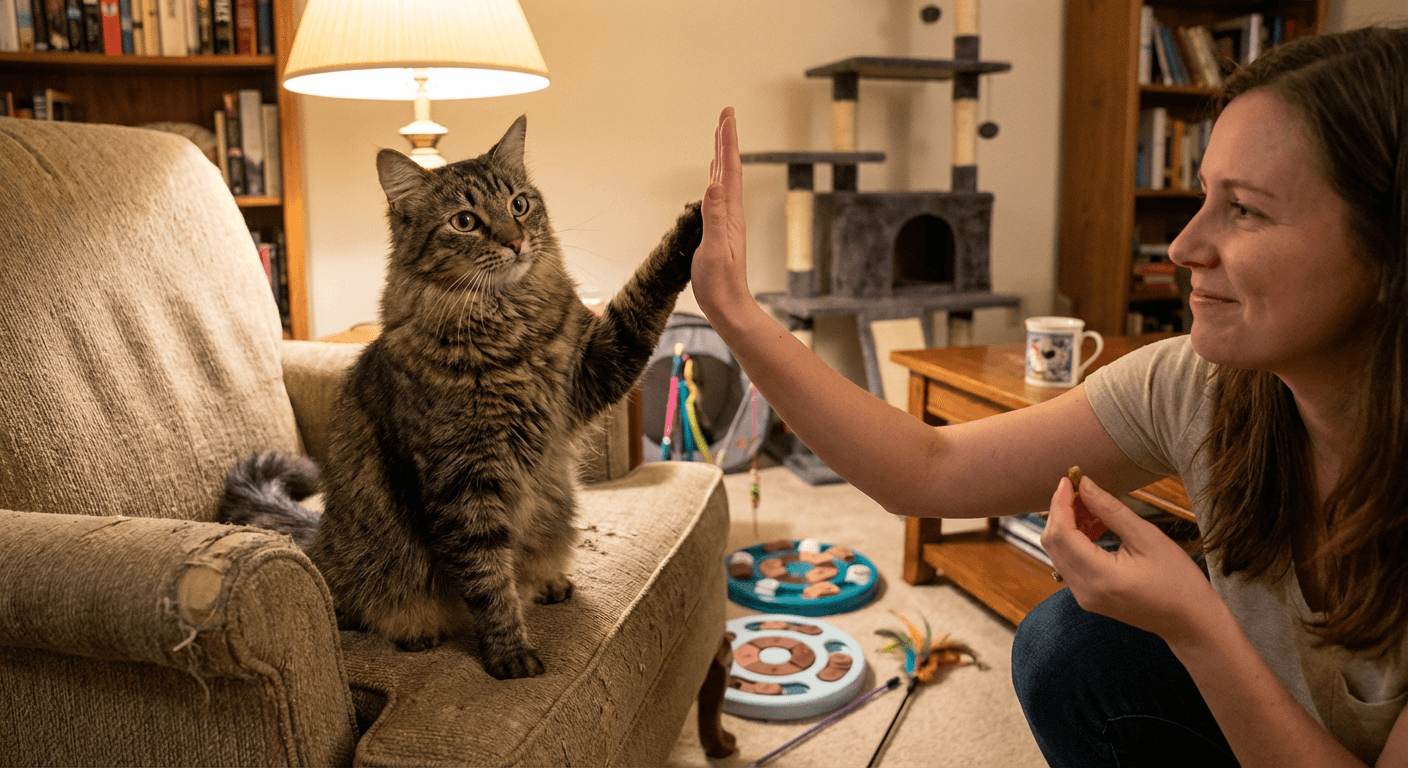
- Embrace Positive Reinforcement: Start with simple tricks like “sit,” “stay,” or “high five.” Use high-value treats and short, frequent training sessions (5-10 minutes is often ideal). Celebrate every small success. This improves their cognitive function and strengthens your bond.
- Invest in Varied Enrichment: Don’t just rely on one type of toy. Rotate toys, introduce puzzle feeders, and create vertical spaces with cat trees or shelves. Consider a “catio” for safe outdoor access. This prevents boredom and reduces stress-related behavioral problems.
- Understand Your Cat’s Communication: Learn to read their body language – tail position, ear orientation, vocalizations. This helps you respond to their needs more effectively and build trust. Better communication reduces frustration for both of you.
- Prioritize Regular Play: Dedicate specific times each day for interactive play using wand toys. This fulfills their predatory instincts, provides physical exercise, and is another powerful bonding tool. Regular exercise helps maintain a healthy weight and prevents obesity-related diseases.
- Consult Professionals: If you’re facing behavioral challenges, or simply want to take your cat’s training to the next level, don’t hesitate to consult a certified cat behavior consultant or veterinary behaviorist. They can offer tailored advice and scientifically-backed strategies.
- Stay Informed: Follow reputable pet care blogs, veterinary associations, and educational social media accounts. The pet industry is constantly innovating, and staying informed about new research, products, and training techniques will directly translate to better care for your pet.
By actively engaging with these principles, pet owners are not just providing basic care; they are offering a rich, stimulating, and loving environment that allows their cats to thrive mentally, physically, and emotionally. This proactive approach to pet parenting translates directly into improved health outcomes, fewer behavioral issues, and a significantly enhanced quality of life for your feline companion.
FAQ: Frequently Asked Questions
How intelligent are cats?
Cats are highly intelligent creatures, capable of problem-solving, understanding complex cues, and performing intricate sequences of actions. They exhibit sophisticated cognitive processes, demonstrating learning, memory, and even intentional communication, often underestimated in popular culture.
Can cats be trained?
Yes, cats can be effectively trained using positive reinforcement methods. By rewarding desired behaviors with high-value treats, toys, or praise, owners can teach cats tricks, good habits like litter box use, and even leash walking. This approach respects their natural instincts and builds a stronger bond.
Why is enrichment important for indoor cats?
Enrichment is crucial for indoor cats to prevent boredom, stress, and behavioral issues. It provides mental and physical stimulation, fulfilling their natural instincts and challenging their cognitive abilities. Activities like trick training, interactive toys, and environmental enhancements contribute to their overall psychological and physical well-being.
How do viral pet videos affect the pet industry?
Viral pet videos significantly influence the pet industry by inspiring owners to invest more in their pets’ enrichment and training. This drives demand for innovative products like interactive toys and training aids, leads to growth in professional pet services, and encourages educational content creation by experts, ultimately shaping market trends and promoting better pet care.
What are some practical tips for cat owners?
Practical tips include embracing positive reinforcement for training, investing in varied enrichment (toys, cat trees, catios), understanding your cat’s body language, prioritizing regular interactive play sessions, consulting professionals for behavioral challenges, and staying informed about new pet care research and products.
Conclusion
The impact of videos like Boy’s extends far beyond a fleeting moment of internet fame. It serves as a powerful reminder that our pets are intelligent, capable, and deeply connected to us. It underscores the advancements in our understanding of animal behavior and the ever-growing industry dedicated to supporting pet wellness. For pet owners, veterinarians, trainers, and everyone in between, the tale of a cat performing a “quadruple flip” is a compelling call to action: to continually learn, adapt, and provide the best possible lives for the animals who bring so much joy and wonder into our world. The future of pet care is bright, dynamic, and full of incredible possibilities, all inspired by the extraordinary capabilities and unbreakable spirit of our beloved companions.