
Expert Guide to The Best Dog Dryers for Grooming
The Best Dog Dryers: A Comprehensive Guide to Optimal Canine Grooming
🔑Key Takeaways
- Selecting the ideal dog dryer is dependent on your dog’s size, coat type, and temperament.
- Proper drying is crucial for preventing skin issues like hot spots, yeast infections, and matting, and for enhancing your dog’s comfort.
- High-velocity forced-air dryers are essential for double-coated and large breeds, while quieter, gentler options suit small or anxious dogs.
- Prioritize safety by using low heat, providing ear protection, and desensitizing your dog to the dryer.
- The right dryer improves home grooming efficiency, reduces shedding, and contributes to overall canine health and well-being.
📑Table of Contents
- Why Proper Dog Drying Matters: Beyond Just Aesthetics
- Understanding Dog Coat Types: The Foundation of Dryer Choice
- Dog Size and Temperament: Tailoring Your Approach
- Types of Dog Dryers: Features and Functions
- Expert Take: Jae Thomas, CPDT-KA on Dryer Selection
- Prioritizing Safety and Comfort During Drying
- Practical Benefits for Pet Owners and Professionals
- Beyond the Dryer: A Holistic Grooming Approach
- Choosing the Right Dryer: A Decision Matrix
- FAQ
- Conclusion
The rhythmic hum of a blow dryer is a familiar sound in many households, often associated with a freshly washed and styled look. For pet parents, the decision of which dog dryer to invest in is far more critical than just achieving a fluffy finish. A truly effective and safe drying routine is paramount to a dog’s health, comfort, and overall well-being, influencing everything from skin integrity to behavioral acceptance of grooming. In the ever-evolving world of pet care, understanding the nuances of drying technology and matching it to your individual dog’s needs is key.
At first glance, the market for dog dryers can seem overwhelming, with options ranging from compact handheld devices to powerful professional machines. However, the guiding principle in selecting the best dog dryer is beautifully simple and profoundly important: it’s not a one-size-fits-all solution. As Jae Thomas, CPDT-KA, a certified professional dog trainer, aptly points out, “While I know my way around a powerful, high-velocity dog blow dryer, I realize that an expensive two-motor dog dryer isn’t a must-have for every pet parent and the best dog dryer for you is largely dependent on your dog’s size and coat type.” This insightful perspective forms the cornerstone of our comprehensive guide, emphasizing that the “best” dryer is ultimately the one that meets the unique requirements of your canine companion while ensuring their safety and comfort.
This post will delve deep into the world of dog dryers, exploring why proper drying is more than just a luxury, examining how different coat types and sizes dictate specific needs, outlining the various types of dryers available, and providing crucial safety protocols. We’ll also highlight the practical benefits for pet owners, veterinarians, trainers, and pet-related businesses, demonstrating how informed choices contribute to better pet wellness, improved grooming outcomes, and enhanced daily care routines.
✅Why Proper Dog Drying Matters: Beyond Just Aesthetics
While a dry, fluffy coat is certainly appealing, the benefits of thoroughly and correctly drying a dog extend far beyond superficial aesthetics. It’s a fundamental aspect of preventive health care, contributing significantly to a dog’s physical comfort and psychological well-being.
◻Preventing Skin and Coat Issues
One of the most critical reasons for effective drying is the prevention of dermatological problems. A damp coat, particularly one that remains wet for an extended period, creates a warm, moist environment – an ideal breeding ground for bacteria, yeast, and fungi. This can lead to a host of uncomfortable and often painful conditions, including:
- Hot Spots (Acute Moist Dermatitis): These rapidly developing, intensely itchy, red, and weeping lesions are often triggered by prolonged dampness or irritation. Proper drying significantly reduces this risk.
- Yeast Infections: Malassezia dermatitis, a common yeast infection, thrives in moist conditions, leading to greasy skin, hair loss, and a distinctive yeasty odor.
- Bacterial Skin Infections (Pyoderma): Bacterial overgrowth can occur quickly on damp skin, causing pustules, crusts, and itching.
- Matting and Tangles: For dogs with longer or double coats, wet fur can quickly felt together, forming painful mats that pull on the skin. These mats trap moisture and debris, further exacerbating skin issues and making grooming difficult or impossible without shaving. High-velocity dryers are particularly effective at “blasting” out loose undercoat, preventing matting before it starts.
◻Enhancing Comfort and Reducing Odors
No dog enjoys feeling cold and damp, especially after a bath. Thorough drying ensures their comfort and helps regulate their body temperature. Moreover, the characteristic “wet dog smell” isn’t just unpleasant; it’s often a sign of microbial activity on the damp coat. Efficient drying eliminates this damp environment, significantly reducing unpleasant odors and leaving your dog smelling fresher for longer.
◻Improving Grooming Efficiency and Reducing Shedding
For many pet owners, grooming can be a chore. However, a good dog dryer can transform the experience. High-velocity dryers, in particular, can literally blow out loose hair and dander from the undercoat, significantly reducing shedding around the house. This makes subsequent brushing easier, more effective, and helps maintain a healthier coat between professional grooming sessions. For grooming professionals, an efficient dryer is indispensable for saving time, achieving superior finishes, and ensuring client satisfaction.
◻Behavioral Acceptance and Bonding
Introducing a dryer properly can turn a potentially stressful experience into a neutral or even positive one for your dog. A dog accustomed to the dryer noise and sensation is generally more cooperative during grooming, reducing anxiety for both pet and owner. This positive association can strengthen the bond and make future grooming much smoother.
✅Understanding Dog Coat Types: The Foundation of Dryer Choice
The variety of dog coats is astonishing, a testament to centuries of selective breeding for different purposes and aesthetics. Each coat type presents unique challenges and opportunities when it comes to drying, making it the primary factor in selecting the right equipment.
🔹Short Coats (e.g., Beagles, Pugs, Greyhounds, Dobermans)
These breeds typically have a single, short layer of fur that lies close to the body.
- Drying Needs: They dry relatively quickly on their own, but a quick towel dry followed by a gentle, low-heat handheld dryer (kept at a safe distance) or even a warm towel rub can speed up the process and remove loose hairs.
- Best Dryer Type: A standard human hairdryer on a cool/low setting or a low-power, quiet dog-specific dryer is often sufficient. High-velocity dryers are usually overkill unless for quick blast drying to remove shedding hair.
🔹Medium Coats (e.g., Golden Retrievers, Border Collies, Labrador Retrievers)
These coats have moderate length and density, often with a slight undercoat.
- Drying Needs: Require more attention than short coats to ensure the undercoat dries completely, preventing dampness near the skin. Brushing while drying is important to prevent tangles.
- Best Dryer Type: A medium-power forced-air dryer is a great choice. Handheld dog dryers with adjustable heat and speed settings work well. For Labs or Goldens that love water, a more powerful forced-air dryer can significantly cut down drying time.
🔹Long/Silky Coats (e.g., Afghan Hounds, Yorkshire Terriers, Shih Tzus, Maltese)
Characterized by fine, flowing hair that can be prone to tangling and breakage.
- Drying Needs: Gentle drying is paramount to prevent damage, frizz, and matting. The hair needs to be dried carefully, often section by section, with a brush to smooth it out.
- Best Dryer Type: A stand dryer (allowing for two-handed brushing) or a quiet, low-to-medium velocity handheld dryer with a concentrator nozzle is ideal. Avoid very high heat and excessive force, which can damage the delicate hair shafts.
🔹Double Coats (e.g., Huskies, German Shepherds, Samoyeds, Akitas, Pomeranians)
These breeds possess a dense, insulating undercoat beneath a protective outer coat. This coat type is designed to protect against extreme temperatures.
- Drying Needs: This is where high-velocity dryers become indispensable. The dense undercoat traps an immense amount of water and will not air dry effectively, leading to major matting and skin issues if left damp. The dryer needs to penetrate through the topcoat to dry the undercoat completely.
- Best Dryer Type: A powerful high-velocity forced-air dryer is a must-have. These dryers use force, not heat, to blast water out of the coat and separate the hairs, preventing mats and promoting thorough drying. Using a regular human hairdryer on a double-coated dog is often ineffective and can lead to dangerous skin conditions.
🔹Curly/Wiry Coats (e.g., Poodles, Bichon Frise, Terriers like Schnauzers, Airedales)
Curly coats are prone to matting and need specific techniques to maintain their texture. Wiry coats have a harsh outer layer and a soft undercoat.
- Drying Needs: Poodles and Bichons require thorough drying and brushing to achieve their characteristic fluffy, full look, preventing tight curls from matting. Terriers need careful drying to preserve the wiry texture if hand-stripping, or to achieve a smooth finish if clipped.
- Best Dryer Type: A stand dryer is excellent for poodles and bichons, allowing the groomer to brush and dry simultaneously. Forced-air dryers can be used, but careful brushing is crucial to avoid frizz and matting. For wiry coats, a general-purpose forced-air dryer is usually sufficient.
🔹Sensitive Skin/Hairless Breeds (e.g., Chinese Crested, Xoloitzcuintli, Bulldogs with skin folds)
These dogs have unique needs due to their lack of fur or predispositions to skin irritation.
- Drying Needs: Very gentle, low-to-no heat drying is critical. For hairless breeds, focus on drying skin folds carefully to prevent moisture buildup and subsequent infections. Bulldogs also benefit from diligent drying of their facial and tail folds.
- Best Dryer Type: The gentlest settings on a quiet, low-velocity dog dryer or even a soft towel followed by air drying in a warm environment. Avoid any high heat or strong air currents that could irritate sensitive skin.
✅Dog Size and Temperament: Tailoring Your Approach
Beyond coat type, a dog’s size and temperament play a significant role in determining the most suitable dryer and drying technique.
◻Small Dogs (e.g., Chihuahuas, Toy Poodles, Pomeranians)
- Considerations: Easily overwhelmed by powerful dryers. Can be physically delicate.
- Approach: Start with low settings, ensure the dryer is not too close. Their small size means they dry quickly. Quiet dryers are often a good choice to prevent fear.
◻Medium to Large Dogs (e.g., Labs, Goldens, Huskies, German Shepherds)
- Considerations: More volume to dry, often more active. May require stronger airflow for efficiency.
- Approach: These dogs can generally tolerate higher settings on forced-air dryers. Patience and breaks are key, especially for larger breeds where drying can take considerable time. Training and desensitization are crucial for cooperative behavior.
◻Giant Breeds (e.g., Great Danes, Newfoundlands, Mastiffs)
- Considerations: Immense volume of hair (especially Newfoundlands), long drying times. Powerful equipment is almost a necessity to complete the task efficiently.
- Approach: A robust high-velocity dryer is virtually essential. Consider a stand dryer for ergonomic benefits for the groomer, allowing for two-handed brushing. Breaks are critical for both dog and handler.
◻Anxious/Fearful Dogs
- Considerations: Noise and the sensation of forced air can be terrifying. This can lead to stress, aggression, or a lifelong aversion to grooming.
- Approach: This is where a quiet dryer is invaluable. Desensitization and counter-conditioning are critical. Start with the dryer off, then on low power at a distance, gradually moving closer while providing treats and praise. Never force the dog. Some dogs may require professional help or even mild sedation from a vet for initial grooming sessions.
✅Types of Dog Dryers: Features and Functions
The dog dryer market offers a range of options, each designed for specific uses and benefits. Understanding these distinctions is crucial for making an informed choice.
1. High-Velocity Forced-Air Dryers (Blasters)
- Description: These are the workhorses of the grooming world. They feature powerful motors that generate a high volume of unheated or minimally heated air. They do not use heating elements like human hair dryers; rather, they rely on the friction of the powerful airflow to generate a slight warmth, which is much safer for a dog’s skin.
- Benefits:
- Extremely Fast Drying: By literally “blasting” water off the coat, they dramatically reduce drying time.
- Dematiing & Deshedding: The powerful airflow helps separate tangled hair and blows out loose undercoat, preventing mats and reducing shedding.
- Prevents Hot Spots: Dries the coat down to the skin, preventing moisture from lingering.
- When to Use: Essential for double-coated breeds (Huskies, Shepherds, Malamutes), large breeds, and dogs with thick or dense coats. Highly recommended for professional groomers and breeders.
- Safety: Always use ear protection for both dog and handler. Never point the nozzle directly at sensitive areas like eyes, ears, or genitals. Start on a low setting and gradually increase power.
2. Handheld Dog Dryers (Similar to Human Hair Dryers but Pet-Specific)
- Description: These are similar in appearance to human hair dryers but are specifically designed for pets. They often have lower heat settings, quieter motors, and more durable housings.
- Benefits:
- Convenience: Portable and easy to use for quick touch-ups or smaller dogs.
- Control: Allows for precise drying of specific areas.
- Adjustable: Many models offer multiple heat and speed settings.
- When to Use: Ideal for short-coated dogs, small breeds, and for drying delicate areas. Can be a good entry-level option for home groomers.
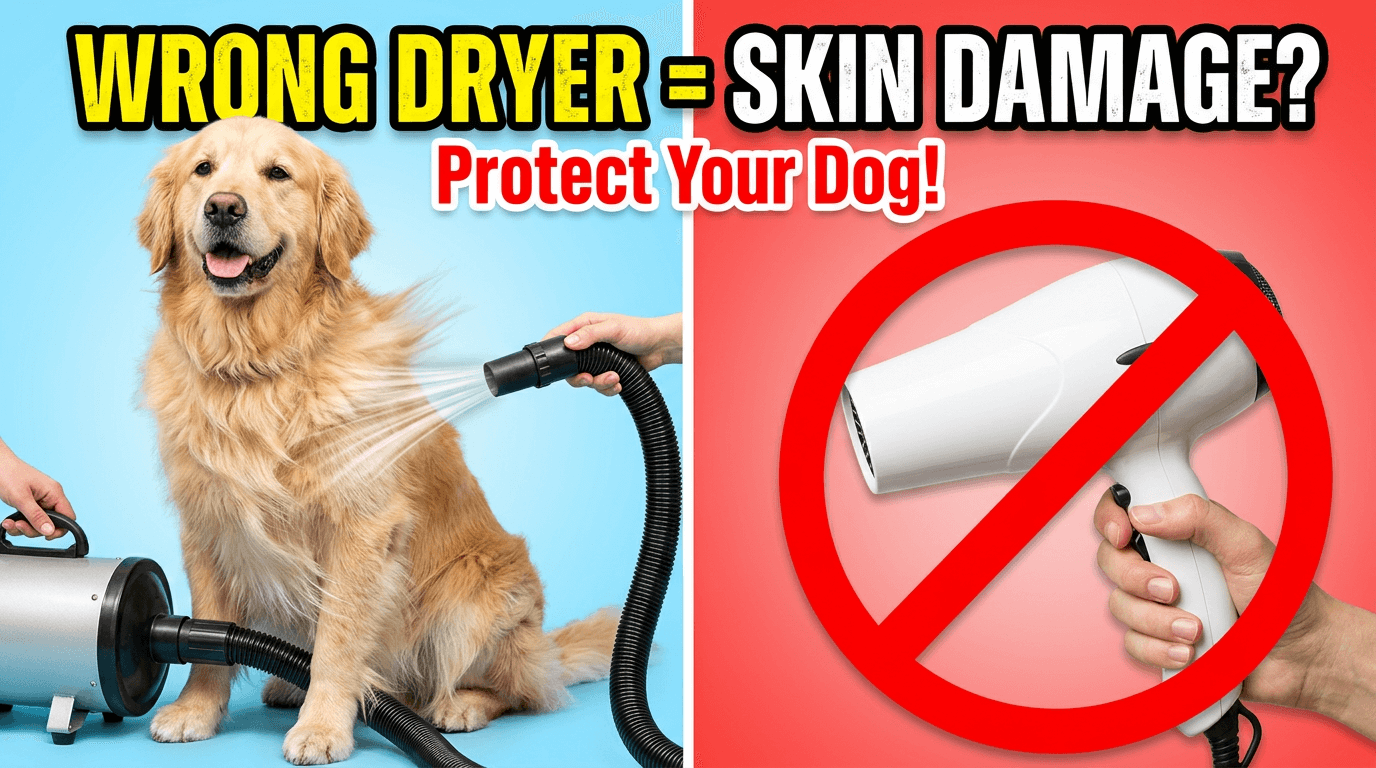
- Caution with Human Hair Dryers: While accessible, human hair dryers are not recommended. They often run too hot, risking skin burns and overheating. They are also typically louder, which can scare dogs. If absolutely no other option is available, use only on the coolest setting, at a distance, and with constant vigilance.
3. Stand Dryers
- Description: These dryers are mounted on a stand, allowing for hands-free operation. They typically have adjustable height and angle.
- Benefits:
- Hands-Free: Frees up both hands for brushing, styling, or comforting the dog.
- Ergonomic: Reduces strain on the groomer.
- Precision: Can be angled to direct airflow precisely.
- When to Use: Popular with professional groomers, show dog owners, and anyone who needs to brush or style while drying. Excellent for long-coated or curly-coated breeds that require simultaneous brushing.
4. Cage Dryers (for Professional/Veterinary Use ONLY)
- Description: These systems involve circulating air within a kennel or crate.
- Benefits (in controlled professional settings): Can be used for dogs that need to dry slowly or for multiple dogs simultaneously.
- Extreme Caution and Risks: Cage dryers are highly controversial and carry significant risks of overheating, heatstroke, and anxiety if not used under constant, direct, and expert supervision with proper temperature control and ventilation. They are generally NOT recommended for home use under any circumstances due to the high risk of severe harm or death if not monitored meticulously.
- When to Use: ONLY by trained professionals in facilities with strict safety protocols, temperature monitoring, and constant supervision. Never leave a dog unattended in a cage dryer.
5. Quiet Dryers
- Description: Designed with noise reduction technology, these dryers operate at a lower decibel level.
- Benefits: Significantly reduces stress and fear for noise-sensitive or anxious dogs, making the grooming experience more pleasant for everyone.
- When to Use: Highly recommended for all dogs, but especially for puppies, elderly dogs, and those with a history of fear or anxiety related to loud noises. These can be found in high-velocity and handheld formats.
Read More : Find the Best Pet Grooming Near Me: Pamper Your Pet Today!
✅Expert Take: Jae Thomas, CPDT-KA on Dryer Selection
“While I know my way around a powerful, high-velocity dog blow dryer, I realize that an expensive two-motor dog dryer isn’t a must-have for every pet parent and the best dog dryer for you is largely dependent on your dog’s size and coat type.”
Jae Thomas, a certified professional dog trainer (CPDT-KA), offers a crucial perspective that underscores the importance of a personalized approach to pet grooming. Her insight highlights that raw power, while often impressive, is not always synonymous with the “best” choice for every household. The emphasis on “size and coat type” directly ties into a dog’s comfort, safety, and ultimately, their willingness to cooperate with grooming. As a dog trainer, Thomas understands that positive experiences during grooming contribute to a dog’s overall behavioral health. Forcing a small, short-coated dog under a roaring two-motor dryer is not only unnecessary for drying but could also instill a lifelong fear of grooming, negating any perceived efficiency gains. Her statement serves as a valuable reminder for pet owners to evaluate their specific needs rather than succumbing to the allure of the most expensive or professional-grade equipment, emphasizing that the most effective tool is the one tailored to the individual dog and owner.
✅Prioritizing Safety and Comfort During Drying
Regardless of the dryer type chosen, safety and your dog’s comfort must always be the top priorities. Even the best equipment can cause harm if used improperly.
- Temperature Control is Paramount: Always use the lowest possible heat setting. Most dog-specific forced-air dryers produce little to no heat, relying on airflow. If using a dryer with a heating element (like a handheld or stand dryer), consistently monitor the air temperature with your hand. Never allow the air to feel uncomfortably hot on your skin; if it’s too hot for you, it’s too hot for your dog. Overheating can cause skin burns, heatstroke, and extreme distress.
- Ear Protection: High-velocity dryers are loud. For both your dog and yourself, consider using Happy Hoodies (snoods) for dogs, cotton balls in their ears, or even ear muffs. This reduces noise anxiety and protects hearing.
- Desensitization and Positive Reinforcement: Introduce the dryer gradually. Start with the dryer off, letting your dog investigate. Then turn it on low, at a distance, praising and rewarding calm behavior with treats. Gradually move closer, always watching your dog’s body language for signs of stress. Keep initial sessions short and positive.
- Brushing While Drying: For most medium to long-haired breeds, brushing while drying helps separate the fur, improves airflow, prevents mats, and speeds up the process. Always brush in the direction of hair growth.
- Proper Handling and Restraint: Use a grooming table with a secure noose for safety, or work on a non-slip surface. Maintain a gentle but firm hold. Avoid directing strong airflow into your dog’s face, ears, or sensitive areas (e.g., genitals, anus).
- Monitor for Distress: Pay close attention to your dog’s body language. Panting, yawning, lip licking, tucked tail, flattened ears, or attempts to escape are all signs of stress. If your dog shows these signs, take a break, reassure them, and lower the dryer’s intensity or stop the session.
- Ventilation: Ensure you are grooming in a well-ventilated area. This helps disperse airborne hair and dander, and prevents the air from becoming too warm or humid.
✅Practical Benefits for Pet Owners and Professionals
Investing in the right dog dryer and understanding proper drying techniques yields tangible benefits across the entire pet ecosystem.
✔For Pet Owners:
- Improved Health and Comfort: Healthier skin and coat, significantly reduced risk of hot spots, yeast infections, and matting. A dry dog is a comfortable dog.
- Reduced Odors and Allergens: Less “wet dog” smell, fewer allergens from loose hair and dander floating in the home.
- Easier Home Grooming: Cuts down on brushing time, makes DIY grooming more manageable, and fosters a better bond through positive grooming experiences.
- Cost Savings: While there’s an initial investment, proper home drying can reduce the frequency of professional grooming appointments, especially for maintenance baths.
✔For Veterinarians:
- Preventive Care: Educating clients on proper drying can significantly reduce the incidence of skin conditions, allowing vets to focus on more serious health issues.
- Post-Surgical and Medical Care: Specific dryers can be used for sensitive post-operative areas or to aid in the application of topical medications, ensuring the pet stays clean and dry without irritation.
- Early Detection: Regular grooming (including drying) can help owners spot lumps, bumps, parasites, or skin abnormalities earlier, leading to prompt veterinary attention.
✔For Groomers and Trainers:
- Efficiency and Quality: High-velocity dryers drastically cut down drying time, allowing groomers to serve more clients while achieving a superior, fluffy, and tangle-free finish.
- Client Satisfaction: Well-groomed, healthy pets lead to happier clients and repeat business.
- Safer Practices: Proper drying minimizes the risk of skin irritation or overheating during long grooming sessions.
- Behavioral Management: Trainers can incorporate desensitization to dryers as part of their curriculum, helping create calm, cooperative grooming clients.
✔For Pet Product Sellers and Breeders:
- Informed Recommendations: Retailers can confidently recommend specific dryer types and accessories (like ear protection or grooming tables) based on customer needs.
- Showcasing Healthy Pets: Breeders can ensure their puppies and adult dogs are always presented in optimal condition, demonstrating their commitment to health and well-being.
- Expanding Product Lines: The demand for quiet, efficient, and specialized pet dryers represents a growth opportunity in the pet care market.
✅Beyond the Dryer: A Holistic Grooming Approach
While the dog dryer is a powerful tool, it’s part of a larger grooming ecosystem. For optimal results and a truly healthy pet, consider these complementary practices:
- Proper Bathing Techniques: Use high-quality shampoos and conditioners appropriate for your dog’s skin and coat type. Ensure thorough rinsing to remove all product residue, which can cause irritation and dullness.
- Regular Brushing: This is crucial before and after bathing/drying. It helps remove loose hair, prevents mats, stimulates blood circulation, and distributes natural oils.
- Nail Trimming and Ear Cleaning: Essential for overall hygiene and comfort.
- Professional Grooming: For complex coat types or dogs requiring specific styling, professional grooming every few weeks or months can maintain coat health and ensure proper care.
✅Choosing the Right Dryer: A Decision Matrix
| Factor | Considerations | Recommended Dryer Type(s) |
|---|---|---|
| Dog Size | Small dogs: easily overwhelmed. Large/Giant dogs: require more power and time. | Small: Low-power handheld, quiet dryer. Large: High-velocity forced-air dryer. |
| Coat Type | Short: minimal drying. Double/Thick: needs high power. Long/Curly: gentle heat, hands-free for brushing. | Short: Handheld. Double: High-velocity. Long/Curly: Stand dryer, gentle forced-air. |
| Temperament | Anxious/noise-sensitive dogs require quiet operation and careful introduction. | Quiet dryers (various types), desensitization, positive reinforcement. |
| Frequency of Bathing | Occasional baths: a versatile home dryer. Frequent baths (e.g., show dogs, working dogs): more powerful and durable professional-grade dryer. | Occasional: Handheld, low-medium forced-air. Frequent: High-velocity, stand dryer. |
| Budget | Prices vary widely. Entry-level handhelds are affordable; professional high-velocity dryers are a significant investment. | Match budget to needs; don’t compromise safety for cost. |
| Grooming Space | Compact dryers for small spaces. Stand dryers require a dedicated grooming area. Consider noise level in shared living spaces. | Handheld for small spaces. Stand/High-velocity for dedicated grooming areas. |
| Desired Drying Time | Quick touch-ups vs. full, thorough dry. | Quick: Handheld. Thorough/Fast: High-velocity. |
📑FAQ
➖Q: Why can’t I just use a human hairdryer on my dog?
A: Human hairdryers often run too hot, posing a significant risk of skin burns and overheating for your dog. They are also typically louder, which can be frightening for pets. Dog-specific dryers are designed with lower heat settings and quieter motors for canine safety and comfort. If absolutely necessary, use a human dryer only on the coolest setting, at a distance, and with constant vigilance.
➖Q: What are hot spots and how does drying prevent them?
A: Hot spots, or acute moist dermatitis, are rapidly developing, intensely itchy, red, and weeping skin lesions. They are often triggered by prolonged dampness or irritation on the skin. Thorough and proper drying, especially down to the skin, prevents the warm, moist environment where bacteria and yeast thrive, significantly reducing the risk of hot spot development.
➖Q: Are cage dryers safe for home use?
A: No, cage dryers are generally NOT recommended for home use under any circumstances. They carry significant risks of overheating, heatstroke, and anxiety if not used under constant, direct, and expert supervision with proper temperature control and ventilation, which is typically only available in professional or veterinary settings with strict safety protocols.
➖Q: How do I introduce my dog to a new dryer if they are scared?
A: Introduce the dryer gradually through desensitization and positive reinforcement. Start with the dryer off, letting your dog investigate it. Then turn it on a low setting, at a distance, praising and rewarding calm behavior with treats. Gradually move closer in short sessions, always watching for signs of stress. Never force your dog. Using a quiet dryer can also greatly help.
➖Q: Which dryer is best for a dog with a thick double coat?
A: For dogs with thick double coats (like Huskies, German Shepherds, or Samoyeds), a powerful high-velocity forced-air dryer is essential. These dryers use strong airflow to effectively blast water out of the dense undercoat and separate hairs, preventing matting and ensuring thorough drying down to the skin.
💡Conclusion | The journey to finding “the best dog dryer” is ultimately a personal one, deeply rooted in the unique characteristics of your beloved canine companion. As Jae Thomas, CPDT-KA, wisely emphasizes, an expensive, high-powered unit isn’t always the answer, nor is it universally necessary. Instead, the most effective dryer is the one that aligns perfectly with your dog’s size, coat type, and temperament, while prioritizing their safety and comfort above all else.
By understanding the distinct needs of different coat types, respecting individual canine personalities, and selecting from the diverse range of dryers available, pet owners, veterinarians, trainers, and industry professionals can all contribute to a higher standard of pet care. The right drying solution not only ensures a beautifully groomed pet but also safeguards their skin health, enhances their emotional well-being, and strengthens the invaluable bond shared between humans and their animal companions. Investing thoughtfully in your dog’s grooming routine is an investment in their overall health and happiness, proving that sometimes, the simplest insights lead to the most profound improvements in daily care.