Best Brushes for Double-Coated Dogs: Top Picks for Healthy, Shed-Free Fur
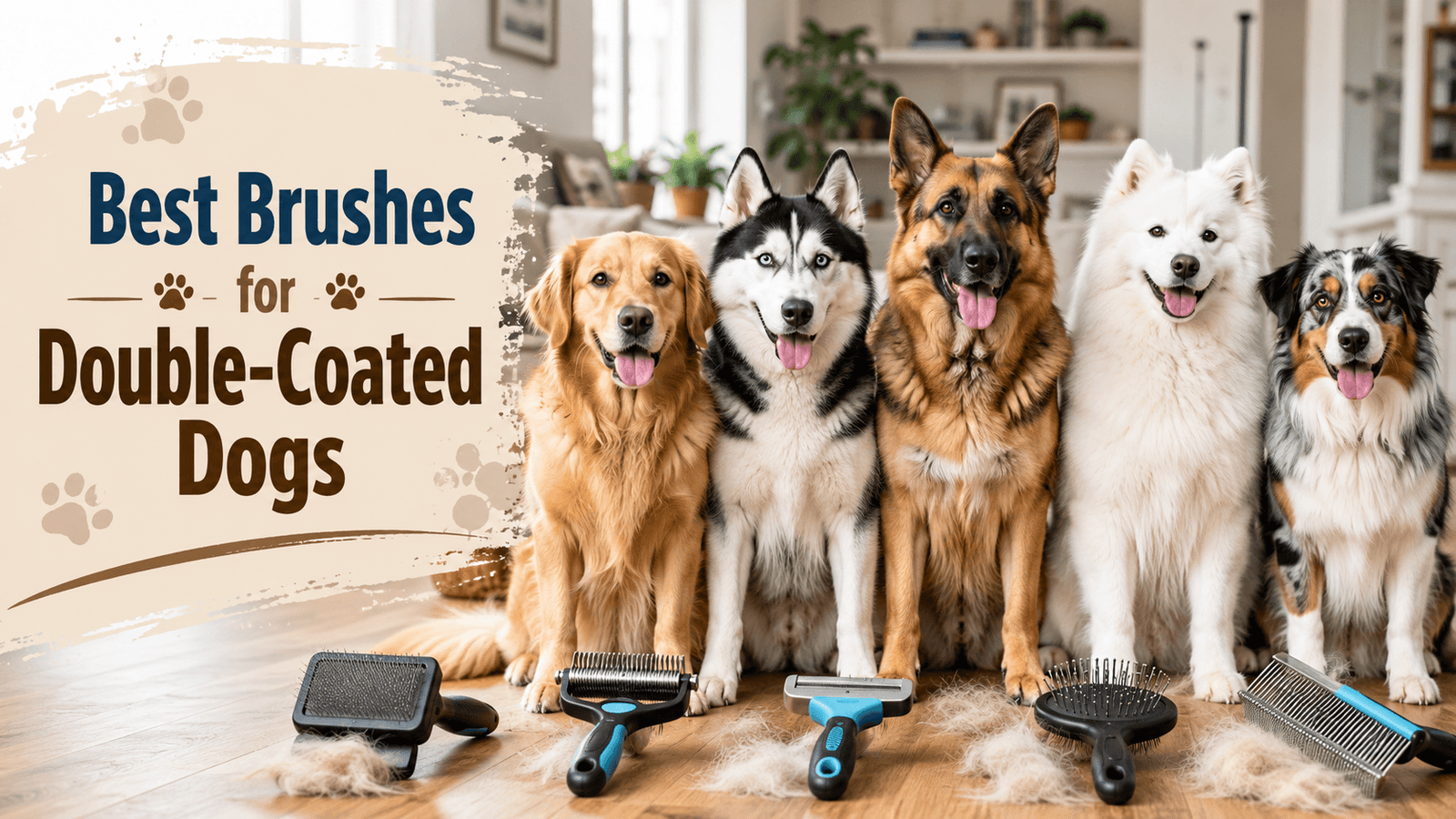
If you own a double-coated dog, you already know the struggle—fur everywhere! 🐶 From the couch to your clothes, shedding can feel endless. Fortunately, choosing the best brush for a double-coated dog can dramatically reduce loose hair, prevent painful mats, and keep your dog’s skin and coat healthy.
Whether you have a Golden Retriever, Husky, German Shepherd, Australian Shepherd, Akita, Chow Chow, or Samoyed, the right grooming tool makes all the difference.
In this guide, we’ll compare the best brush types, explain how they work, and help you choose the perfect one for your dog’s grooming routine.
What Is a Double Coat?
A double coat consists of two layers:
- Outer Coat (Guard Hairs): Protects against dirt, rain, and sun.
- Undercoat: Soft, dense insulation that keeps dogs warm in winter and cool in summer.
These breeds naturally shed their undercoat, especially during seasonal coat blows.
Common double-coated breeds include:
- Golden Retriever
- Labrador Retriever
- German Shepherd
- Siberian Husky
- Alaskan Malamute
- Australian Shepherd
- Border Collie
- Bernese Mountain Dog
- Samoyed
- Akita
Why Regular Brushing Matters 🪮
Routine brushing offers several benefits:
✅ Reduces shedding around your home
✅ Prevents tangles and mats
✅ Removes dirt and loose undercoat
✅ Improves air circulation to the skin
✅ Distributes natural oils for a shiny coat
✅ Helps detect skin issues early
👉 Read More : Mastering a Fur-Free Home with Top Pet Hair Removers
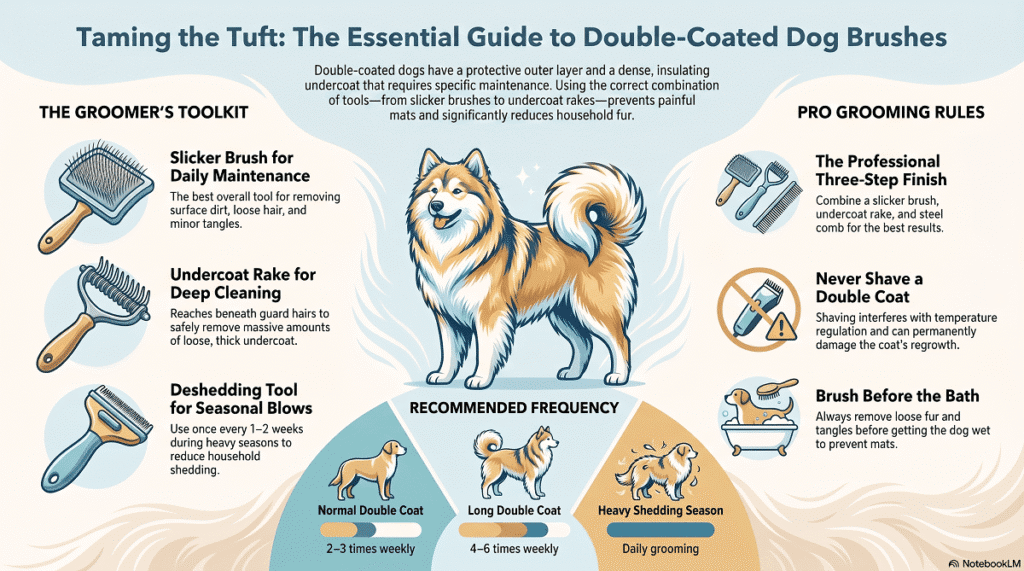
Types of Brushes for Double-Coated Dogs
1. Slicker Brush ⭐ (Best Overall)
A slicker brush features fine wire pins that remove loose hair, dirt, and minor tangles.
Best for:
- Everyday brushing
- Medium to long coats
- Removing loose topcoat hair
Pros
- Gentle on most coats
- Great finishing brush
- Helps prevent mats
Cons
- Doesn’t remove heavy undercoat as effectively
2. Undercoat Rake 🪮 (Best for Heavy Shedding)
An undercoat rake reaches deep beneath the guard hairs to remove loose undercoat safely.
Perfect during spring and fall shedding seasons.
Pros
- Excellent for thick coats
- Removes large amounts of loose fur
- Prevents compacted undercoat
Cons
- Should not be overused
3. Deshedding Tool 🐕
Designed specifically to reduce shedding by removing loose undercoat without cutting healthy guard hairs when used correctly.
Best For
- Seasonal coat blow
- Heavy shedders
- Thick undercoats
Pros
- Removes impressive amounts of loose fur
- Reduces household shedding
Cons
- Excessive use may thin the coat
4. Pin Brush
A pin brush resembles a human hairbrush with rounded pins.
Ideal for:
- Longer coats
- Daily maintenance
- Sensitive dogs
It smooths the coat without pulling too much hair.
5. Grooming Comb
A steel grooming comb helps finish the grooming session by checking for:
- Hidden mats
- Remaining loose fur
- Sensitive areas behind ears and legs
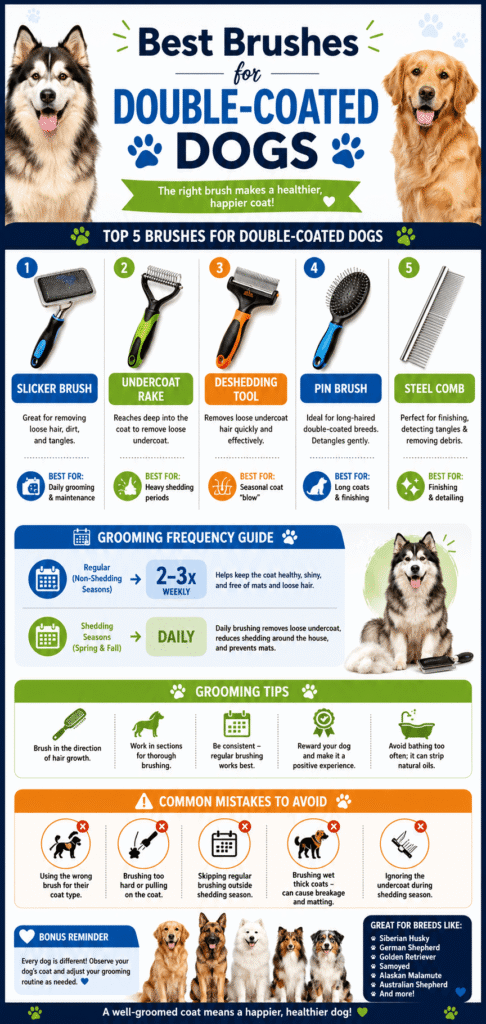
Best Brush Combination 🏆
Instead of relying on one brush, professional groomers often recommend using multiple tools:
| Purpose | Best Tool |
|---|---|
| Daily grooming | Slicker Brush |
| Heavy shedding | Undercoat Rake |
| Seasonal shedding | Deshedding Tool |
| Finishing | Steel Comb |
| Sensitive areas | Pin Brush |
How Often Should You Brush?
| Coat Type | Frequency |
|---|---|
| Normal | 2–3 times weekly |
| Heavy Shedding Season | Daily |
| Long Double Coat | 4–6 times weekly |
| Outdoor Dogs | Daily check |
Grooming Tips for Double-Coated Dogs ✂️
✔ Brush before bathing.
✔ Never shave a double-coated breed unless advised by a veterinarian for medical reasons.
✔ Brush in sections instead of rushing.
✔ Always brush in the direction of hair growth.
✔ Reward your dog with treats after grooming.
✔ Inspect behind ears, tail, legs, and under the collar.
👉 Read More : Why Is My Dog’s Nose Dry?
Common Grooming Mistakes 🚫
Avoid these common errors:
❌ Brushing only the top layer
❌ Using excessive force
❌ Ignoring the undercoat
❌ Bathing too frequently
❌ Waiting until mats develop
❌ Using the wrong grooming tool
How to Choose the Best Brush
Consider:
Coat Length
Long coats need slicker brushes and undercoat rakes.
Shedding Level
Heavy shedders benefit from deshedding tools.
Dog Size
Larger breeds require wider grooming heads.
Skin Sensitivity
Choose rounded pins for sensitive skin.
Grooming Frequency
Frequent grooming allows for gentler tools.
Frequently Asked Questions
What is the best brush for double-coated dogs?
A slicker brush combined with an undercoat rake provides the best overall grooming routine for most double-coated breeds.
Can I use a deshedding tool every day?
No. Most dogs only need a deshedding tool once every 1–2 weeks during heavy shedding seasons. Overuse may remove too much healthy undercoat.
Should I shave my double-coated dog?
Generally, no. The double coat helps regulate body temperature and protects the skin. Shaving can interfere with normal coat function and regrowth unless recommended by a veterinarian.
How often do double-coated dogs shed?
Most shed lightly year-round and experience heavier seasonal shedding—often called “blowing the coat”—once or twice a year.
Are slicker brushes safe?
Yes. When used gently, slicker brushes are safe and effective for removing loose hair and preventing tangles.
Which brush removes the most fur?
Undercoat rakes and deshedding tools remove the largest amount of loose undercoat during shedding season.
Conclusion 🐾
Choosing the best brushes for double-coated dogs is one of the easiest ways to keep your dog’s coat healthy, reduce shedding, and make grooming more comfortable. For the best results, combine a slicker brush for routine maintenance, an undercoat rake for deep grooming, and a steel comb to check for remaining tangles. With regular brushing and the right tools, your dog will look great—and you’ll spend less time vacuuming. 🐶✨