White Golden Retriever: 15 Amazing Facts About the Beautiful Cream-Colored Family Dog

The white golden retriever is one of the most admired dog breeds in the world. With its luxurious cream-colored coat, friendly personality, and remarkable intelligence, this beautiful dog has become a favorite among families, therapy organizations, and active pet lovers alike. Whether you’ve searched for dog golden retriever white, golden retriever dog white, or simply wondered why some Golden Retrievers appear almost snow-white, this comprehensive guide covers everything you need to know.
Despite their striking appearance, white Golden Retrievers are not a separate breed. They belong to the same beloved Golden Retriever breed and possess the same affectionate temperament, loyalty, and eagerness to please that have made Golden Retrievers one of the world’s most popular dogs.
Let’s explore what makes these elegant companions so special. 🐶❤️
What Is a White Golden Retriever?
A white golden retriever is simply a Golden Retriever with a very light cream or pale golden coat. The color is produced through genetics rather than crossbreeding or albinism.
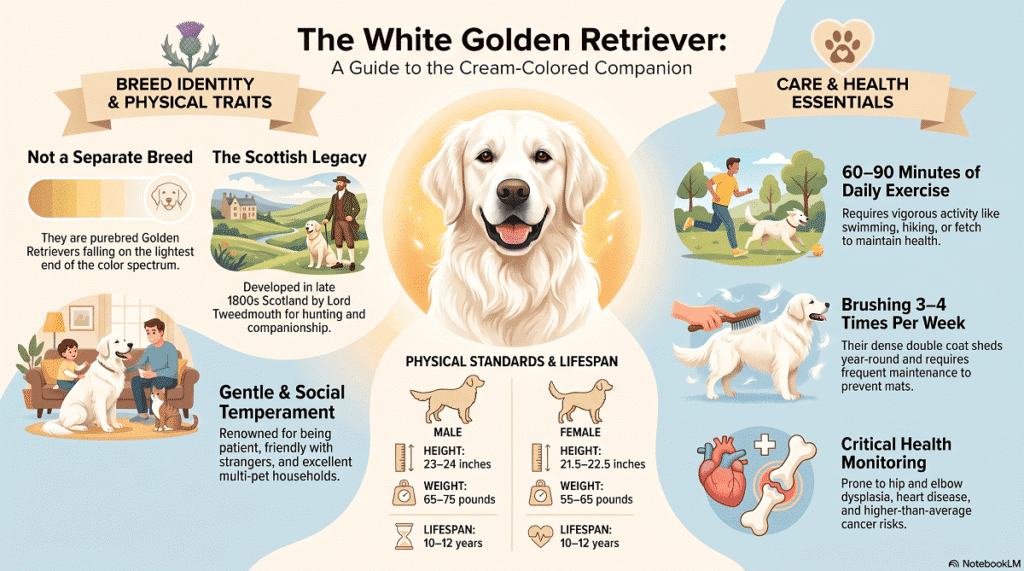
Many people mistakenly believe these dogs are rare or mixed with another breed. In reality, they are purebred Golden Retrievers whose coat falls on the lighter end of the breed’s accepted color spectrum.
Although often called:
- dog golden retriever white
- golden retriever dog white
- English Cream Golden Retriever
they are still officially classified as Golden Retrievers.
Their gentle personality remains identical to darker-coated Golden Retrievers.
History and Origin
Golden Retrievers originated in Scotland during the late 1800s. Lord Tweedmouth carefully developed the breed by crossing Yellow Retrievers with the now-extinct Tweed Water Spaniel.
The objective was simple:
- Excellent hunting companion
- Gentle family dog
- Superior swimming ability
- Intelligent working partner
Over decades, breeders in Europe favored lighter-colored coats, especially in England. This selective breeding eventually led to today’s beautiful cream-colored Golden Retrievers.
Today, these lighter dogs are especially popular in:
- United Kingdom 🇬🇧
- Canada 🇨🇦
- Australia 🇦🇺
- United States 🇺🇸
Why Are Some Golden Retrievers White?
One of the biggest misconceptions is that white Golden Retrievers are genetically different.
They are not.
Instead, coat color is determined by inherited genes from both parents.
Golden Retrievers naturally come in shades ranging from:
- Dark golden
- Rich golden
- Medium golden
- Light golden
- Cream
- Nearly white
The pale coat simply represents the lightest end of the accepted spectrum.
Genetics Behind the Coat Color
Several pigment genes influence coat color.
When puppies inherit lighter pigment genes from both parents, they develop the creamy white appearance that many owners adore.
Importantly:
❌ They are not albino
❌ They are not mixed breeds
❌ They are not a separate species
They are 100% Golden Retrievers.
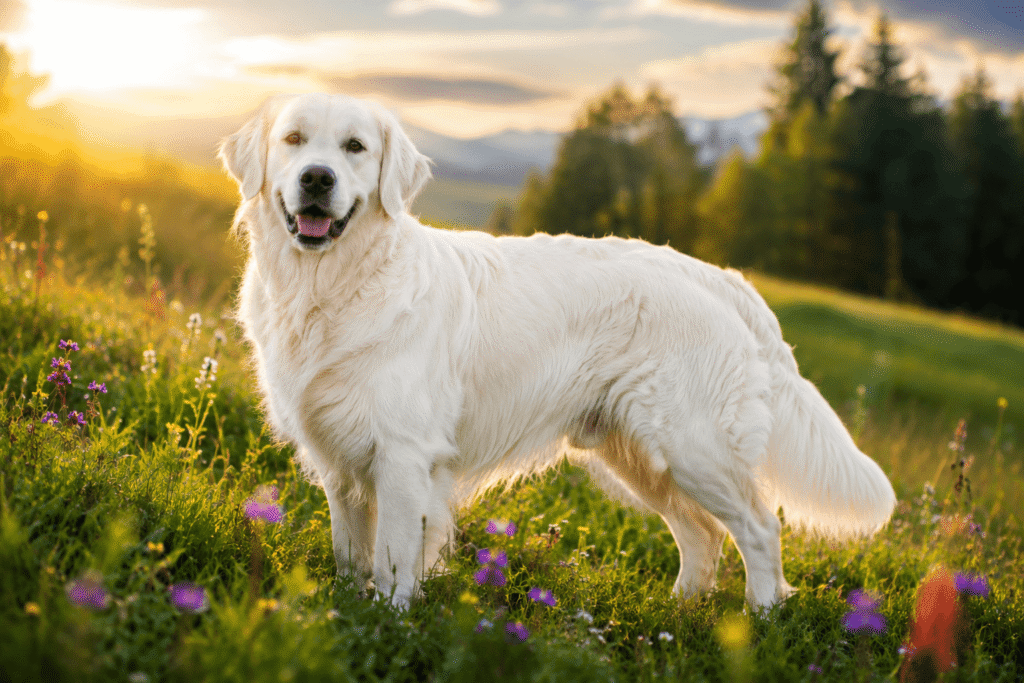
English Cream Golden Retrievers
Many breeders market these dogs as “English Cream Golden Retrievers.”
While the name sounds official, it mainly refers to breeding lines originating in Europe.
Characteristics often include:
- Broader skull
- Blockier body
- Thick cream coat
- Calm personality
- Slightly stockier appearance
However, personality differences depend far more on breeding quality than coat color alone.
Physical Appearance
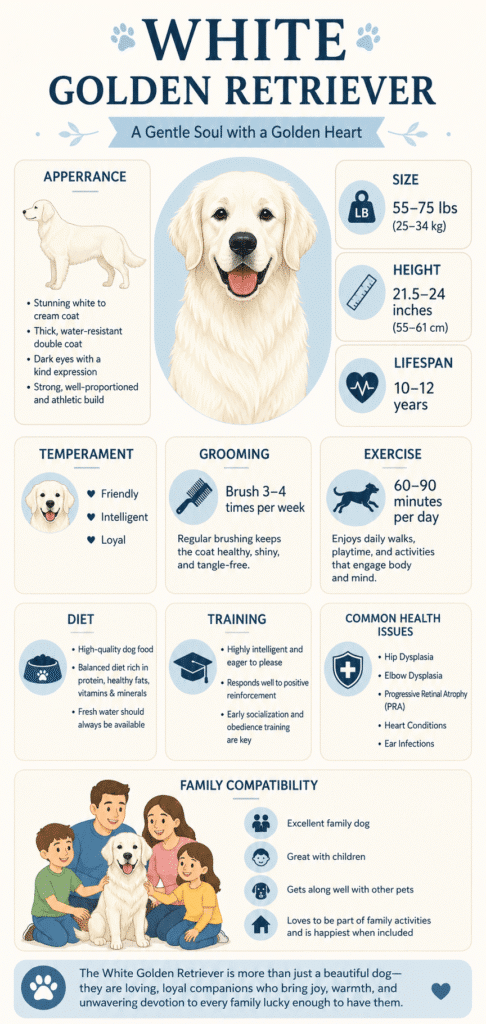
The white golden retriever is admired for its graceful build and elegant coat.
Size
Adult males:
- Height: 23–24 inches
- Weight: 65–75 pounds
Adult females:
- Height: 21.5–22.5 inches
- Weight: 55–65 pounds
Their athletic build makes them excellent companions for hiking, swimming, agility sports, and family adventures.
Coat
Perhaps their most striking feature is their luxurious double coat.
The coat includes:
- Soft insulating undercoat
- Water-resistant outer coat
- Feathering on legs
- Feathering on tail
- Thick neck fur
Their cream coat often appears white in bright sunlight, which explains the popularity of the keyword golden retriever dog white.
Eye Color
Most white Golden Retrievers have:
- Dark brown eyes 👀
- Black nose
- Black eye rims
These features beautifully contrast against their light-colored fur.
Lifespan
With excellent care, most white Golden Retrievers live:
10–12 years
Some healthy individuals live even longer with:
- Regular veterinary care
- Healthy diet
- Daily exercise
- Weight management
Read More ➡ Understanding Stress and Anxiety in Dogs: Causes, Signs, and Effective Solutions
Personality and Temperament ❤️
Golden Retrievers consistently rank among the friendliest dog breeds.
Their personality is often described as:
- Loving
- Gentle
- Patient
- Intelligent
- Loyal
- Social
- Playful
These traits remain exactly the same regardless of coat color.
The dog golden retriever white is especially popular with families because of its calm nature and desire to spend time with people.
Unlike many protective breeds, Golden Retrievers usually greet strangers with wagging tails rather than suspicion.
This makes them wonderful companions—but not ideal guard dogs.
Are White Golden Retrievers Good Family Dogs? 👨👩👧👦
Absolutely.
Few breeds match the family-friendly reputation of the white Golden Retriever.
They generally thrive in households with:
- Young children
- Teenagers
- Seniors
- Multiple pets
- Cats (when socialized)
- Other dogs
Their patience and affectionate personality make them excellent playmates for children. They enjoy participating in family activities, whether it’s a walk around the neighborhood, a camping trip, or simply relaxing indoors.
However, because they are highly social, they do not enjoy being left alone for long periods. Extended isolation can lead to boredom, anxiety, and destructive behaviors such as chewing or excessive barking.
Exercise Requirements 🏃♂️🐕
The white golden retriever is an energetic sporting dog that needs regular physical and mental stimulation.
Most adults require 60–90 minutes of exercise every day.
Great activities include:
- Long walks
- Hiking
- Swimming
- Fetch
- Agility training
- Obedience games
- Puzzle toys
- Frisbee
Exercise is not just about burning energy—it also helps maintain a healthy weight, supports joint health, and prevents boredom.
Puppies should avoid intense exercise until their bones and joints have fully developed.
Read More ➡ The Ultimate First Week With a New Puppy Checklist: 25 Essential Steps for a Happy Start
Diet and Nutrition 🍖🥦
A balanced diet is essential for keeping your Golden Retriever healthy and active.
Look for high-quality dog food that contains:
- Real meat as the first ingredient
- Healthy fats (especially omega-3 fatty acids)
- Whole grains or digestible carbohydrates
- Vitamins and minerals
- Joint-support ingredients like glucosamine and chondroitin
Avoid overfeeding, as Golden Retrievers are known for their hearty appetites and can become overweight if calorie intake isn’t managed.
Fresh water should always be available, especially after exercise.
Grooming Guide for a White Golden Retriever ✂️🛁
The luxurious coat of a white golden retriever is one of its most attractive features, but it also requires consistent care. Their dense double coat protects them from heat, cold, and water, yet it sheds throughout the year and even more heavily during seasonal coat changes.
Brushing
Brush your dog 3–4 times per week, and daily during spring and fall shedding seasons.
Regular brushing helps:
- Remove loose hair
- Prevent mats and tangles
- Distribute natural oils
- Keep the coat shiny
- Reduce shedding around your home
A slicker brush and an undercoat rake are excellent grooming tools.
Bathing
Most white Golden Retrievers only need a bath every 6–8 weeks, unless they become particularly dirty.
Use a gentle dog shampoo designed for light-colored coats to help maintain their bright cream appearance. Avoid overbathing, as it can strip the natural oils from the skin.
Nail Care
Trim nails every 3–4 weeks or whenever you hear them clicking on hard floors.
Ear Cleaning
Because Golden Retrievers have floppy ears, moisture can become trapped inside, increasing the risk of ear infections.
Check and clean their ears weekly using a veterinarian-approved ear cleaner.
Dental Care
Brush your dog’s teeth several times each week. Good dental hygiene helps prevent plaque buildup, bad breath, and gum disease.
Training Tips 🐕🎓
One reason the golden retriever dog white is so popular is its remarkable intelligence. Golden Retrievers consistently rank among the easiest breeds to train because they are eager to please and enjoy learning.
Start Early
Begin training and socialization during puppyhood. Introduce your puppy to different people, sounds, places, and other animals in a positive way.
Use Positive Reinforcement
Reward desired behaviors with:
- Treats
- Praise
- Toys
- Playtime
Positive reinforcement builds trust and encourages faster learning.
Teach Basic Commands
Every Golden Retriever should master:
- Sit
- Stay
- Come
- Down
- Leave it
- Heel
These commands improve safety and strengthen the bond between you and your dog.
Mental Stimulation
Golden Retrievers are highly intelligent and can become bored if they lack mental challenges.
Try activities such as:
- Puzzle feeders
- Hide-and-seek games
- Scent work
- Obedience practice
- Agility courses
A mentally engaged dog is often calmer and happier.
Common Health Problems ❤️
Although generally healthy, the white golden retriever shares many of the same health concerns as other Golden Retrievers.
Hip Dysplasia
This inherited condition affects the hip joints and may cause pain, stiffness, and reduced mobility.
Maintaining a healthy weight and purchasing puppies from health-tested parents can reduce the risk.
Elbow Dysplasia
Elbow abnormalities can lead to arthritis and lameness, particularly in active dogs.
Cancer
Unfortunately, Golden Retrievers have a higher-than-average risk of certain cancers.
Routine veterinary checkups and early detection are essential.
Heart Disease
Some Golden Retrievers may develop heart conditions such as subaortic stenosis (SAS). Responsible breeders screen breeding dogs to reduce this risk.
Eye Disorders
Potential eye problems include:
- Cataracts
- Progressive retinal atrophy (PRA)
Regular eye examinations can help identify issues early.
Skin Allergies
Some dogs experience allergies triggered by food, pollen, dust mites, or fleas. Symptoms may include itching, redness, and recurring ear infections.
Health Tips
- Schedule annual veterinary checkups.
- Keep vaccinations current.
- Feed a balanced diet.
- Maintain regular exercise.
- Prevent obesity.
- Stay up to date on parasite prevention.
Puppy Buying Guide 🐶
If you’re looking for a dog golden retriever white, take time to find a responsible breeder.
A reputable breeder should:
- Perform health testing on parent dogs.
- Provide veterinary records.
- Allow you to meet the puppies and parents.
- Raise puppies in a clean, social environment.
- Answer questions openly.
- Offer ongoing support after adoption.
Avoid
- Puppy mills
- Backyard breeders
- Sellers unwilling to provide health documentation
- Deals that seem unusually cheap
Adoption vs. Buying from a Breeder 🏡
Both adoption and purchasing from a responsible breeder can be excellent options.
| Adoption | Responsible Breeder |
|---|---|
| Lower cost | Predictable lineage |
| Gives a dog a second chance | Health-tested parents |
| Adult dogs often available | Puppy raised from an early age |
| May already have training | Greater knowledge of family history |
If you’re open to adopting, breed-specific rescue organizations often have wonderful Golden Retrievers waiting for loving homes.
Is a White Golden Retriever Right for You? 🤔
A white Golden Retriever may be an excellent choice if you:
- ❤️ Want a friendly family companion
- 🏃 Enjoy outdoor activities
- 🎾 Have time for daily exercise
- 🐕 Can commit to regular grooming
- 👨👩👧👦 Want a dog that loves children
- 🏡 Have enough living space
They may not be the best fit if you’re frequently away from home or prefer a low-maintenance breed.
Quick Comparison Table
| Feature | White Golden Retriever |
|---|---|
| Breed | Golden Retriever |
| Coat Color | Cream to very light golden |
| Weight | 55–75 lbs |
| Height | 21.5–24 inches |
| Lifespan | 10–12 years |
| Grooming | Moderate to High |
| Shedding | High |
| Trainability | Excellent |
| Family Friendly | Excellent ⭐⭐⭐⭐⭐ |
| Good with Kids | Yes |
| Good with Other Pets | Usually Yes |
| Energy Level | High |
Frequently Asked Questions (FAQs)
1. Is a white golden retriever a separate breed?
No. A white golden retriever is simply a Golden Retriever with a very light cream-colored coat. It is not a separate breed.
2. Are white Golden Retrievers rare?
They are less common than darker Golden Retrievers in some regions, but they are not considered rare. Their popularity has increased significantly over the past decade.
3. Do white Golden Retrievers shed a lot?
Yes. Like all Golden Retrievers, they shed year-round and experience heavier shedding during seasonal coat changes.
4. Are white Golden Retrievers healthier than darker Golden Retrievers?
Coat color alone does not determine health. A dog’s overall health depends more on genetics, responsible breeding, nutrition, exercise, and routine veterinary care.
5. How much exercise does a white Golden Retriever need?
Most healthy adults need 60–90 minutes of daily physical activity along with mental stimulation to stay happy and fit.
6. Are white Golden Retrievers good for first-time owners?
Yes. Their intelligence, affectionate temperament, and eagerness to please make them one of the best dog breeds for first-time owners who can commit to their exercise and grooming needs.
Conclusion 🐾
The white golden retriever combines elegance, intelligence, and an exceptionally loving personality, making it one of the finest family dogs in the world. Whether you searched for dog golden retriever white or golden retriever dog white, you’ll find that these beautiful cream-colored companions offer the same loyalty, playfulness, and gentle nature that have made Golden Retrievers beloved across generations.
With proper nutrition, consistent training, regular grooming, and routine veterinary care, a white Golden Retriever can become a devoted companion for many years. If you’re prepared for an active, affectionate, and people-oriented dog, this breed is likely to reward you with endless love, unforgettable adventures, and lifelong friendship.