Why Your Cat Acts Homeless After Bed Wash
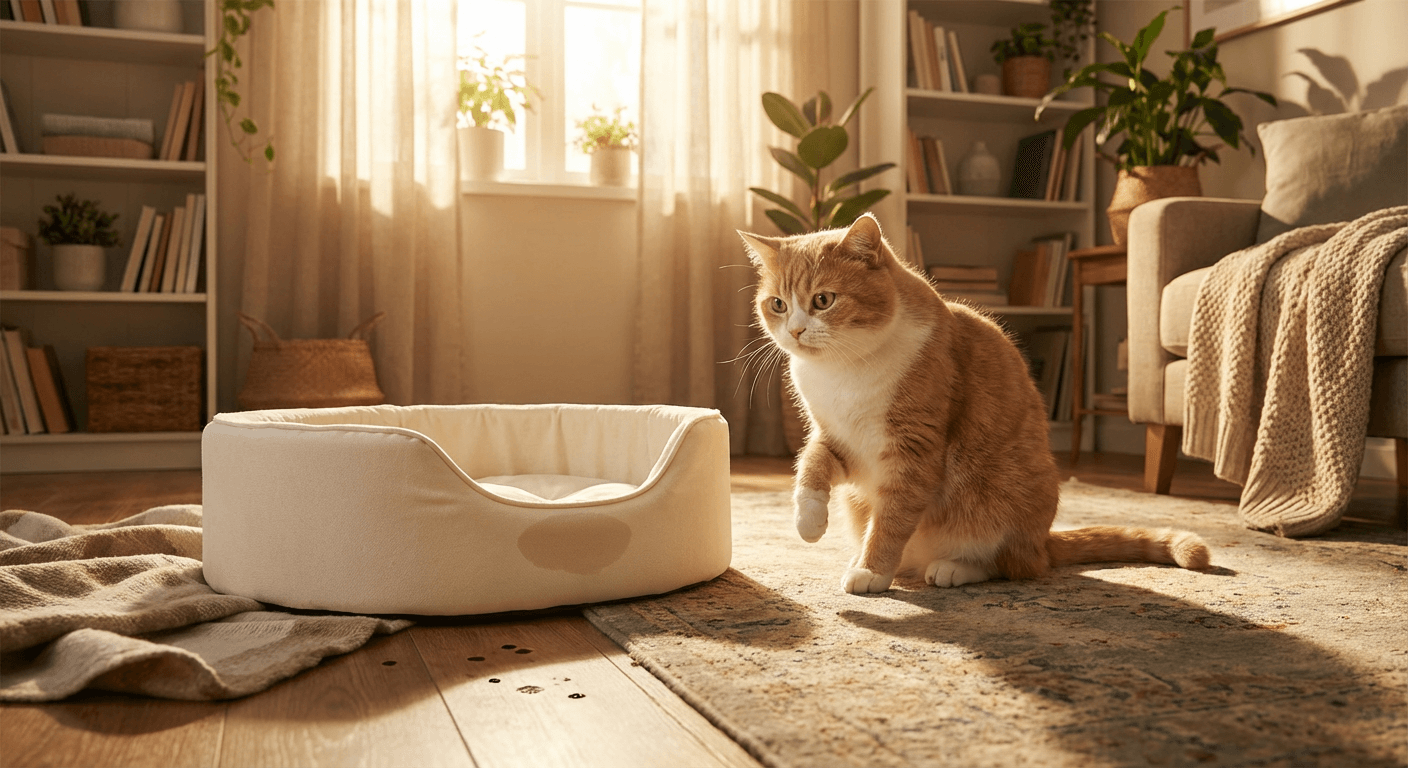
Cat Pretending To Be Homeless After Owner Does This
Key Takeaways
- Cats communicate through a complex blend of body language, vocalizations, and scent, often expressing rich emotional landscapes.
- A cat’s sense of security is profoundly linked to familiar scents; washing their bed can cause anxiety and displacement, as seen in a viral video.
- Understanding feline communication, including subtle cues like ear position, tail flicks, and pheromone marking, is crucial for pet owners and professionals.
- Recognizing signs of feline distress (e.g., hiding, changes in appetite, over-grooming) allows for early intervention and improved well-being.
- Deeper empathy for cats’ unique sensory world leads to better care practices, enhanced pet products, and a stronger human-animal bond.
Table of Contents
-
- The Unseen Language of Cats: Beyond the Meow
- The Cat’s World: A Landscape of Scent and Security
- Expert Takes on Feline Communication and Well-being
- Decoding Feline Emotions: Beyond the Enigma
- Enhancing Feline Wellness Through Deeper Understanding
- The Evolving Human-Feline Bond: A Partnership of Understanding
- FAQ Section
- Conclusion
In the ever-evolving tapestry of human-animal interaction, few creatures captivate our imaginations quite like the domestic cat. Often lauded for their mysterious allure and independent spirit, cats nonetheless communicate a rich and complex inner world, if only we take the time to observe and understand. A recent viral video perfectly encapsulates this fascinating dynamic, showcasing a feline exhibiting what many interpreted as a dramatic “protest” – seemingly pretending to be homeless after its owner committed the cardinal sin of washing its bed. While humorous on the surface, this incident opens a profound window into the sophisticated emotional landscape of our feline companions, highlighting their intricate communication methods, deep attachment to scent, and innate need for security within their environment.
This seemingly theatrical display by a cat reacting to a freshly laundered bed is far more than just a funny internet moment. It underscores a fundamental truth about cats: they are highly sensitive beings whose well-being is intrinsically linked to their surroundings and the subtle cues they perceive. For pet owners, veterinarians, trainers, and indeed, anyone involved in the pet industry, understanding the nuances of feline communication – from whisker twitches to the profound significance of scent – is not merely a curiosity, but a crucial element in fostering happier, healthier pets and strengthening the human-animal bond.
The Unseen Language of Cats: Beyond the Meow
Cats, contrary to popular belief, are not inscrutable creatures. Their communication is a sophisticated symphony of subtle cues, a language we are only just beginning to fully appreciate. The video of the “homeless” cat perfectly illustrates their capacity for expressive behavior, even if it’s a form of feline theatricality. While humans often focus on vocalizations, a cat’s primary form of communication lies in its body language.
Body Language: A Silent Dialogue
Every part of a cat’s body, from the tip of its ears to the twitch of its tail, acts as a messenger, conveying emotions, intentions, and reactions to its environment.
Ears
- A cat’s ears are incredibly mobile and expressive. Forward-facing ears indicate alertness and interest.
- Ears slightly turned to the side suggest relaxation or curiosity.
- Flattened ears, pressed back against the head, are a clear sign of fear, aggression, or irritation, often preceding a hiss or a strike.
Eyes
- The eyes hold a wealth of information. Dilated pupils can signal fear, excitement, or aggression.
- Constricted pupils might indicate aggression or intense focus.
- A slow blink, often dubbed a “kitty kiss,” is a powerful sign of trust and affection, inviting a reciprocal connection.
Whiskers
- Whiskers are not just sensory organs; they are mood indicators. Relaxed whiskers that fan out to the sides suggest contentment.
- Whiskers pulled back tightly against the face signal fear or submission.
- Forward-pointing whiskers often accompany curiosity, hunting focus, or aggression.
Posture
- The overall posture of a cat speaks volumes. A cat walking with a tail held high and a confident gait is usually happy and friendly.
- A low-slung body with a tucked tail indicates fear or submission.
- A puffed-up body with an arched back and bristled fur is an unmistakable sign of extreme fear or defensiveness, signaling a potential attack.
Tail
- Perhaps the most obvious communicator, the tail is a barometer of emotion. A gently swishing tail can indicate mild interest or thought.
- A rapidly lashing tail is a warning sign of irritation or impending aggression.
- A tail held high with a slight curl at the tip often signifies happiness and confidence.
Vocalizations: A Rich and Varied Lexicon
While body language is paramount, feline vocalizations are far more diverse than many realize. Research suggests domestic cats are capable of producing an astonishing range of vocalizations – some studies even put the number as high as 276 distinct sounds when accounting for context and nuance. These aren’t just different volumes of “meow”; they encompass a complex array of purrs, trills, chirps, hisses, growls, and specific meows tailored to different needs and recipients.
Meows
- Cats primarily meow to communicate with humans, not usually with other cats.
- A short, sharp meow might be a greeting.
- A drawn-out, insistent meow might signal a demand for food or attention.
- A low-pitched, mournful meow often indicates distress or pain.
Purrs
- Usually associated with contentment and relaxation, purrs can also be a self-soothing mechanism when a cat is stressed, injured, or even giving birth.
Hisses and Growls
- These are unmistakable warnings, signaling fear, anger, or a need for space. They are often accompanied by other aggressive body language cues.
Trills and Chirps
- These are often used by mothers to call their kittens or by cats to get a human’s attention, often conveying a friendly invitation or excitement.
The Cat’s World: A Landscape of Scent and Security
The viral video’s premise—a cat reacting strongly to its washed bed—highlights another critical aspect of feline perception: the profound importance of scent. For humans, a freshly laundered bed evokes comfort and cleanliness. For a cat, it can be a jarring disruption, potentially even a threat to its sense of security.
The Power of Pheromones and Scent Marking
Cats navigate and define their world through scent. They possess a highly developed sense of smell, far superior to ours, and rely on pheromones—chemical signals released from specialized glands—to communicate with other cats and to mark their territory as safe and familiar.
Facial Rubbing
- When a cat rubs its face against furniture, walls, or even its human companions, it’s depositing facial pheromones. These “happy hormones” create a sense of comfort and ownership, marking the object (or person) as part of its safe territory.
Paw Pad Scent Glands
- Cats also have scent glands in their paw pads. When they scratch, they’re not just sharpening their claws; they’re also leaving behind a unique scent marker.
Urine Spraying
- While often a problematic behavior, urine spraying is a potent form of scent marking, usually indicating extreme stress, territorial disputes, or a perceived threat.
A cat’s bed, therefore, is not just a place to sleep; it’s a repository of its personal scent, a potent symbol of safety, familiarity, and belonging. When this scent is removed by washing, the bed becomes alien. It’s no longer its bed in the cat’s sensory world. This sudden loss of familiar scent can trigger confusion, anxiety, and a feeling of displacement—hence, the dramatic “pretending to be homeless” display. The cat is protesting the loss of its security blanket, its scented sanctuary.
Expert Takes on Feline Communication and Well-being
Expert Take 1: Dr. Evelyn Reed, Feline Ethologist
“The viral video vividly illustrates that feline communication extends far beyond simple meows. Every flicker of a whisker, every shift in posture, and especially the profound reaction to the absence of familiar scent, tells a detailed story. Cats are constantly communicating their emotional state and their perception of the world. Our role as caregivers is to become fluent in this nuanced language, which allows us to anticipate their needs and reduce stress.”
Expert Take 2: Dr. Julian Vance, Veterinary Behaviorist
“For a cat, their scent is their security. The simple act of washing a bed can, from a cat’s perspective, be akin to removing their sense of belonging or erasing their territorial claim. It can induce significant stress, triggering behaviors that might seem theatrical to us, but are genuine expressions of anxiety and disruption to their established routine and sense of safety. Integrating pheromone-based products or ensuring a gradual reintroduction of scent can be vital steps in managing such transitions.”
Expert Take 3: Dr. Lena Petrova, Pet Psychologist
“What appears to be ‘pretending to be homeless’ is often a clear signal of protest or distress. Cats are creatures of habit and comfort. When a core element of their routine or environment, like their familiar sleeping spot and its accumulated scent, is abruptly altered, they don’t have human words to express their displeasure. Instead, they use their entire body and behavior to communicate: ‘Something is wrong, I am uncomfortable, and I need my familiar world back.’ Recognizing these signals as genuine emotional responses, rather than mere antics, is crucial for addressing their underlying needs.”
Decoding Feline Emotions: Beyond the Enigma
The “mysterious” reputation of cats often stems from a human tendency to project our own emotional frameworks onto them, or to simply miss their more subtle cues. However, scientific research increasingly confirms that cats experience a rich spectrum of emotions, including happiness, contentment, fear, anxiety, frustration, anger, and even grief. The key to truly understanding them lies in shifting our perspective and appreciating their unique sensory world and communication style.
Signs of feline distress or discomfort are often missed until they escalate into more obvious behavioral problems. These can include:
- Hiding: A cat that suddenly starts hiding more often could be experiencing stress, pain, or fear.
- Changes in Appetite/Thirst: A sudden decrease or increase can be a sign of illness or stress.
- Inappropriate Elimination: Urinating or defecating outside the litter box is almost always a sign of an underlying medical issue, stress, or litter box aversion.
- Over-grooming: Licking fur excessively, to the point of creating bald patches, is a common stress-coping mechanism.
- Increased Vocalization or Silence: A cat that suddenly becomes much noisier or unusually quiet can be signaling distress.
- Aggression: Any sudden onset of aggression towards humans or other pets should be investigated for medical or behavioral causes.
By learning to recognize these signals early, pet owners, veterinarians, and animal care professionals can intervene effectively, preventing escalation and improving the cat’s overall quality of life.
Enhancing Feline Wellness Through Deeper Understanding
The insights gleaned from a seemingly simple video of a cat’s reaction to a washed bed have far-reaching implications for improving feline health, behavior, and overall well-being across various segments of the pet industry.
For Pet Owners:
The primary beneficiaries are, of course, pet owners. Learning to interpret your cat’s nuanced body language, vocalizations, and reactions to scent and environment is foundational to building a strong, empathetic bond.
- Observational Skills: Take time to simply watch your cat. Note their ear positions, tail movements, and posture in different situations. What do their meows sound like when they’re hungry versus when they want attention?
- Respecting Routine and Territory: Understand that sudden changes can be stressful. Introduce new items, people, or routines gradually. When washing a favorite bed, consider washing only a portion at a time, or placing a familiar blanket with the clean bed to retain some scent.
- Environmental Enrichment: Provide ample resources that cater to a cat’s natural instincts: vertical spaces (cat trees, shelves), scratching posts (both vertical and horizontal), interactive toys, puzzle feeders, and safe hiding spots.
- Gentle Handling and Positive Reinforcement: Avoid force. Use positive reinforcement to encourage desired behaviors and create positive associations with experiences like carrier training or vet visits.
For Veterinarians:
A deeper understanding of feline communication and emotional health significantly enhances veterinary care. Recognizing stress signals in the clinic allows for more feline-friendly practices, reducing anxiety during visits and improving diagnostic accuracy.
- Stress Recognition: Identifying signs of fear or anxiety in the waiting room or exam room can lead to more gentle handling techniques, use of pheromone sprays, or even rescheduling if the cat is too stressed.
- Behavioral Advice: Vets are often the first point of contact for owners noticing behavioral changes. Equipped with knowledge about feline communication and stress, they can provide accurate initial advice on environmental enrichment, managing stress, and when to refer to a veterinary behaviorist.
- Holistic Health: Understanding that behavioral issues can stem from medical problems, and vice-versa, allows for a more holistic approach to feline health.
For Trainers and Behaviorists:
For professionals specializing in animal behavior, these insights are the bedrock of their practice.
- Tailored Behavior Modification: By accurately decoding a cat’s communication, behaviorists can pinpoint the root cause of undesirable behaviors (e.g., aggression, inappropriate elimination) and develop effective, humane modification strategies that address the cat’s emotional state.
- Proactive Strategies: Understanding how environmental factors and scent influence a cat’s well-being allows behaviorists to recommend proactive enrichment and management strategies to prevent problems before they start.
For Pet Product Developers and Retailers:
The pet industry can leverage these insights to create and market products that genuinely contribute to feline wellness.
- Scent-Friendly Products: Beds, blankets, and carriers designed with materials that retain scent well, or even incorporating safe, cat-specific pheromone technology, can support a cat’s sense of security.
- Effective Enrichment Tools: Developing a wider range of high-quality scratching posts, vertical climbing structures, puzzle feeders, and interactive toys that stimulate a cat’s natural hunting and exploratory behaviors is essential.
- Education and Marketing: Retailers can play a crucial role in educating consumers about the why behind certain products, explaining how they cater to a cat’s unique sensory and emotional needs.
For Breeders:
Early experiences profoundly shape a kitten’s behavior and temperament. Breeders can apply these principles to ensure well-socialized, confident kittens.
- Early Socialization: Exposing kittens to a variety of safe sounds, sights, and gentle handling helps them develop resilience.
- Enriched Environments: Providing stimulating, scent-rich environments from birth aids in cognitive development and reduces future stress.
- Genetic Predispositions: Understanding how certain breeds might have particular behavioral tendencies can help in matching kittens to appropriate homes.
The Evolving Human-Feline Bond: A Partnership of Understanding
The journey of understanding our feline companions is an ongoing one, but the benefits are immeasurable. Moving beyond anthropomorphism and toward a genuine appreciation of their unique world fosters a deeper, more respectful partnership. When we recognize that a cat’s dramatic “protest” over a clean bed is a genuine expression of distress, we elevate our relationship from one of mere ownership to one of empathetic companionship.
This deeper understanding contributes not only to a cat’s improved health and happiness but also enriches our own lives. The joy of deciphering a slow blink, interpreting a tail twitch, or providing an environment that genuinely caters to their needs is a powerful testament to the unique bond we share. As the pet industry continues to grow and evolve, these insights will drive innovations in products, services, and educational initiatives, ultimately leading to a world where every cat is truly understood and cherished.
The 5 Best Online Vet Services for Canadians in 2025 – Reviews & Top Picks
FAQ Section
Q: Why would a cat “pretend to be homeless” after its bed is washed?
A: This behavior is often a genuine expression of distress. Cats rely heavily on scent to feel secure and mark their territory. When their bed is washed, their familiar scent is removed, causing anxiety, confusion, and a feeling of displacement.
Q: How do cats primarily communicate?
A: While vocalizations like meows are common, cats primarily communicate through body language (ears, eyes, whiskers, tail, posture) and scent marking (pheromones from facial rubbing, paw pads).
Q: What are common signs of stress or discomfort in cats?
A: Signs of stress can include hiding, changes in appetite or thirst, inappropriate elimination outside the litter box, excessive grooming, increased or decreased vocalization, and sudden aggression.
Q: How can I help my cat adjust to a clean bed or new items?
A: Introduce changes gradually. When washing a bed, consider washing only a portion, or place a familiar blanket with the clean bed to retain some scent. Providing environmental enrichment and maintaining a consistent routine also helps.
Conclusion
In conclusion, the simple act of a cat “pretending to be homeless” after its bed was washed serves as a powerful reminder: our feline friends are not merely pets, but complex, emotional beings with a rich inner life. By taking the time to learn their language, respect their sensory world, and provide an environment that supports their natural instincts, we unlock the potential for a profoundly rewarding relationship built on mutual understanding and unwavering care. Let’s continue to listen to what our cats are telling us, even if it’s through the silent protest of a freshly laundered bed.